Und dann auf "Zum Home-Bildschirm [+]".

Stöbern
genialokal zum Startbildschirm hinzufügen
Installieren Sie die genialokal App auf Ihrem Startbildschirm für einen schnellen Zugriff und eine komfortable Nutzung.
Installieren Sie die genialokal App auf Ihrem Startbildschirm für einen schnellen Zugriff und eine komfortable Nutzung.
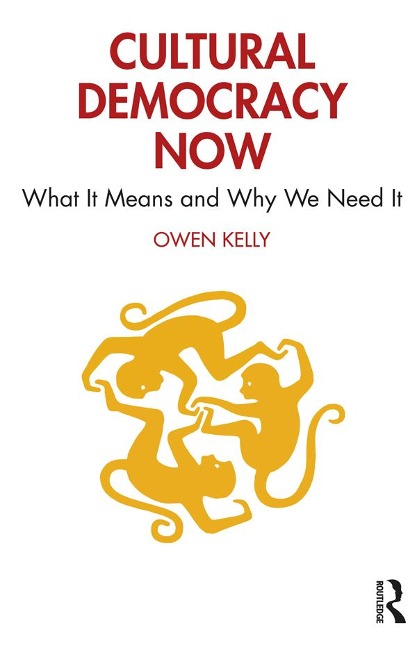
Positioning cultural democracy in a historical context and in a context of adjacent movements such as the creative commons, open source movement, and maker movement, this book goes back to first principles and asks what personhood means in the twenty-first century, what cultural democracy means, why we should want it, and how we can work towards it. In this new book, the author provides a timely untangling of the various historical meanings of the term and explores the various ways in which it has been co-opted, suggesting that it has a strength that we should open up to examination with a view to reinvigorating it. Just as importantly, the book situates cultural democracy within the wider framework of progressive political and social movements, and of the impact of new digital information and communication technologies. To those unfamiliar with the term, it introduces cultural democracy through related concepts such as digital cultural politics, participatory democracy, and digital citizenship. Providing a much-needed theoretical take on the growing interest in cultural democracy, this book will be essential reading for students and scholars interested in the arts as well as practitioners and policy makers. It combines theory and practice with a view to inciting both thought and action.
Owen Kelly writes and researches as Principal Lecturer Emeritus in online media at Arcada, a university of applied science, in Helsinki. He has worked as a community artist, a cultural consultant, a soundscaper, and a multimedia programmer. He is the author of Community, Art and the State, Digital Creativity, and Ambient Learning and Self Authorship, and has an ongoing interest in developing convivial tools that assist in the struggle for cultural democracy.
Introduction Part I: Autonomous Vehicles 1. The Mind and the Body 2. Problems with Selfhood 3. Dennett's Solution 4. Narratives and Consciousness 5. Darwin and Evolution 6. Genes and Memes 7. Late to the Party Part II: Cultural Landscapes 8. The First Tools - Language and numbers 9. The Nature of Tools - Conviviality 10. Gamification - Shopping as Theatre 11. Selling Ourselves - Quantified Data 12. The Price of Fame - Film and Celebrity 13. Liking our Selves - Social Media 14. Buying the Culture - IP and Creativity Part III: Making a Difference 15. Community, Citizenship, and Creativity 16. Codifying Culture 17. Cultural Democracy - A Definition 18. Cultural Democracy and Community 19. Cultural Democracy and Economics 20. Cultural Democracy and Politics 21. ALL Together Now Acknowledgements Continuing... A Final Word about Language
Dieses eBook wird im PDF-Format geliefert und ist mit einem Adobe Kopierschutz (DRM) versehen. Sie können dieses eBook mit allen Geräten lesen, die das PDF-Format und den Adobe Kopierschutz (DRM) unterstützen.
Zum Beispiel mit den folgenden Geräten:
• tolino Reader
Laden Sie das eBook direkt über den Reader-Shop auf dem tolino herunter oder übertragen Sie das eBook auf Ihren tolino mit einer kostenlosen Software wie beispielsweise Adobe Digital Editions.
• Sony Reader & andere eBook Reader
Laden Sie das eBook direkt über den Reader-Shop herunter oder übertragen Sie das eBook mit der kostenlosen Software Sony READER FOR PC/Mac oder Adobe Digital Editions auf ein Standard-Lesegeräte mit epub- und Adobe DRM-Unterstützung.
• Tablets & Smartphones
Möchten Sie dieses eBook auf Ihrem Smartphone oder Tablet lesen, finden Sie hier unsere kostenlose Lese-App für iPhone/iPad und Android Smartphone/Tablets.
• PC & Mac
Lesen Sie das eBook direkt nach dem Herunterladen mit einer kostenlosen Lesesoftware, beispielsweise Adobe Digital Editions, Sony READER FOR PC/Mac oder direkt über Ihre eBook-Bibliothek in Ihrem Konto unter „Meine eBooks“ - „online lesen“.
Schalten Sie das eBook mit Ihrer persönlichen Adobe ID auf bis zu sechs Geräten gleichzeitig frei.
Bitte beachten Sie, dass die Kindle-Geräte das Format nicht unterstützen und dieses eBook somit nicht auf Kindle-Geräten lesbar ist.