Und dann auf "Zum Home-Bildschirm [+]".

Stöbern
genialokal zum Startbildschirm hinzufügen
Installieren Sie die genialokal App auf Ihrem Startbildschirm für einen schnellen Zugriff und eine komfortable Nutzung.
Installieren Sie die genialokal App auf Ihrem Startbildschirm für einen schnellen Zugriff und eine komfortable Nutzung.
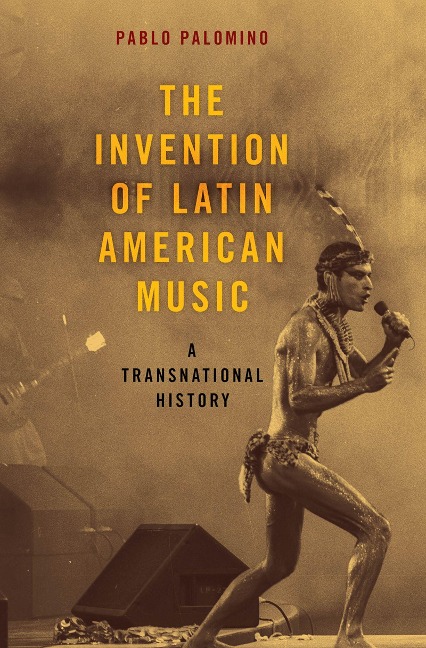
The ethnically and geographically heterogeneous countries that comprise Latin America have each produced music in unique styles and genres - but how and why have these disparate musical streams come to fall under the single category of "Latin American music"? Reconstructing how this category came to be, author Pablo Palomino tells the dynamic history of the modernization of musical practices in Latin America. He focuses on the intellectual, commercial, musicological, and diplomatic actors that spurred these changes in the region between the 1920s and the 1960s, offering a transnational story based on primary sources from countries in and outside of Latin America. The Invention of Latin American Music portrays music as the field where, for the first time, the cultural idea of Latin America disseminated through and beyond the region, connecting the culture and music of the region to the wider, global culture, promoting the now-established notion of Latin America as a single musical market. Palomino explores multiple interconnected narratives throughout, pairing popular and specialist traveling musicians, commercial investments and repertoires, unionization and musicology, and music pedagogy and Pan American diplomacy. Uncovering remarkable transnational networks far from a Western cultural center, The Invention of Latin American Music firmly asserts that the democratic legitimacy and massive reach of Latin American identity and modernization explain the spread and success of Latin American music.
Pablo Palomino is Assistant Professor of Latin American and Caribbean Studies and Mellon Faculty Fellow at Oxford College of Emory University.
Acknowledgments Abbreviations
Introduction: Music is Latin American history Chapter 1: A continental patchwork Chapter 2: Transnational networks Chapter 3: State musical populisms Chapter 4: The transnational formation of Latin American musicology Chapter 5: Latin/Pan American music Chapter 6: Music and regionalism since the 1950s Epilogue: A century of Latin American Music
Bibliography
Dieses eBook wird im PDF-Format geliefert und ist mit einem Adobe Kopierschutz (DRM) versehen. Sie können dieses eBook mit allen Geräten lesen, die das PDF-Format und den Adobe Kopierschutz (DRM) unterstützen.
Zum Beispiel mit den folgenden Geräten:
• tolino Reader
Laden Sie das eBook direkt über den Reader-Shop auf dem tolino herunter oder übertragen Sie das eBook auf Ihren tolino mit einer kostenlosen Software wie beispielsweise Adobe Digital Editions.
• Sony Reader & andere eBook Reader
Laden Sie das eBook direkt über den Reader-Shop herunter oder übertragen Sie das eBook mit der kostenlosen Software Sony READER FOR PC/Mac oder Adobe Digital Editions auf ein Standard-Lesegeräte mit epub- und Adobe DRM-Unterstützung.
• Tablets & Smartphones
Möchten Sie dieses eBook auf Ihrem Smartphone oder Tablet lesen, finden Sie hier unsere kostenlose Lese-App für iPhone/iPad und Android Smartphone/Tablets.
• PC & Mac
Lesen Sie das eBook direkt nach dem Herunterladen mit einer kostenlosen Lesesoftware, beispielsweise Adobe Digital Editions, Sony READER FOR PC/Mac oder direkt über Ihre eBook-Bibliothek in Ihrem Konto unter „Meine eBooks“ - „online lesen“.
Schalten Sie das eBook mit Ihrer persönlichen Adobe ID auf bis zu sechs Geräten gleichzeitig frei.
Bitte beachten Sie, dass die Kindle-Geräte das Format nicht unterstützen und dieses eBook somit nicht auf Kindle-Geräten lesbar ist.