Und dann auf "Zum Home-Bildschirm [+]".

Stöbern
genialokal zum Startbildschirm hinzufügen
Installieren Sie die genialokal App auf Ihrem Startbildschirm für einen schnellen Zugriff und eine komfortable Nutzung.
Installieren Sie die genialokal App auf Ihrem Startbildschirm für einen schnellen Zugriff und eine komfortable Nutzung.
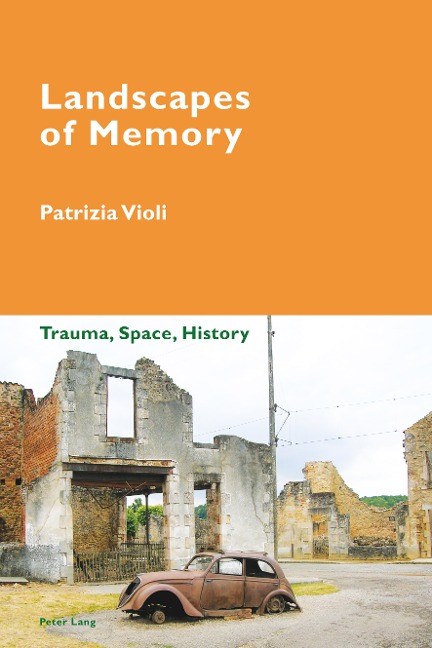
Since Auschwitz, and more and more frequently today, places that were theatres of mass suffering and other atrocities are becoming common features of our cultural landscape. What should we do with these places? Keep them as they were, to remind us of what actually took place there, as ideal museums of past evils? Or should we transform them and, if so, into which forms and according to which principles? Which pasts do these places transmit, and how? This volume uses an innovative semiotic methodology to analyse selected key trauma sites. The author demonstrates that these places can become, once properly interrogated, privileged observatories capable of throwing light upon the many different conflicts, forms of social control, and power relationships that underlie any politics of memory. The selfsame notions of trauma and memory become, in this way, rewritten in quite a different light: far from any kind of naturalistic definition, they emerge as painful «knots» within which many of the most crucial questions in the contemporary world are intertwined.
Patrizia Violi is Full Professor of Semiotics in the Department of Philosophy and Communication and Coordinator of the PhD Program in Semiotics at the University of Bologna. She is Director of the School of Advanced Studies in the Humanities and Director of TRAME (Interdisciplinary Centre for the Study of Memory and Cultural Traumas; www.trame.unibo.it) at the University of Bologna. Her main areas of research include text analysis, language and gender, and semantic theory. She is currently working on cultural semiotics and traumatic memory, in particular on memorials and memory museums.
CONTENTS: Remembering trauma: From compulsion to traumatic heritage - Spatializing trauma: From the trace to suffering as spectacle - Re-presenting the horror: The Tuol Sleng Museum of Genocide Crimes in Phnom Penh, Cambodia - The rhetoric of nationhood: The Memorial Hall in Nanjing - The difficult memories of Latin American dictatorships: The case of Chile - The difficult memories of Latin American dictatorships: The case of Argentina - When trauma meets art: The Museo per la Memoria di Ustica in Bologna.
Dieses eBook wird im PDF-Format geliefert und ist mit einem Adobe Kopierschutz (DRM) versehen. Sie können dieses eBook mit allen Geräten lesen, die das PDF-Format und den Adobe Kopierschutz (DRM) unterstützen.
Zum Beispiel mit den folgenden Geräten:
• tolino Reader
Laden Sie das eBook direkt über den Reader-Shop auf dem tolino herunter oder übertragen Sie das eBook auf Ihren tolino mit einer kostenlosen Software wie beispielsweise Adobe Digital Editions.
• Sony Reader & andere eBook Reader
Laden Sie das eBook direkt über den Reader-Shop herunter oder übertragen Sie das eBook mit der kostenlosen Software Sony READER FOR PC/Mac oder Adobe Digital Editions auf ein Standard-Lesegeräte mit epub- und Adobe DRM-Unterstützung.
• Tablets & Smartphones
Möchten Sie dieses eBook auf Ihrem Smartphone oder Tablet lesen, finden Sie hier unsere kostenlose Lese-App für iPhone/iPad und Android Smartphone/Tablets.
• PC & Mac
Lesen Sie das eBook direkt nach dem Herunterladen mit einer kostenlosen Lesesoftware, beispielsweise Adobe Digital Editions, Sony READER FOR PC/Mac oder direkt über Ihre eBook-Bibliothek in Ihrem Konto unter „Meine eBooks“ - „online lesen“.
Schalten Sie das eBook mit Ihrer persönlichen Adobe ID auf bis zu sechs Geräten gleichzeitig frei.
Bitte beachten Sie, dass die Kindle-Geräte das Format nicht unterstützen und dieses eBook somit nicht auf Kindle-Geräten lesbar ist.