Und dann auf "Zum Home-Bildschirm [+]".

Stöbern
genialokal zum Startbildschirm hinzufügen
Installieren Sie die genialokal App auf Ihrem Startbildschirm für einen schnellen Zugriff und eine komfortable Nutzung.
Installieren Sie die genialokal App auf Ihrem Startbildschirm für einen schnellen Zugriff und eine komfortable Nutzung.
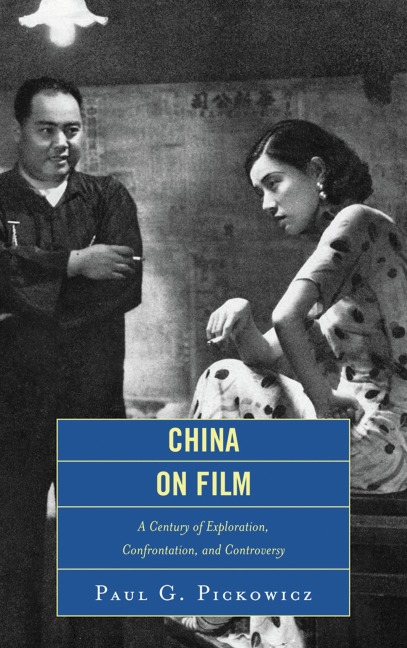
Leading scholar Paul G. Pickowicz traces the dynamic history of Chinese filmmaking and discusses its course of development from the early days to the present. Moving decade by decade, he explores such key themes as the ever-shifting definitions of modern marriage in 1920s silent features, East-West cultural conflict in the movies of the 1930s, the strong appeal of the powerful melodramatic mode of the 1930s and 1940s, the polarizing political controversies surrounding Chinese filmmaking under the Japanese occupation of Shanghai in the 1940s, and the critical role of cinema during the bloody civil war of the late 1940s. Pickowicz then considers the challenging Mao years, including chapters on legendary screen personalities who tried but failed to adjust to the new socialist order in the 1950s, celebrities who made the sort of artistic and political accommodations that would keep them in the spotlight in the post-revolutionary era, and insider film professionals of the early 1960s who actively resisted the most extreme forms of Maoist cultural production. The book concludes with explorations of the highly cathartic films of the early post-Mao era, edgy postsocialist movies that appeared on the eve of the Tiananmen demonstrations of 1989, the relevance of the Eastern European "velvet prison" cultural production model, and the rise of underground and independent filmmaking beginning in the 1990s.
Throughout its long history of film production, China has been embroiled in a seemingly unending series of wars, revolutions, and jarring social transformations. Despite daunting censorship obstacles, Chinese filmmakers have found ingenious ways of taking political stands and weighing in-for better or worse-on the most explosive social, cultural, and economic issues of the day. Exploring the often gut-wrenching controversies generated by their work, Pickowicz offers a unique and perceptive window on Chinese culture and society.
Paul G. Pickowicz is Distinguished Professor of History and Chinese Studies and holder of the Endowed Chair in Modern Chinese History at the University of California, San Diego.
Introduction: The Sorrows and Joys of Chinese Filmmaking: Political and Personal Contexts
Chapter 1: Shanghai Twenties: Early Chinese Cinematic Explorations of the Modern Marriage
Chapter 2: The Theme of Spiritual Pollution in Chinese Films of the 1930s
Chapter 3: Melodramatic Representation and the May Fourth Tradition of Chinese Cinema
Chapter 4: Never-Ending Controversies: The Case of Remorse in Shanghai and Occupation-Era
Chinese Filmmaking
Chapter 5: Victory as Defeat: Postwar Visualizations of China's War of Resistance
Chapter 6: Acting like Revolutionaries: Shi Hui, the Wenhua Studio, and Private-Sector Filmmaking,
1949-1952
Chapter 7: Zheng Junli, Complicity, and the Cultural History of Socialist China, 1949-1976
Chapter 8: The Limits of Cultural Thaw: Chinese Cinema in the Early 1960s
Chapter 9: Popular Cinema and Political Thought in Early Post-Mao China: Reflections on Official
Pronouncements, Film, and the Film Audience
Chapter 10: On the Eve of Tiananmen: Huang Jianxin and
Dieses eBook wird im PDF-Format geliefert und ist mit einem Adobe Kopierschutz (DRM) versehen. Sie können dieses eBook mit allen Geräten lesen, die das PDF-Format und den Adobe Kopierschutz (DRM) unterstützen.
Zum Beispiel mit den folgenden Geräten:
• tolino Reader
Laden Sie das eBook direkt über den Reader-Shop auf dem tolino herunter oder übertragen Sie das eBook auf Ihren tolino mit einer kostenlosen Software wie beispielsweise Adobe Digital Editions.
• Sony Reader & andere eBook Reader
Laden Sie das eBook direkt über den Reader-Shop herunter oder übertragen Sie das eBook mit der kostenlosen Software Sony READER FOR PC/Mac oder Adobe Digital Editions auf ein Standard-Lesegeräte mit epub- und Adobe DRM-Unterstützung.
• Tablets & Smartphones
Möchten Sie dieses eBook auf Ihrem Smartphone oder Tablet lesen, finden Sie hier unsere kostenlose Lese-App für iPhone/iPad und Android Smartphone/Tablets.
• PC & Mac
Lesen Sie das eBook direkt nach dem Herunterladen mit einer kostenlosen Lesesoftware, beispielsweise Adobe Digital Editions, Sony READER FOR PC/Mac oder direkt über Ihre eBook-Bibliothek in Ihrem Konto unter „Meine eBooks“ - „online lesen“.
Schalten Sie das eBook mit Ihrer persönlichen Adobe ID auf bis zu sechs Geräten gleichzeitig frei.
Bitte beachten Sie, dass die Kindle-Geräte das Format nicht unterstützen und dieses eBook somit nicht auf Kindle-Geräten lesbar ist.