Und dann auf "Zum Home-Bildschirm [+]".

Stöbern
genialokal zum Startbildschirm hinzufügen
Installieren Sie die genialokal App auf Ihrem Startbildschirm für einen schnellen Zugriff und eine komfortable Nutzung.
Installieren Sie die genialokal App auf Ihrem Startbildschirm für einen schnellen Zugriff und eine komfortable Nutzung.
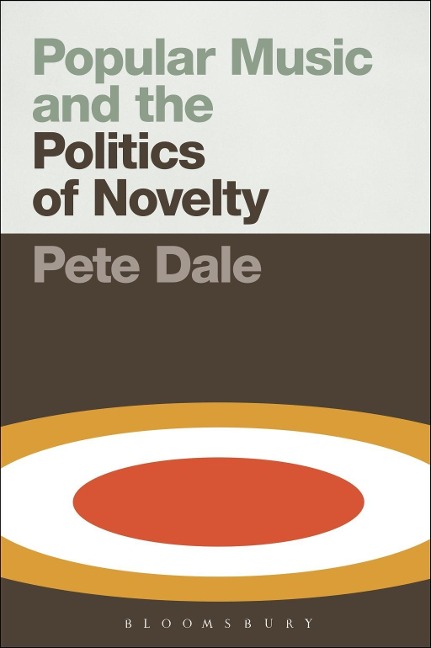
Popular music, today, has supposedly collapsed into a 'retromania' which, according to leading critic Simon Reynolds, has brought a 'slow and steady fading of the artistic imperative to be original.' Meanwhile, in the estimation of philosopher Alain Badiou, a significant political event will always require 'the dictatorial power of a creation ex nihilo'. Everywhere, it seems, at least amongst commentators of a certain age and type, pessimism prevails with regards to the predominant aesthetic preferences of the twenty first century: popular music, supposedly, is in a rut.
Yet when, if ever, did the political engagement kindled by popular music amount to more than it does today? The sixties? The punk explosion of the late 1970s? Despite an on-going fixation upon these periods in much rock journalism and academic writing, this book demonstrates that the utilisation of popular music to promote political causes, on the one hand, and the expression of dissent through the medium of 'popular song', on the other hand, remain widely in practice today.
This is not to argue, however, for complacency with regards to the need for expressions of political dissent through popular culture. Rather, the book looks carefully at actual usages of popular music in political processes, as well as expressions of political feeling through song, and argues that there is much to encourage us to think that the demand for radical change remains in circulation. The question is, though, how necessary is it for politically-motivated popular music to offer aesthetic novelty?
Pete Dale is a Senior Lecturer in Popular Music at Manchester Metropolitan University, UK.
1. Introduction
2. First chapter: 1899 and All That
3. Second chapter: If You Don't Care to Remember 'The Sixties', You Probably Weren't There
4. Third chapter: 1977, Year Zero (ish)
5. Fourth chapter: Badiou and the Postmodern Turn, Turn, Turn
6. Fifth chapter: Hetero-mania in the 21st Century
7. Sixth chapter: What's Left for the Future of Pop?
Dieses eBook wird im PDF-Format geliefert und ist mit einem Adobe Kopierschutz (DRM) versehen. Sie können dieses eBook mit allen Geräten lesen, die das PDF-Format und den Adobe Kopierschutz (DRM) unterstützen.
Zum Beispiel mit den folgenden Geräten:
• tolino Reader
Laden Sie das eBook direkt über den Reader-Shop auf dem tolino herunter oder übertragen Sie das eBook auf Ihren tolino mit einer kostenlosen Software wie beispielsweise Adobe Digital Editions.
• Sony Reader & andere eBook Reader
Laden Sie das eBook direkt über den Reader-Shop herunter oder übertragen Sie das eBook mit der kostenlosen Software Sony READER FOR PC/Mac oder Adobe Digital Editions auf ein Standard-Lesegeräte mit epub- und Adobe DRM-Unterstützung.
• Tablets & Smartphones
Möchten Sie dieses eBook auf Ihrem Smartphone oder Tablet lesen, finden Sie hier unsere kostenlose Lese-App für iPhone/iPad und Android Smartphone/Tablets.
• PC & Mac
Lesen Sie das eBook direkt nach dem Herunterladen mit einer kostenlosen Lesesoftware, beispielsweise Adobe Digital Editions, Sony READER FOR PC/Mac oder direkt über Ihre eBook-Bibliothek in Ihrem Konto unter „Meine eBooks“ - „online lesen“.
Schalten Sie das eBook mit Ihrer persönlichen Adobe ID auf bis zu sechs Geräten gleichzeitig frei.
Bitte beachten Sie, dass die Kindle-Geräte das Format nicht unterstützen und dieses eBook somit nicht auf Kindle-Geräten lesbar ist.