Und dann auf "Zum Home-Bildschirm [+]".

Stöbern
genialokal zum Startbildschirm hinzufügen
Installieren Sie die genialokal App auf Ihrem Startbildschirm für einen schnellen Zugriff und eine komfortable Nutzung.
Installieren Sie die genialokal App auf Ihrem Startbildschirm für einen schnellen Zugriff und eine komfortable Nutzung.
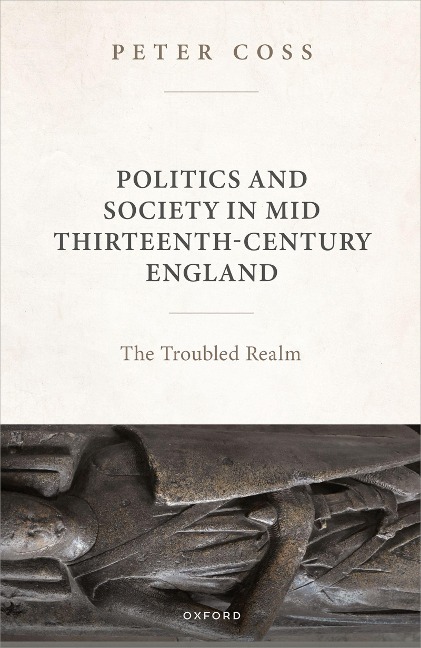
Despite the multidirectional nature of modern research, the interpretation of the political history of thirteenth-century England has remained locked into a traditional framework bequeathed by the mid-twentieth-century historian, R. F. Treharne, and embellished by the emphases and accentuations of his present-day successors. Characterised by its conception of community, its constitutionalism, its ready identification of a national enterprise, and its predilection for idealism and 'progressive' thinking, this framework remains close to the Whig interpretation of English history. It is reinforced by the continuation of reverence for the baronial leader, Simon de Montfort.
In contrast, Peter Coss offers here an alternative approach to the period which is anchored in social mores and cultural values. More emphasis is placed upon the interests, ambitions, and needs of contemporaries, upon social networks of various kinds, and upon how interests both clashed and cohered as people strove to improve or preserve their situations. This was a crisis born of political instability, but in the context of institutional, administrative, and legal growth, that is to say at a particular point in the evolution of the state. Drawing on a wide range of sources, the book reconsiders the generation of the crisis, the factors which influenced its course, and its (partial) resolution. In short, it explores the anatomy and physiology of a troubled realm.
A doctoral student of Rodney Hilton at Birmingham, Peter Coss joined the board of Past and Present in 1984 and was a lecturer and subsequently professor at the University of Northumbria. He held the established chair of medieval history at Cardiff University from 1995-2013 where he became head of the School of History, Archaeology and Religion. He held a Leverhulme Fellowship at the University of Pisa and Visiting Fellowships at Magdalen and Exeter Colleges, Oxford. He was awarded a D. Litt. by Cardiff University for his contribution to knowledge and has published six monographs, three editions of historical documents, a dozen edited collections, and more than 50 essays.
- List of Abbreviations - 1: The Whig Interpretation of Thirteenth-Century England - 2: The Angevin Legacy and the Kingship of Henry III - 3: The Impact of Royal Policy on the Nobility: Patronage, Appeasement and Privatization - 4: Power and Profit in the Provinces - 5: Reform and the Knights of 1258 - 6: Faction, Party and Affinity - 7: Civil War - 8: Simon de Montfort and his Support - 9: Public Authority and the Provisions of Westminster - 10: Resolution and Equilibrium, 1267-90 - Conclusion - Bibliography - Index
Dieses eBook wird im PDF-Format geliefert und ist mit einem Adobe Kopierschutz (DRM) versehen. Sie können dieses eBook mit allen Geräten lesen, die das PDF-Format und den Adobe Kopierschutz (DRM) unterstützen.
Zum Beispiel mit den folgenden Geräten:
• tolino Reader
Laden Sie das eBook direkt über den Reader-Shop auf dem tolino herunter oder übertragen Sie das eBook auf Ihren tolino mit einer kostenlosen Software wie beispielsweise Adobe Digital Editions.
• Sony Reader & andere eBook Reader
Laden Sie das eBook direkt über den Reader-Shop herunter oder übertragen Sie das eBook mit der kostenlosen Software Sony READER FOR PC/Mac oder Adobe Digital Editions auf ein Standard-Lesegeräte mit epub- und Adobe DRM-Unterstützung.
• Tablets & Smartphones
Möchten Sie dieses eBook auf Ihrem Smartphone oder Tablet lesen, finden Sie hier unsere kostenlose Lese-App für iPhone/iPad und Android Smartphone/Tablets.
• PC & Mac
Lesen Sie das eBook direkt nach dem Herunterladen mit einer kostenlosen Lesesoftware, beispielsweise Adobe Digital Editions, Sony READER FOR PC/Mac oder direkt über Ihre eBook-Bibliothek in Ihrem Konto unter „Meine eBooks“ - „online lesen“.
Schalten Sie das eBook mit Ihrer persönlichen Adobe ID auf bis zu sechs Geräten gleichzeitig frei.
Bitte beachten Sie, dass die Kindle-Geräte das Format nicht unterstützen und dieses eBook somit nicht auf Kindle-Geräten lesbar ist.