Und dann auf "Zum Home-Bildschirm [+]".

Stöbern
genialokal zum Startbildschirm hinzufügen
Installieren Sie die genialokal App auf Ihrem Startbildschirm für einen schnellen Zugriff und eine komfortable Nutzung.
Installieren Sie die genialokal App auf Ihrem Startbildschirm für einen schnellen Zugriff und eine komfortable Nutzung.
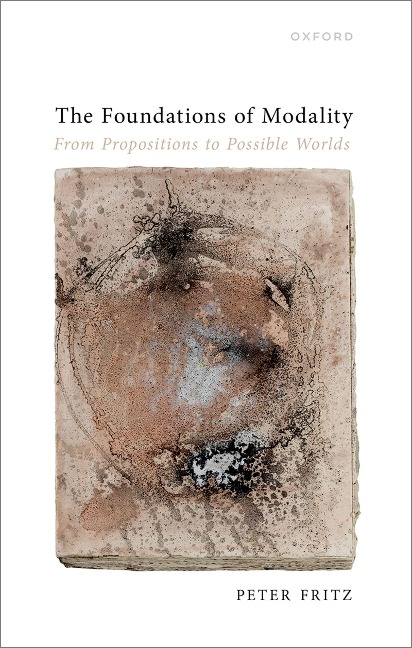
The notions of necessity and possibility, as well as the notion of a possible world, are ubiquitous in philosophy. Nevertheless, these notions remain controversial. It also remains controversial whether metaphysics requires notions drawing distinctions which are finer than those which can be drawn in terms of necessity and possibility, such as the recently much-discussed notion of grounding. In order to make progress on these debates, this book develops a general framework for theorizing about such intensional notions using the tools of higher-order logic. The Foundations of Modality begins by motivating the use of higher-order logic, and introduces a particularly simple form of higher-order logic. Progress is made on well-trodden territory concerning modality and possible worlds by considering first the question how fine propositions are individuated. Peter Fritz uses both logical results and philosophical arguments to motivate a relatively coarse-grained individuation of propositions. Fritz shows that a number of putative metaphysical notions are ruled out by this theory of individuation. Furthermore, the theory allows the controversial notion of (metaphysical) necessity to be delineated as the broadest necessity, which applies just to the single tautologous proposition. This book also vindicates appeals to possible worlds: First, it shows that if anything plays the theoretical role of possible worlds, then certain propositions do so. Second, it argues that there are in fact the required propositions playing the role of possible worlds; this is shown using the notion of plural quantification over propositions in higher-order logic.
Peter Fritz is Professor of Philosophy at the Dianoia Institute of Philosophy at the Australian Catholic University, and at the Department of Philosophy, Classics, History of Art and Ideas at the University of Oslo. He studied philosophy and logic at the Universities of Konstanz, Amsterdam, and Oxford, and works on logic, metaphysics, and the philosophy of language.
- Introduction - Part One: Language - 1: Breaking the Domination of the Word - 2: A Formal Language - Part Two: Identity - 3: Attitudes andStructuredPropositions - 4: Classicism - Part Three: Necessity - 5: Metaphysical Necessity - 6: Actuality, Distinctness, and Possibility - Part Four: Worlds - 7: A Theory of Possible Worlds - 8: Plural Propositional Quantification - Part Five: Conclusion - 9: A Coarse-Grained World-View - 10: Looking Ahead - Bibliography - List of Notation - Index
Dieses eBook wird im PDF-Format geliefert und ist mit einem Adobe Kopierschutz (DRM) versehen. Sie können dieses eBook mit allen Geräten lesen, die das PDF-Format und den Adobe Kopierschutz (DRM) unterstützen.
Zum Beispiel mit den folgenden Geräten:
• tolino Reader
Laden Sie das eBook direkt über den Reader-Shop auf dem tolino herunter oder übertragen Sie das eBook auf Ihren tolino mit einer kostenlosen Software wie beispielsweise Adobe Digital Editions.
• Sony Reader & andere eBook Reader
Laden Sie das eBook direkt über den Reader-Shop herunter oder übertragen Sie das eBook mit der kostenlosen Software Sony READER FOR PC/Mac oder Adobe Digital Editions auf ein Standard-Lesegeräte mit epub- und Adobe DRM-Unterstützung.
• Tablets & Smartphones
Möchten Sie dieses eBook auf Ihrem Smartphone oder Tablet lesen, finden Sie hier unsere kostenlose Lese-App für iPhone/iPad und Android Smartphone/Tablets.
• PC & Mac
Lesen Sie das eBook direkt nach dem Herunterladen mit einer kostenlosen Lesesoftware, beispielsweise Adobe Digital Editions, Sony READER FOR PC/Mac oder direkt über Ihre eBook-Bibliothek in Ihrem Konto unter „Meine eBooks“ - „online lesen“.
Schalten Sie das eBook mit Ihrer persönlichen Adobe ID auf bis zu sechs Geräten gleichzeitig frei.
Bitte beachten Sie, dass die Kindle-Geräte das Format nicht unterstützen und dieses eBook somit nicht auf Kindle-Geräten lesbar ist.