Und dann auf "Zum Home-Bildschirm [+]".

Stöbern
genialokal zum Startbildschirm hinzufügen
Installieren Sie die genialokal App auf Ihrem Startbildschirm für einen schnellen Zugriff und eine komfortable Nutzung.
Installieren Sie die genialokal App auf Ihrem Startbildschirm für einen schnellen Zugriff und eine komfortable Nutzung.
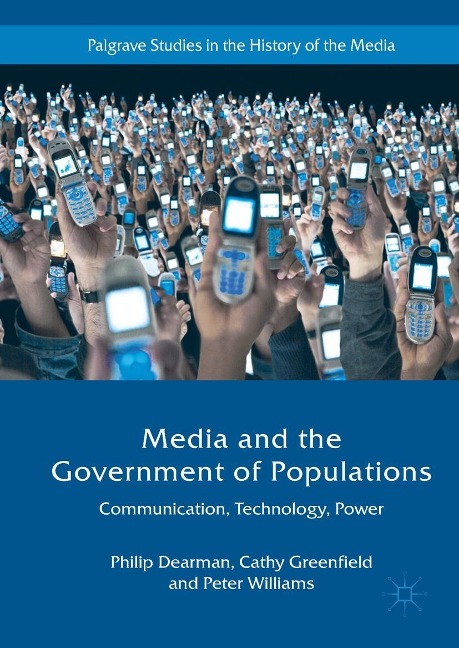
. This book argues for shifting attention to populations. It brings together governmentality studies and its enlargement of how we think about politics, with the study of media practices and communication technologies. It brings into focus key moments where populations of different sorts have been subject to formative and diverse projects of governing, in which communication has been key. Chapters range across: print culture and the new political technology of individuals; digital economies as places where populations are formed, known and managed as productive resources; workplaces, schools, clinics and homes as sites of governmental objectives; and how to appropriately link communication technologies and practices with politics. Key themes include person formation, standardized individuality, financialization and mobile privatization, distinguishing technologies of democracy and populism, the power of cascading rationalities in digitally networked worlds.
Philip Dearman is Lecturer in Communication Studies at RMIT University, Australia. Cathy Greenfield is Associate Professor of Communication at RMIT University, Australia. Peter Williams was an Associate of RMIT University, Australia where for many years he taught the RMIT Honours level course 'Communication Revolutions and Cultural Forms'.
Chapter 1. Introduction: Communication, Government, Populations.- Chapter 2. History Lessons: Then and Now.- Chapter 3. Governing Digitally Networked Populations.- Chapter 4. Productive, Schooled, Healthy.- Chapter 5. Conclusion: What Kind of Governing?.- Index