Und dann auf "Zum Home-Bildschirm [+]".

Stöbern
genialokal zum Startbildschirm hinzufügen
Installieren Sie die genialokal App auf Ihrem Startbildschirm für einen schnellen Zugriff und eine komfortable Nutzung.
Installieren Sie die genialokal App auf Ihrem Startbildschirm für einen schnellen Zugriff und eine komfortable Nutzung.
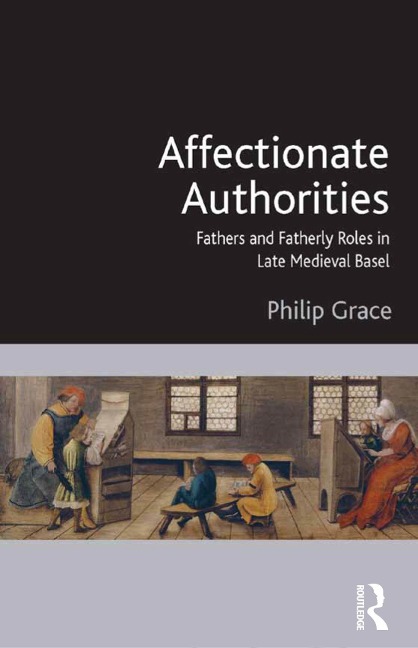
In one of his sermons, the medieval preacher Bernardino of Siena listed seven 'fathers' to whom one owed obedience: God, one's natural father, godfather, confessor, benefactor, a government official, and any elderly man. This book seeks to answer the question of why medieval Europeans saw the need for so many 'fathers.' Why was fatherhood so appealing as a metaphor? Situated at the intersection of social and cultural history, the study draws upon a variety of late-medieval and early-modern sources including witness depositions, personal letters and pedagogical treatises from the city of Basel, Switzerland. It focuses on how people from different walks of life invoked ideas about fatherhood in the pursuit of various goals - not only the ideological agendas of scholarly elites, but also the more pragmatic problems of closing a business deal, claiming an inheritance, or choosing sides in a fistfight - before turning to what these ideas reveal about fatherhood 'on the ground.' The book argues that it was precisely fatherhood's basis in lived experience that gave it a familiar 'shape' in the several roles that fathers played, including provision, affection, disciplinary authority, and education. The most potent rhetorical aspect of fatherhood, however, was not as a static image or shape, but rather the possibility of invoking connections between one role and another. The most potent connection between roles was the idea that fathers were 'affectionate authorities,' combining power over subordinates with desire for their well-being. Tracing the connections and contradictions of these identities, this study provides a nuanced view of concepts of fatherhood on the eve of the Reformation.
Philip Grace studied at Wheaton College, Keble College Oxford, Western Michigan University, and the University of Minnesota, where he completed his doctorate. He has taught classes in medieval and world history at Grand Valley State University and Arizona State University. He is currently an Assistant Professor of History at Texas Lutheran University.
The setting and sources: Basel around 1500. Fathers and guardians: fosterage and fatherly provision. Fathers and testators: inheritance and dowry as fatherly provision. Fathers and masters: vocational training as provision and education. Fathers and mothers: moral discipline and example. Fathers and tutors: fathers in competition with formal educators. Conclusion: harnessing fatherhood before and after the Reformation.
Dieses eBook wird im PDF-Format geliefert und ist mit einem Adobe Kopierschutz (DRM) versehen. Sie können dieses eBook mit allen Geräten lesen, die das PDF-Format und den Adobe Kopierschutz (DRM) unterstützen.
Zum Beispiel mit den folgenden Geräten:
• tolino Reader
Laden Sie das eBook direkt über den Reader-Shop auf dem tolino herunter oder übertragen Sie das eBook auf Ihren tolino mit einer kostenlosen Software wie beispielsweise Adobe Digital Editions.
• Sony Reader & andere eBook Reader
Laden Sie das eBook direkt über den Reader-Shop herunter oder übertragen Sie das eBook mit der kostenlosen Software Sony READER FOR PC/Mac oder Adobe Digital Editions auf ein Standard-Lesegeräte mit epub- und Adobe DRM-Unterstützung.
• Tablets & Smartphones
Möchten Sie dieses eBook auf Ihrem Smartphone oder Tablet lesen, finden Sie hier unsere kostenlose Lese-App für iPhone/iPad und Android Smartphone/Tablets.
• PC & Mac
Lesen Sie das eBook direkt nach dem Herunterladen mit einer kostenlosen Lesesoftware, beispielsweise Adobe Digital Editions, Sony READER FOR PC/Mac oder direkt über Ihre eBook-Bibliothek in Ihrem Konto unter „Meine eBooks“ - „online lesen“.
Schalten Sie das eBook mit Ihrer persönlichen Adobe ID auf bis zu sechs Geräten gleichzeitig frei.
Bitte beachten Sie, dass die Kindle-Geräte das Format nicht unterstützen und dieses eBook somit nicht auf Kindle-Geräten lesbar ist.