Und dann auf "Zum Home-Bildschirm [+]".

Stöbern
genialokal zum Startbildschirm hinzufügen
Installieren Sie die genialokal App auf Ihrem Startbildschirm für einen schnellen Zugriff und eine komfortable Nutzung.
Installieren Sie die genialokal App auf Ihrem Startbildschirm für einen schnellen Zugriff und eine komfortable Nutzung.
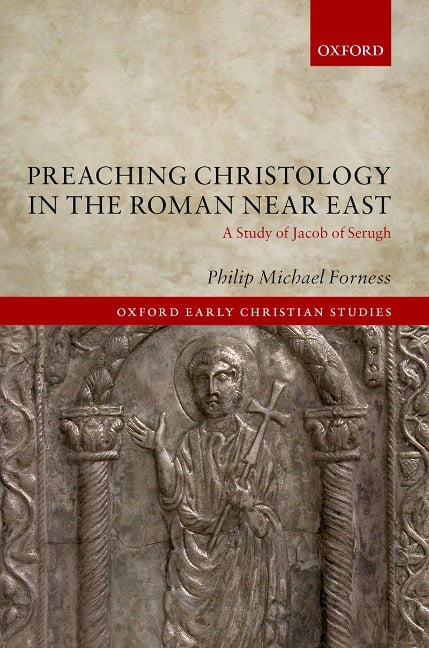
Preaching formed one of the primary, regular avenues of communication between ecclesiastical elites and a wide range of society. Clergy used homilies to spread knowledge of complex theological debates prevalent in late antique Christian discourse. Some sermons even offer glimpses into the locations in which communities gathered to hear orators preach. Although homilies survive in greater number than most other types of literature, most do not specify the setting of their initial delivery, dating, and authorship. Preaching Christology in the Roman Near East addresses how we can best contextualize sermons devoid of such information. The first chapter develops a methodology for approaching homilies that draws on a broader understanding of audience as both the physical audience and the readership of sermons. The remaining chapters offer a case study on the renowned Syriac preacher Jacob of Serugh (c. 451-521) whose metrical homilies form one of the largest sermon collections in any language from late antiquity. His letters connect him to a previously little-known Christological debate over the language of the miracles and sufferings of Christ through his correspondence with a monastery, a Roman military officer, and a Christian community in South Arabia. He uses this language in homilies on the Council of Chalcedon, on Christian doctrine, and on biblical exegesis. An analysis of these sermons demonstrates that he communicated miaphysite Christology to both elite reading communities as well as ordinary audiences. Philip Michael Forness provides a new methodology for working with late antique sermons and discloses the range of society that received complex theological teachings through preaching.
Philip Michael Forness is Post-Doctoral Researcher in Late Antique Christianity in the Near East at Goethe-Universität Frankfurt am Main. His research focuses on Christianity in the late antique Mediterranean and culture exchange between Christian communities in the Middle East and the Horn of Africa in the Middle Ages. He is interested in the transmission of ideas across linguistic boundaries, book culture and manuscript studies, and the relationship between doctrine and religious practices.
- Abbreviations - Conventions - Introduction - I: The Audience and Readership of Late Antique Homilies - II: The Christological Debates and the Miracles and Sufferings of Christ - III: Jacob of Serugh's Letters as a Context for his Homilies - IV: Homilies and Reading Communities - V: Homilies as Tools for Teaching Theology - VI: Homilies and the Spread of Christological Doctrine - Conclusion - Tables - Bibliography
Dieses eBook wird im PDF-Format geliefert und ist mit einem Adobe Kopierschutz (DRM) versehen. Sie können dieses eBook mit allen Geräten lesen, die das PDF-Format und den Adobe Kopierschutz (DRM) unterstützen.
Zum Beispiel mit den folgenden Geräten:
• tolino Reader
Laden Sie das eBook direkt über den Reader-Shop auf dem tolino herunter oder übertragen Sie das eBook auf Ihren tolino mit einer kostenlosen Software wie beispielsweise Adobe Digital Editions.
• Sony Reader & andere eBook Reader
Laden Sie das eBook direkt über den Reader-Shop herunter oder übertragen Sie das eBook mit der kostenlosen Software Sony READER FOR PC/Mac oder Adobe Digital Editions auf ein Standard-Lesegeräte mit epub- und Adobe DRM-Unterstützung.
• Tablets & Smartphones
Möchten Sie dieses eBook auf Ihrem Smartphone oder Tablet lesen, finden Sie hier unsere kostenlose Lese-App für iPhone/iPad und Android Smartphone/Tablets.
• PC & Mac
Lesen Sie das eBook direkt nach dem Herunterladen mit einer kostenlosen Lesesoftware, beispielsweise Adobe Digital Editions, Sony READER FOR PC/Mac oder direkt über Ihre eBook-Bibliothek in Ihrem Konto unter „Meine eBooks“ - „online lesen“.
Schalten Sie das eBook mit Ihrer persönlichen Adobe ID auf bis zu sechs Geräten gleichzeitig frei.
Bitte beachten Sie, dass die Kindle-Geräte das Format nicht unterstützen und dieses eBook somit nicht auf Kindle-Geräten lesbar ist.