Und dann auf "Zum Home-Bildschirm [+]".

Stöbern
genialokal zum Startbildschirm hinzufügen
Installieren Sie die genialokal App auf Ihrem Startbildschirm für einen schnellen Zugriff und eine komfortable Nutzung.
Installieren Sie die genialokal App auf Ihrem Startbildschirm für einen schnellen Zugriff und eine komfortable Nutzung.
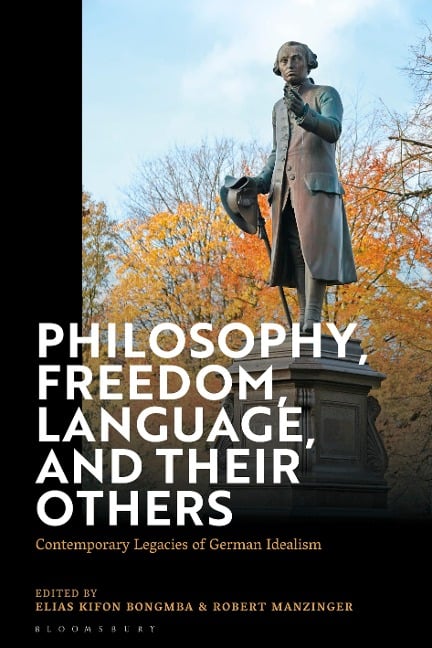
Kantian and Hegelian conceptions of freedom guide this collection of essays that engage with the linguistic turn in continental philosophy to explore contemporary interpretations of freedom. Using a broad approach to the tradition of German Idealism, this volume considers its modern recasting of philosophy as a rigorous thinking practice with profound implications for individual and communal praxis and wellbeing.
Philosophy, Freedom, Language, and its Others further cultivates and demonstrates the freedom to think and engage philosophy in a critical dialogue with other fields of inquiry. This method is exemplified in the philosophy and teaching of Professor Jere P. Surber, whom this book honors by using his interdisciplinary method as a springboard for new understandings of freedom in contemporary life.
Expert scholars working in the philosophy of language, continental philosophy of religion, ancient philosophy, critical theory, and ethics engage seminal thinkers on freedom including Plato, Kant, Hegel, Kierkegaard, and Debord to provide a diverse range of perspectives on freedom. In so doing, they address the complex legacy of philosophical freedom across subjects from contemporary media and political patrimonial culture to literary imagination and the politics of Nelson Mandela.
Elias Kifon Bongmba is Harry and Hazel Chavanne Chair in Christian Theology, and Professor of Religion, Rice University, USA.
Robert Manzinger earned his PhD from the University of Denver, USA and the Iliff School of Theology, USA.
Introduction
1. Hegel From Reason to Freedom, William Maker (Clemson University, USA)
2. Hegel's Speculative Sentence: Freedom From Presuppositions, Stephen Houlgate (Warwick University, USA)
3. The Subversive Politics of Hegel's Speculative Sentence, Jeffrey Reid (University of Ottawa, Canada)
4. Remembering the Future: Freedom From Slavery, Jared Niefts (University of Denver, USA)
5. Freedom and the Linguistic Turn in Kant's Critique of Judgment, Frank Schalow (University of New Orleans, USA)
6. Surber and Kripke on A posteriori Necessity, William Anderson
7. Freedom at Risk: Guy Debord, Donald Trump and the State of the Spectacle, Gary Percesepe (Fordham University, USA)
8. Freedom, Aesthetics, and Breaking News, Andreas Dörner (Phiipps-Universität Marburg, Germany) and Ludgera Vogt (Bergische Universität Wuppertal, Germany)
9. Kant's Language of the Sublime in Contemporary Novels and its Metacritique, Miglena Dikova-Milanova (Ghent University, Belgium)
10. Memory and the Politics of Patrimony, Shaw Smith
11. Humor as a Philosophical-Religious Boundary in Soren Kierkegaard's Concluding Unscientific Postscript, Robert Manzinger (USA)
12. Mandela's Spiritual Politics, Elias Kifon Bongmba (Rice University, USA)
Afterword by Professor Jere Surber
Index
Dieses eBook wird im PDF-Format geliefert und ist mit einem Adobe Kopierschutz (DRM) versehen. Sie können dieses eBook mit allen Geräten lesen, die das PDF-Format und den Adobe Kopierschutz (DRM) unterstützen.
Zum Beispiel mit den folgenden Geräten:
• tolino Reader
Laden Sie das eBook direkt über den Reader-Shop auf dem tolino herunter oder übertragen Sie das eBook auf Ihren tolino mit einer kostenlosen Software wie beispielsweise Adobe Digital Editions.
• Sony Reader & andere eBook Reader
Laden Sie das eBook direkt über den Reader-Shop herunter oder übertragen Sie das eBook mit der kostenlosen Software Sony READER FOR PC/Mac oder Adobe Digital Editions auf ein Standard-Lesegeräte mit epub- und Adobe DRM-Unterstützung.
• Tablets & Smartphones
Möchten Sie dieses eBook auf Ihrem Smartphone oder Tablet lesen, finden Sie hier unsere kostenlose Lese-App für iPhone/iPad und Android Smartphone/Tablets.
• PC & Mac
Lesen Sie das eBook direkt nach dem Herunterladen mit einer kostenlosen Lesesoftware, beispielsweise Adobe Digital Editions, Sony READER FOR PC/Mac oder direkt über Ihre eBook-Bibliothek in Ihrem Konto unter „Meine eBooks“ - „online lesen“.
Schalten Sie das eBook mit Ihrer persönlichen Adobe ID auf bis zu sechs Geräten gleichzeitig frei.
Bitte beachten Sie, dass die Kindle-Geräte das Format nicht unterstützen und dieses eBook somit nicht auf Kindle-Geräten lesbar ist.