Und dann auf "Zum Home-Bildschirm [+]".

Stöbern
genialokal zum Startbildschirm hinzufügen
Installieren Sie die genialokal App auf Ihrem Startbildschirm für einen schnellen Zugriff und eine komfortable Nutzung.
Installieren Sie die genialokal App auf Ihrem Startbildschirm für einen schnellen Zugriff und eine komfortable Nutzung.
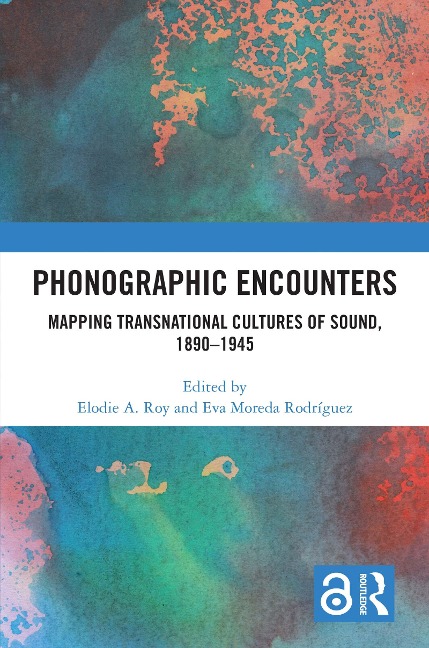
This cross-disciplinary volume illuminates the history of early phonography from a transnational perspective, recovering the myriad sites, knowledge practices, identities and discourses which dynamically shaped early recording cultures. With case studies from China, Australia, the United States, Latin America, Russia, Sweden, Germany, Spain, Portugal, France, and Italy, Phonographic Encounters explores moments of interaction and encounter, as well as tensions, between local and global understandings of recording technologies. Drawing on an array of archival sources often previously unavailable in English, it moves beyond western-centric narratives of early phonography and beyond the strict confines of the recording industry. Contributions from media history, musicology, popular music studies, cultural studies, area studies and the history of science and technology make this book a key and innovative resource for understanding early phonography against the backdrop of colonial and global power relations.
Elodie A. Roy is a media and material culture theorist. She is the author of Media, Materiality and Memory: Grounding the Groove (Routledge). Eva Moreda Rodríguez is Senior Lecturer in Musicology at the University of Glasgow and the author of two books on music and politics in Francoist Spain. Her research into early recordings in Spain has received funding from the AHRC and the British Academy.
Introduction Part I: Negotiating Geographical and Cultural Boundaries: Intermediaries, Traders and Operators Chapter 1. Sergio Ospina Romero, "Recording Studios on Tour: Traveling Ventures at the Dawn of the Music Industry" Chapter 2. Andreas Steen, "Global Transfer, Local Realities: Early Phonographic Practices and Challenges in China (1900-1914)" Chapter 3. Henry Reese, "Settler Colonial Soundscapes: Phonograph Demonstrations in 1890s Australia" Part II: Repertoires, Auditory Practices and the Shaping of New Listening Identities Chapter 4. João Silva, "Portugal and Mechanical Music in the Early Phonographic Era: An Intermedial Approach" Chapter 5. Eva Moreda Rodríguez, "Discòfils: Notes on the Birth of the Record Club and the Record Listener in 1930s Barcelona" Chapter 6. Ulrik Volgsten, "Mediatization of Music, Musicalization of Everyday Life: New Ways of Listening to Recorded Sound in Sweden during the Interwar Years, 1919-1939" Part III: Phonography and the Reordering of Knowledge and Sensibilities / Phonography as Ideology Chapter 7. Karina Zybina, "Recording music, making business: The Russian recording industry at the beginning of the 20th century" Chapter 8. Benedetta Zucconi, "'Phonographic Awareness': Recorded Sound in Early Twentieth-Century Italy between Aesthetic Questions and Economic Struggles" Chapter 9. Britta Lange, "The Construction of "das Volk" through Acoustic Knowledge. Recordings of "Ethnic German Repatriates" from the Institute for Acoustic Research, 1940-1941" Part IV: The Heterogeneous Geographies of Consumption Chapter 10. Jacques Vest, "The Aesthetic of Arrest: The Victor Talking Machine Company's Ready Made Windows Program, 1909-1913" Chapter 11. Siel Agugliaro, "The Phonograph as a Transnational Tool: Selling Music Records in Philadelphia's Little Italy, 1900s-1920s" Chapter 12. Thomas Henry, "From the Grands Boulevards to Montparnasse: An Essay on the Geohistory of the Phonograph and Sound Recording Business in Paris (1878-1940)" Conclusion
Dieses eBook wird im PDF-Format geliefert und ist mit einem Adobe Kopierschutz (DRM) versehen. Sie können dieses eBook mit allen Geräten lesen, die das PDF-Format und den Adobe Kopierschutz (DRM) unterstützen.
Zum Beispiel mit den folgenden Geräten:
• tolino Reader
Laden Sie das eBook direkt über den Reader-Shop auf dem tolino herunter oder übertragen Sie das eBook auf Ihren tolino mit einer kostenlosen Software wie beispielsweise Adobe Digital Editions.
• Sony Reader & andere eBook Reader
Laden Sie das eBook direkt über den Reader-Shop herunter oder übertragen Sie das eBook mit der kostenlosen Software Sony READER FOR PC/Mac oder Adobe Digital Editions auf ein Standard-Lesegeräte mit epub- und Adobe DRM-Unterstützung.
• Tablets & Smartphones
Möchten Sie dieses eBook auf Ihrem Smartphone oder Tablet lesen, finden Sie hier unsere kostenlose Lese-App für iPhone/iPad und Android Smartphone/Tablets.
• PC & Mac
Lesen Sie das eBook direkt nach dem Herunterladen mit einer kostenlosen Lesesoftware, beispielsweise Adobe Digital Editions, Sony READER FOR PC/Mac oder direkt über Ihre eBook-Bibliothek in Ihrem Konto unter „Meine eBooks“ - „online lesen“.
Schalten Sie das eBook mit Ihrer persönlichen Adobe ID auf bis zu sechs Geräten gleichzeitig frei.
Bitte beachten Sie, dass die Kindle-Geräte das Format nicht unterstützen und dieses eBook somit nicht auf Kindle-Geräten lesbar ist.