Und dann auf "Zum Home-Bildschirm [+]".

Stöbern
genialokal zum Startbildschirm hinzufügen
Installieren Sie die genialokal App auf Ihrem Startbildschirm für einen schnellen Zugriff und eine komfortable Nutzung.
Installieren Sie die genialokal App auf Ihrem Startbildschirm für einen schnellen Zugriff und eine komfortable Nutzung.


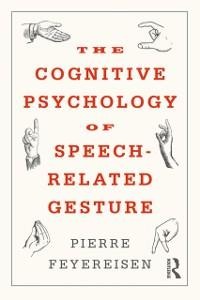
Why do we gesture when we speak? The Cognitive Psychology of Speech-Related Gesture offers answers to this question while introducing readers to the huge interdisciplinary field of gesture. Drawing on ideas from cognitive psychology, this book highlights key debates in gesture research alongside advocating new approaches to conventional thinking. Beginning with the definition of the notion of communication, this book explores experimental approaches to gesture production and comprehension, the possible gestural origin of language and its implication for brain organization, and the development of gestural communication from infancy to childhood. Through these discussions the author presents the idea that speech-related gestures are not just peripheral phenomena, but rather a key function of the cognitive architecture, and should consequently be studied alongside traditional concepts in cognitive psychology. The Cognitive Psychology of Speech Related Gesture offers a broad overview which will be essential reading for all students of gesture research and language, as well as speech therapists, teachers and communication practitioners. It will also be of interest to anybody who is curious about why we move our bodies when we talk.
Pierre Feyereisen is Honorary Research Director of the Fund for Scientific Research - FNRS, Psychological Sciences Research Institute in Belgium.
Foreword 1. Introduction: Matters of terminology and of philosophy. What is gestural communication about?. Gestures, actions, movements, signs. Analyses of communication: codes, inferences, social influences. Why are cognitive psychologists interested in gestural communication? The diversity of disciplines. Cognitive approaches: the nature of thought. Mental mechanisms. Research questions - Plan. 2. Speaking hands: inventory of forms and functions. Pioneers. Wilhelm Wundt (1900): gestures as mental representations. David Efron (1941): discourse marking by hand movements. Nonverbal behaviour, a wide-ranging topic. Current perspectives. Gesticulation and autonomous gestures: break or continuity? Gestures of monologue and dialogue. Gesture infancy. Gesture impairments in case of brain damages. Beyond "chirocentrism" 3. Ghosts in the machine : models of gesture processing. Translucent architectures: gestures reveal thought. Adam Kendon and the ethnography of communicative action. Susan Goldin-Meadow: gesture as a window on the mind. Information processing models. Dynamical models. Pragmatic approaches. Conclusions 4. Production mechanisms. Do the speakers take perspective of their addressee when they gesture? Social context. Common ground. Why do some spoken utterances involve gestures whereas others do not? Activation of visuo-spatial and motor imagery. Problems in lexical access and in conceptualization. Performing gestures or not: effects on speech production. How do spoken and gestural production co-operate? Physical characteristics of oral and manual movements. Temporal relationships between gestures and speech. Conclusions: cooperative or competitive relationships? 5. The impact of gestures on speech comprehension. Is message comprehension influenced by the gestures of the speaker? How visual and auditory information is integrated in verbal comprehension? Electrophysiological approaches. 6. Evolution and neuropsychology of gestures. Does human speech stem out manual skills? Does gestures and speech involve the same brain regions? Manual preferences in speech-related gestures. Gesture use by persons suffering from brain lesions. Neuroimagery of gestural communication. 7. The development of gestural communication. How do babies learn to read minds and to communicate their intentions? What is the role of gestures in language acquisition? Gesture use and atypical language development. 8. Final remarks
Dieses eBook wird im PDF-Format geliefert und ist mit einem Adobe Kopierschutz (DRM) versehen. Sie können dieses eBook mit allen Geräten lesen, die das PDF-Format und den Adobe Kopierschutz (DRM) unterstützen.
Zum Beispiel mit den folgenden Geräten:
• tolino Reader
Laden Sie das eBook direkt über den Reader-Shop auf dem tolino herunter oder übertragen Sie das eBook auf Ihren tolino mit einer kostenlosen Software wie beispielsweise Adobe Digital Editions.
• Sony Reader & andere eBook Reader
Laden Sie das eBook direkt über den Reader-Shop herunter oder übertragen Sie das eBook mit der kostenlosen Software Sony READER FOR PC/Mac oder Adobe Digital Editions auf ein Standard-Lesegeräte mit epub- und Adobe DRM-Unterstützung.
• Tablets & Smartphones
Möchten Sie dieses eBook auf Ihrem Smartphone oder Tablet lesen, finden Sie hier unsere kostenlose Lese-App für iPhone/iPad und Android Smartphone/Tablets.
• PC & Mac
Lesen Sie das eBook direkt nach dem Herunterladen mit einer kostenlosen Lesesoftware, beispielsweise Adobe Digital Editions, Sony READER FOR PC/Mac oder direkt über Ihre eBook-Bibliothek in Ihrem Konto unter „Meine eBooks“ - „online lesen“.
Schalten Sie das eBook mit Ihrer persönlichen Adobe ID auf bis zu sechs Geräten gleichzeitig frei.
Bitte beachten Sie, dass die Kindle-Geräte das Format nicht unterstützen und dieses eBook somit nicht auf Kindle-Geräten lesbar ist.