Und dann auf "Zum Home-Bildschirm [+]".

Stöbern
genialokal zum Startbildschirm hinzufügen
Installieren Sie die genialokal App auf Ihrem Startbildschirm für einen schnellen Zugriff und eine komfortable Nutzung.
Installieren Sie die genialokal App auf Ihrem Startbildschirm für einen schnellen Zugriff und eine komfortable Nutzung.
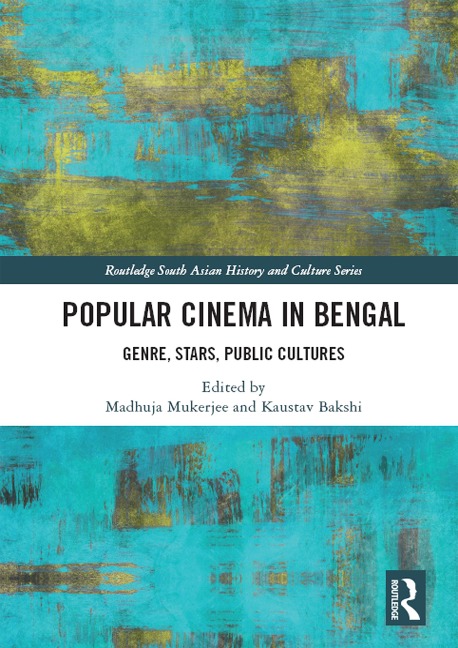
Popular Cinema in Bengal marks a decisive turn in studies of Bengali language cinema by shifting the focus from auteur and text-based studies to exhaustive readings of the film industry. The book covers a wide range of themes and issues, including: generic tropes (like comedy and action); iconic figurations (of the detective and the city); (female) stars such as Kanan Bala, Sadhana Bose and Aparna Sen; intensities of public debates (subjects of high and low cultures, taste, viewership, gender and sexuality); print cultures (including posters, magazines and song-booklets); cinematic spaces; and trans-media and trans-cultural traffic. By locating cinema within the crosscurrents of geo-political transformations, the book highlights the new and persuasive research that has materialised over the last decade. The authors raise pertinent questions regarding 'regional' cinema as a category, in relation to 'national' cinema models, and trace the non-linear journey of the popular via multiple (media) trajectories. They address subjects of physicality, sexuality and its representations, industrial change, spaces of consumption, and cinema's meandering directions through global circuits and low-end networks. Highlighting the ever-changing contours of cinema in Bengal in all its popular forms and proposing a new historiography, Popular Cinema in Bengal will be of great interest to scholars of film studies and South-Asian popular culture. The chapters were originally published in the journal South Asian History and Culture.
Madhuja Mukherjee is Associate Professor of Film Studies at Jadavpur University, India. Her publications include New Theatres Ltd.: The Emblem of Art, The Picture of Success (2009), Aural Films, Oral Cultures (2012), and the award-winning anthology Voices of the Talking Stars (2017). She is co-editor of Industrial Networks and Cinemas of India (forthcoming). Kaustav Bakshi is Assistant Professor in the Department of English at Jadavpur University, India. A Charles Wallace Fellow, he has worked on Anglophone Sri Lankan Literature for his doctoral thesis. His published books include Anxieties, Influences and After: Critical Responses to Postcolonialism and Neocolonialism (2009) and Rituparno Ghosh: Cinema, Gender, and Art (2017).
1. Introduction: A brief introduction to popular cinema in Bengal: genre, stardom, public cultures Part I: Styles, Stars and Popular Forms 2. Rethinking popular cinema in Bengal (1930s-1950s): of literariness, comic mode, mythological and other avatars 3. Kanan Devi: a Bengali star 4. Performing the region: Sadhona Bose and the modern Bengali film dance 5. A postcolonial iconi-city: Re-reading Uttam Kumar's cinema as metropolar melodrama 6. Filmfare and the question of Bengali cinema (1955-65) 7. From Teen Kanya to Arshinagar: feminist politics, Bengali high culture and the stardom of Aparna Sen 8. The action heroes of Bengali cinema: industrial, technological and aesthetic determinants of popular film culture, 1980s-1990s Part II: Ray and Felu Mittir, the private detective 9. Feluda on Feluda: a letter to Topshe 10. Reviewing 'Feluda on Feluda': Maganlal Meghraj 'Writes Back' to Tapesh 11. Negotiating mobility and media: the contemporary digital afterlives of Feluda Part III: Photo Essays: Public Cultures 12. A booklets sequence 13. Inside a dark hall: space, place, and accounts of some single-theatres in Kolkata 14. Rituparno Ghosh, performing arts and a queer legacy: an abiding stardom 15. A Rendezvous with the Ghosh Brothers: A Sneak Peek into Bengal's Homegrown Exploitation Cinema
Dieses eBook wird im PDF-Format geliefert und ist mit einem Adobe Kopierschutz (DRM) versehen. Sie können dieses eBook mit allen Geräten lesen, die das PDF-Format und den Adobe Kopierschutz (DRM) unterstützen.
Zum Beispiel mit den folgenden Geräten:
• tolino Reader
Laden Sie das eBook direkt über den Reader-Shop auf dem tolino herunter oder übertragen Sie das eBook auf Ihren tolino mit einer kostenlosen Software wie beispielsweise Adobe Digital Editions.
• Sony Reader & andere eBook Reader
Laden Sie das eBook direkt über den Reader-Shop herunter oder übertragen Sie das eBook mit der kostenlosen Software Sony READER FOR PC/Mac oder Adobe Digital Editions auf ein Standard-Lesegeräte mit epub- und Adobe DRM-Unterstützung.
• Tablets & Smartphones
Möchten Sie dieses eBook auf Ihrem Smartphone oder Tablet lesen, finden Sie hier unsere kostenlose Lese-App für iPhone/iPad und Android Smartphone/Tablets.
• PC & Mac
Lesen Sie das eBook direkt nach dem Herunterladen mit einer kostenlosen Lesesoftware, beispielsweise Adobe Digital Editions, Sony READER FOR PC/Mac oder direkt über Ihre eBook-Bibliothek in Ihrem Konto unter „Meine eBooks“ - „online lesen“.
Schalten Sie das eBook mit Ihrer persönlichen Adobe ID auf bis zu sechs Geräten gleichzeitig frei.
Bitte beachten Sie, dass die Kindle-Geräte das Format nicht unterstützen und dieses eBook somit nicht auf Kindle-Geräten lesbar ist.