Und dann auf "Zum Home-Bildschirm [+]".

Stöbern
genialokal zum Startbildschirm hinzufügen
Installieren Sie die genialokal App auf Ihrem Startbildschirm für einen schnellen Zugriff und eine komfortable Nutzung.
Installieren Sie die genialokal App auf Ihrem Startbildschirm für einen schnellen Zugriff und eine komfortable Nutzung.
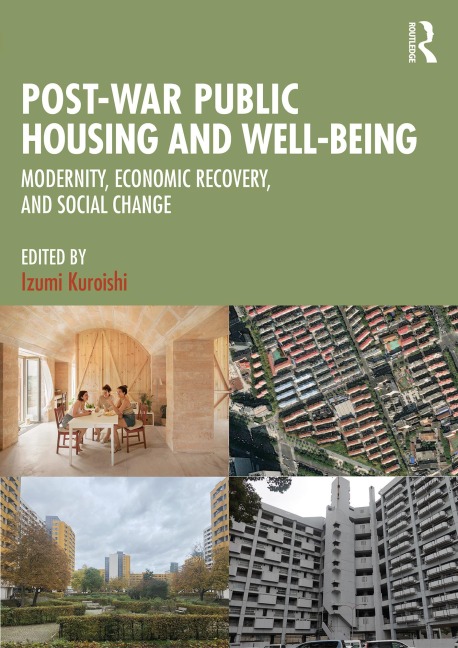
This collection illustrates the evolving role of housing as a symbol of modernity, a tool for economic recovery and a response to societal transitions. It argues that understanding earlier efforts to integrate well-being in the twentieth century can provide valuable insights for contemporary actors in the built environment who are working to address these issues today. As such, it explores and shines light on this lesser-known history, drawing on case studies, it focuses on the intersection of public housing, well-being and social change in the aftermath of the Second World War. With case studies from the UK, US, Singapore, Japan, Germany, China and Spain, this volume provides insights into how these countries have shaped the values, designs and institutions of their dwellings. By incorporating diverse cultural contexts, it contributes to a nuanced understanding of housing dynamics and well-being. Through a multidisciplinary lens, this volume encourages a re-evaluation of living conditions and fundamental values, emphasising the dynamic interplay between humans, their social environment and diverse living environments. This book is essential for scholars, researchers, professionals, students, policymakers and practitioners in cultural history, architecture, planning, urban studies, sociology, education and public policy.
Izumi Kuroishi is a Professor at Fukushima Gakuin University and is the chair of Japan Lifeology Academy.
Introduction Section 1: Well-Being and Social Ethos 1. How Do People Want to Live?': Catherine Bauer and Social Questions in Modern American Housing 2. Ideas of Health and Well-Being as Understood and Applied in the Design and Planning of Post-War British Public Housing 3. The Idea of Life (Seikatsu) and Well-Being in Japanese Pre- and Post-War Housing Section 2: Well-Being, Urban Space and Accessibility 4. Designing for Well-Being in Large Housing Estates in East and West Berlin: Märkisches Viertel and Marzahn 5. The Impact of Housing Access Policies on Wellbeing in Spain 6. Nishiyama Uzo: Writing for Housing and Planning for Well-Being in Post-War Japan Section 3: Well-Being, Ideological and Personal Affluence 7. The Impact of Well-Being on Housing Policies and the Consumption of Durable Goods in Postwar West Germany 8. Post-War Housing and the Concept of Wellbeing: A Comparison of the United States and China 9. Housing Security and Policy over the Long Run, Japan 1600-2000 Section 4: Well-Being in the 21st Century 10. Well-Rounded Well-Being: The Low-Carbon Bioclimatic Architecture of the Balearic Housing Institute 11. Living Together with Dementia: Domestic Rearrangements
Dieses eBook wird im PDF-Format geliefert und ist mit einem Adobe Kopierschutz (DRM) versehen. Sie können dieses eBook mit allen Geräten lesen, die das PDF-Format und den Adobe Kopierschutz (DRM) unterstützen.
Zum Beispiel mit den folgenden Geräten:
• tolino Reader
Laden Sie das eBook direkt über den Reader-Shop auf dem tolino herunter oder übertragen Sie das eBook auf Ihren tolino mit einer kostenlosen Software wie beispielsweise Adobe Digital Editions.
• Sony Reader & andere eBook Reader
Laden Sie das eBook direkt über den Reader-Shop herunter oder übertragen Sie das eBook mit der kostenlosen Software Sony READER FOR PC/Mac oder Adobe Digital Editions auf ein Standard-Lesegeräte mit epub- und Adobe DRM-Unterstützung.
• Tablets & Smartphones
Möchten Sie dieses eBook auf Ihrem Smartphone oder Tablet lesen, finden Sie hier unsere kostenlose Lese-App für iPhone/iPad und Android Smartphone/Tablets.
• PC & Mac
Lesen Sie das eBook direkt nach dem Herunterladen mit einer kostenlosen Lesesoftware, beispielsweise Adobe Digital Editions, Sony READER FOR PC/Mac oder direkt über Ihre eBook-Bibliothek in Ihrem Konto unter „Meine eBooks“ - „online lesen“.
Schalten Sie das eBook mit Ihrer persönlichen Adobe ID auf bis zu sechs Geräten gleichzeitig frei.
Bitte beachten Sie, dass die Kindle-Geräte das Format nicht unterstützen und dieses eBook somit nicht auf Kindle-Geräten lesbar ist.