Und dann auf "Zum Home-Bildschirm [+]".

Stöbern
genialokal zum Startbildschirm hinzufügen
Installieren Sie die genialokal App auf Ihrem Startbildschirm für einen schnellen Zugriff und eine komfortable Nutzung.
Installieren Sie die genialokal App auf Ihrem Startbildschirm für einen schnellen Zugriff und eine komfortable Nutzung.
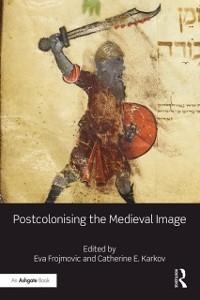
Postcolonial theories have transformed literary, historical and cultural studies over the past three decades. Yet the study of medieval art and visualities has, in general, remained Eurocentric in its canon and conservative in its approaches. 'Postcolonising', as the eleven essays in this volume show, entails active intervention into the field of medieval art history and visual studies through a theoretical reframing of research. This approach poses and elicits new research questions, and tests how concepts current in postcolonial studies - such as diaspora and migration, under-represented artistic cultures, accented art making, displacement, intercultural versus transcultural, hybridity, presence/absence - can help medievalists to reinvigorate the study of art and visuality. Postcolonial concepts are deployed in order to redraft the canon of medieval art, thereby seeking to build bridges between medievalist and modernist communities of scholars. Among the varied topics explored in the volume are the appropriation of Roman iconography by early medieval Scandinavian metalworkers, multilingualism and materiality in Anglo-Saxon culture, the circulation and display of Islamic secular ceramics on Pisan churches, cultural negotiation by Jewish minorities in Central Europe and the Iberian peninsula, Holy Land maps and medieval imaginative geography, and the uses of Thomas Becket in the colonial imaginary of the Plantagenet court.
Eva Frojmovic is Lecturer in the School of Fine Art, History of Art and Cultural Studies at University of Leeds. She specialises in medieval Jewish art and manuscript illumination. She is also Director of the Centre for Jewish Studies. She edited the collection Imagining the Self, Imagining the Other: Visual Representation and Jewish Culture in the Middle Ages and Early Modern Period (Leiden: Brill, 2002). Catherine E. Karkov is Chair of Art History at the University of Leeds and has published widely on Insular and Anglo-Saxon art and archaeology. She is the author of Text and Picture in Anglo-Saxon England: Narrative Strategies in the Junius 11 Manuscript (Cambridge: Cambridge University Press, 2001), The Ruler Portraits of Anglo-Saxon England (Woodbridge: Boydell Press, 2004), and The Art of Anglo-Saxon England (Boydell Press, 2011).
Contents Introduction Eva Frojmovic and Catherine E. Karkov Part 1 The language of the postcolonial Chapter 1. Decolonising gold bracteates: From Late Roman medallions to Scandinavian Migration Period pendants Nancy L. Wicker Chapter 2. The Franks Casket speaks back: The bones of the past, the becoming of England Catherine E. Karkov Chapter 3. Camouflaging and echoing the Latin mass in an illuminated French-language missal Margaret E. Hadley Part 2 The location of the postcolonial Chapter 4. Mandeville's Jews, colonialism, certainty, and art history Asa Simon Mittman Chapter 5. Conquest and coexistence in sixteenth-century Granada: Imposing orders in the Alhambra's Mexuar Lara Eggleton Chapter 6. Beyond Foucault's laugh: On the ethical practice of medieval art history Roland Betancourt Part 3 The ambivalence of the postcolonial Chapter 7. Postcolonising Thomas Becket: The saint as resistant site Alyce A. Jordan Chapter 8. Defining a merchant identity and aesthetic in Pisa: Muslim ceramics as commodities, mementos, and architectural decoration on eleventh-century churches Karen Rose Mathews Chapter 9. The Muslim warrior at the Seder meal: Dynamics between minorities in the Rylands Haggadah Jane Barlow Chapter 10. Neighbouring and mixta in thirteenth-century Ashkenaz Eva Frojmovic Bibliography Index
Dieses eBook wird im PDF-Format geliefert und ist mit einem Adobe Kopierschutz (DRM) versehen. Sie können dieses eBook mit allen Geräten lesen, die das PDF-Format und den Adobe Kopierschutz (DRM) unterstützen.
Zum Beispiel mit den folgenden Geräten:
• tolino Reader
Laden Sie das eBook direkt über den Reader-Shop auf dem tolino herunter oder übertragen Sie das eBook auf Ihren tolino mit einer kostenlosen Software wie beispielsweise Adobe Digital Editions.
• Sony Reader & andere eBook Reader
Laden Sie das eBook direkt über den Reader-Shop herunter oder übertragen Sie das eBook mit der kostenlosen Software Sony READER FOR PC/Mac oder Adobe Digital Editions auf ein Standard-Lesegeräte mit epub- und Adobe DRM-Unterstützung.
• Tablets & Smartphones
Möchten Sie dieses eBook auf Ihrem Smartphone oder Tablet lesen, finden Sie hier unsere kostenlose Lese-App für iPhone/iPad und Android Smartphone/Tablets.
• PC & Mac
Lesen Sie das eBook direkt nach dem Herunterladen mit einer kostenlosen Lesesoftware, beispielsweise Adobe Digital Editions, Sony READER FOR PC/Mac oder direkt über Ihre eBook-Bibliothek in Ihrem Konto unter „Meine eBooks“ - „online lesen“.
Schalten Sie das eBook mit Ihrer persönlichen Adobe ID auf bis zu sechs Geräten gleichzeitig frei.
Bitte beachten Sie, dass die Kindle-Geräte das Format nicht unterstützen und dieses eBook somit nicht auf Kindle-Geräten lesbar ist.