Und dann auf "Zum Home-Bildschirm [+]".

Stöbern
genialokal zum Startbildschirm hinzufügen
Installieren Sie die genialokal App auf Ihrem Startbildschirm für einen schnellen Zugriff und eine komfortable Nutzung.
Installieren Sie die genialokal App auf Ihrem Startbildschirm für einen schnellen Zugriff und eine komfortable Nutzung.
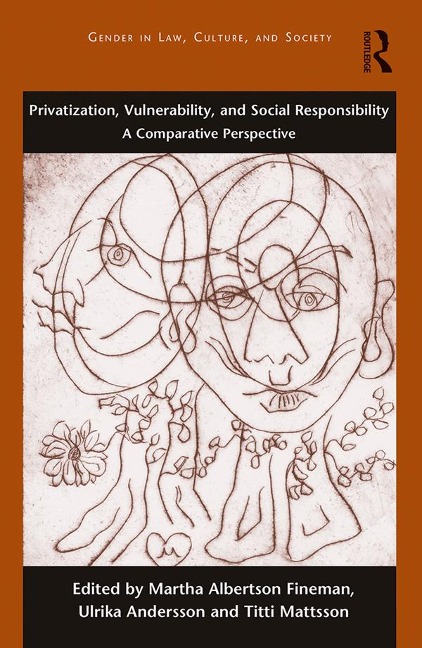
Taking a cross-cultural perspective, this book explores how privatization and globalization impact contemporary feminist and social justice approaches to public responsibility. Feminist legal theorists have long problematized divisions between the private and the political, an issue with growing importance in a time when the welfare state is under threat in many parts of the world and private markets and corporations transcend national boundaries. Because vulnerability analysis emphasizes our interdependency within social institutions and the need for public responsibility for our shared vulnerability, it can highlight how neoliberal policies commodify human necessities, channeling unprofitable social relationships, such as caretaking, away from public responsibility and into the individual private family. This book uses comparative analyses to examine how these dynamics manifest across different legal cultures. By highlighting similarities and differences in legal responses to vulnerability, this book provides important insights and arguments against the privatization of social need and for a more responsive state.
Martha Albertson Fineman is Robert W. Woodruff Professor of Law at Emory University. A leading authority on family law and feminist jurisprudence, Fineman is the founding director of the Feminism and Legal Theory Project, an interdisciplinary scholarly project she began at the University of Wisconsin in 1984. Since 2007, she also directs Emory's Vulnerability and the Human Condition Initiative, an interdisciplinary project housed in the Laney Graduate School. Her scholarly work focuses on various aspects of the legal regulation of intimacy and on the social, cultural, and legal implications of human dependency and vulnerability and includes The Neutered Mother, The Sexual Family and Other Twentieth Century Tragedies (1995) and The Autonomy Myth: A Theory of Dependency (2004). Titti Mattsson is Professor in Public Law, working as a researcher and teacher in public law, social welfare law, and family law at the Faculty of Law at Lund University, Sweden. Her research interests are Social Welfare law, Medical Law, Child law, Elder Law and Data Protection Law. Ulrika Andersson is Associate Professor in Criminal Law at the Faculty of Law, Lund University, working as a teacher and researcher in criminal law and criminal procedural law. Her main research focuses broadly on questions concerning law and power. She is particularly interested in issues of sexuality and gender, in addition to power relations in regard to class and ethnicity.
1. Introduction I. Analyzing Privatization 2. Three Faces of Privatization 3. Big Government Against Social Responsibility: A Vulnerability Critique of Privatization's Public Priorities 4. Rethinking Responsibility in Private Law 5. In the Land of Choice: Privatized Reality and Contractual Vulnerability II. Privatization and Corporatization 6. Entrepreneurial Subjectivity, the Privatization of Risk, and the Ethics of Vulnerability 7. Privatizing Hoodia: Patent Ownership, Benefit Sharing, and Indigenous Knowledge in Southern Africa 8. Credit Counselling in Canada: An Empirical Examination 9. Privatizing and Corporatizing the University: A U.S. and UK Comparison III. Privatization of Public Services 10. Freedom of Choice over Equality as Objective for the Swedish Welfare State? The Latest Debate on Choice in Education 11. Privatization in the Human Services: Impact on the Front Lines and the Ground Floor 12. Still a responsive state? 13. E-government for the distribution of public services in Sweden: Privatization, Vulnerability and Social Responsibility reshaped 14. What does privatization mean for women in Uganda? IV. Privatization of the Coercive Power of the State 15. The Human Right to Dignity and Commodification of Prisoners: Considering Worldwide Challenges to Prison Privatization 16. Gendered Aspects of Privatizing Force in Counterinsurgent Warfare 17. Harmed selves harming others - A vulnerability approach to the criminal justice system
Dieses eBook wird im PDF-Format geliefert und ist mit einem Adobe Kopierschutz (DRM) versehen. Sie können dieses eBook mit allen Geräten lesen, die das PDF-Format und den Adobe Kopierschutz (DRM) unterstützen.
Zum Beispiel mit den folgenden Geräten:
• tolino Reader
Laden Sie das eBook direkt über den Reader-Shop auf dem tolino herunter oder übertragen Sie das eBook auf Ihren tolino mit einer kostenlosen Software wie beispielsweise Adobe Digital Editions.
• Sony Reader & andere eBook Reader
Laden Sie das eBook direkt über den Reader-Shop herunter oder übertragen Sie das eBook mit der kostenlosen Software Sony READER FOR PC/Mac oder Adobe Digital Editions auf ein Standard-Lesegeräte mit epub- und Adobe DRM-Unterstützung.
• Tablets & Smartphones
Möchten Sie dieses eBook auf Ihrem Smartphone oder Tablet lesen, finden Sie hier unsere kostenlose Lese-App für iPhone/iPad und Android Smartphone/Tablets.
• PC & Mac
Lesen Sie das eBook direkt nach dem Herunterladen mit einer kostenlosen Lesesoftware, beispielsweise Adobe Digital Editions, Sony READER FOR PC/Mac oder direkt über Ihre eBook-Bibliothek in Ihrem Konto unter „Meine eBooks“ - „online lesen“.
Schalten Sie das eBook mit Ihrer persönlichen Adobe ID auf bis zu sechs Geräten gleichzeitig frei.
Bitte beachten Sie, dass die Kindle-Geräte das Format nicht unterstützen und dieses eBook somit nicht auf Kindle-Geräten lesbar ist.