Und dann auf "Zum Home-Bildschirm [+]".

Stöbern
genialokal zum Startbildschirm hinzufügen
Installieren Sie die genialokal App auf Ihrem Startbildschirm für einen schnellen Zugriff und eine komfortable Nutzung.
Installieren Sie die genialokal App auf Ihrem Startbildschirm für einen schnellen Zugriff und eine komfortable Nutzung.
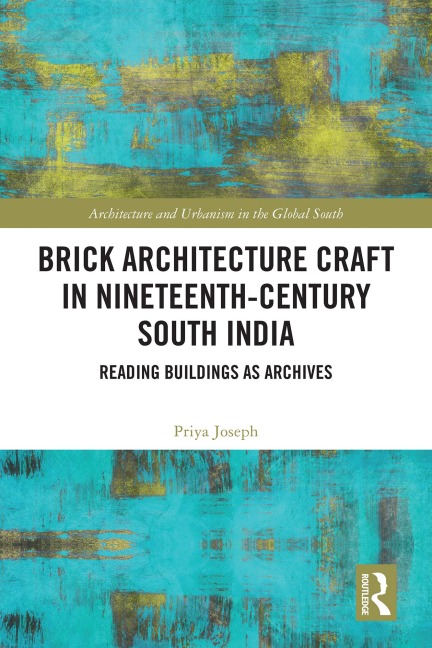
This book explores brick architecture of the nineteenth century in South India, through the lens of tectonics and materiality. The book is a diachronically elaborated history of brick architecture, especially analysing the hybridity due to the indigenous and colonial intersections of nineteenth-century India. It offers a decolonial reading of architecture through meticulous measured drawings as a tool and presents an argument for reading buildings as archives. South India has thousands of dilapidated buildings, which may be erased due to neglect, laxed laws and ignorance. The book exposes the tectonics, fixing, material choices, socio-political circumstances of this architecture in brick. This method of analysing the dilapidated buildings as an archive of construction, forefronts the 'makers' and the agency of the local craftspeople rather than an Anglo-centric gaze. Brick buildings such as the extravagantly ornamental and structurally rich Chatrams of Thanjavur, Rosary Church, Hassan and Fort School, Bengaluru, are some of the many cases elaborated in the book. The book connects the history of brick to its many contemporary challenges and manifestations. The book is intended for students and scholars of architecture, history, material-culture, colonial studies and the Global South as well as anyone interested in brick as material for architecture.
Priya Joseph teaches at Srishti Manipal Institute of Art, Design and Technology, MAHE, Bengaluru, India, and is an architect by training. Her work transects architectural history, urban ecologies, art and design in the urban, and material culture. She has published widely on architecture, and materiality, including Terracotta People (2024) and Rupturing Terracotta: Entangled Exchanges of the Hand and the Machine in South India (2022).
List of figures List of abbreviations Acknowledgements Glossary Part 1: Reading the Archive Chapter 1: The Humble Brick: Material for a Billion - Brick: Construction Material for a Billion - The Decolonial Lens - Hybridity - Standardisation, Mechanisation, Automation - Brick: Contemporary Challenges - Structure and Themes of the Book Chapter 2: Precolonial to Colonial: History of Brick in the Indian Subcontinent - Bricks: Indus to the Nineteenth-century Colonial India - Regional Variations - Missionaries and Factories - Terracotta/Fired Earth: Colonisers Trailing the Missionaries - Terracotta Brick and Tile Industry in Mangalore - The Basel Mission Printing Press - Other Terracotta Tiles Chapter 3: Nineteenth-Century Conversations between the Indigenous and the Colonial - Introduction - Methods and Manuals - The Anthropology of Bricks: Brick-makers of Burma - Coloured Bricks - Well Sinkers: Manual to Mechanised - Brick, Mortar and Plasters of the Nineteenth-century India - Colonial Coercion - The Old and the New Archives Part 2: Drawing the Archives Chapter 4: Why Read and Draw Buildings as Archives? - Traditional Taxonomy in Architectural History - What is an Archive? - Technique and Material as an Anchor of Architectural Analysis - Brick in Focus - The Hidden Historical Archives in the Tectonic Making of Architecture - Tracing the Intersections - A Case Study Method - Manual Measured Drawings Versus Advanced Digital Techniques - Handmade versus Machine-made - The Decolonial Shift Chapter 5: Hybridity: Materiality and Tectonic of the Chatrams of Thanjavur - Introduction - Cases in Brick - Chatrams of Thanjavur - Why are the Chatrams of Thanjavur Important? - Sculptural and Assembled Derivation in Architecture - Muktambal (1801) and Yamunambal Chatrams, Thanjavur (1761) - Typology - Details in Brick - Vennar (1779), Kalyana Mahal (1832) and Shreyas Chatrams (1837) - Details in Brick - Column, Openings and Walls in Brick - Hybridity Chapter 6: Brick Tectonics of a Church, a School and a Market - Rosary Church of Shettihalli, 1810-1880 - Brick Ruins and the Story of Technology - Typology and Drawings - Elements of Architecture - Tracing Hybridity Through Drawing - The Red Kirk at Bengaluru, 1864 - Fort School, Bengaluru, 1907 - Typology and Drawings - Elements of Architecture - Material Technique and Columns - New Material and Traditional Skills - Devaraja Market, Mysore, Karnataka, 1900 - Typology and Drawings - Elements of Architecture - Roofs with Steel Chapter 7: Future: Contemporary Architecture with Bricks and Adobe - Standardisation: A Consequence of Nineteenth-century Mass Production - Twentieth-century Experiments in Brick - Contemporary Brick Architecture in South Asia - Brick in the Forefront - Conclusion Index
Dieses eBook wird im PDF-Format geliefert und ist mit einem Adobe Kopierschutz (DRM) versehen. Sie können dieses eBook mit allen Geräten lesen, die das PDF-Format und den Adobe Kopierschutz (DRM) unterstützen.
Zum Beispiel mit den folgenden Geräten:
• tolino Reader
Laden Sie das eBook direkt über den Reader-Shop auf dem tolino herunter oder übertragen Sie das eBook auf Ihren tolino mit einer kostenlosen Software wie beispielsweise Adobe Digital Editions.
• Sony Reader & andere eBook Reader
Laden Sie das eBook direkt über den Reader-Shop herunter oder übertragen Sie das eBook mit der kostenlosen Software Sony READER FOR PC/Mac oder Adobe Digital Editions auf ein Standard-Lesegeräte mit epub- und Adobe DRM-Unterstützung.
• Tablets & Smartphones
Möchten Sie dieses eBook auf Ihrem Smartphone oder Tablet lesen, finden Sie hier unsere kostenlose Lese-App für iPhone/iPad und Android Smartphone/Tablets.
• PC & Mac
Lesen Sie das eBook direkt nach dem Herunterladen mit einer kostenlosen Lesesoftware, beispielsweise Adobe Digital Editions, Sony READER FOR PC/Mac oder direkt über Ihre eBook-Bibliothek in Ihrem Konto unter „Meine eBooks“ - „online lesen“.
Schalten Sie das eBook mit Ihrer persönlichen Adobe ID auf bis zu sechs Geräten gleichzeitig frei.
Bitte beachten Sie, dass die Kindle-Geräte das Format nicht unterstützen und dieses eBook somit nicht auf Kindle-Geräten lesbar ist.