Und dann auf "Zum Home-Bildschirm [+]".

Stöbern
genialokal zum Startbildschirm hinzufügen
Installieren Sie die genialokal App auf Ihrem Startbildschirm für einen schnellen Zugriff und eine komfortable Nutzung.
Installieren Sie die genialokal App auf Ihrem Startbildschirm für einen schnellen Zugriff und eine komfortable Nutzung.

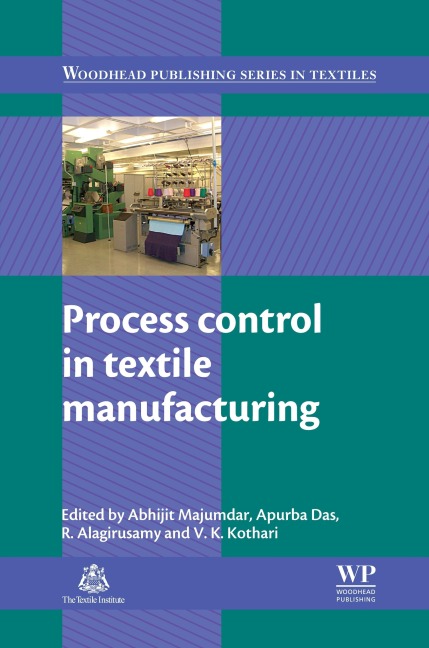
Complex raw materials and manufacturing processes mean the textile industry is particularly dependent on good process control to produce high and consistent product quality. Monitoring and controlling process variables during the textile manufacturing process also minimises waste, costs and environmental impact. Process control in textile manufacturing provides an important overview of the fundamentals and applications of process control methods.Part one introduces key issues associated with process control and principles of control systems in textile manufacturing. Testing and statistical quality control are also discussed before part two goes on to consider control in fibre production and yarn manufacture. Chapters review process and quality control in natural and synthetic textile fibre cultivation, blowroom, carding, drawing and combing. Process control in ring and rotor spinning and maintenance of yarn spinning machines are also discussed. Finally part three explores process control in the manufacture of knitted, woven, nonwoven textiles and colouration and finishing, with a final discussion of process control in apparel manufacturing.With its distinguished editors and international team of expert contributors, Process control in textile manufacturing is an essential guide for textile engineers and manufacturers involved in the processing of textiles, as well as academic researchers in this field. - Provides an important overview of the fundamentals and applications of process control methods - Discusses key issues associated with process control and principles of control systems in textile manufacturing, before addressing testing and statistical quality control - Explores process control in the manufacture of knitted, woven, nonwoven textiles and colouration and finishing, with a discussion on process control in apparel manufacturing
Contributor contact details Woodhead Publishing Series in Textiles Foreword Part I: General issues Chapter 1: Basics of process control in textile manufacturing Abstract: 1.1 Introduction 1.2 Process mapping, analysis and control 1.3 Statistical process control (SPC) and improving processes 1.4 Future trends Chapter 2: Basic principles of control systems in textile manufacturing Abstract: 2.1 Introduction 2.2 Components of control systems 2.3 The control system design process 2.4 Digital control systems 2.5 Intelligent control systems using soft computing 2.6 Application of control systems in textile processing Chapter 3: Testing and statistical quality control in textile manufacturing Abstract: 3.1 Introduction: statistical quality control 3.2 Basic measurement concepts in statistical quality control 3.3 Interpretations: critical difference 3.4 Interpretations: 't' tests, 'F' tests and the chi-square method 3.5 Decision-making using control charts 3.6 Decision-making: hypothesis testing 3.7 Decision-making: significance testing 3.8 Testing fibre and yarn properties 3.9 Testing fabric properties Raw material Part II: Process control in fibre production and yarn manufacture Chapter 4: Process and quality control in cultivating natural textile fibres Abstract: 4.1 Introduction 4.2 Control of cotton fibre quality 4.3 Indexes for cotton fibre quality 4.4 Process control in harvesting 4.5 Control of natural lignocellulosic/bast fibre quality: climatic conditions 4.6 Process control in production 4.7 Evaluating fibre quality 4.8 Future trends Chapter 5: Process control in the manufacturing of synthetic textile fibres Abstract: 5.1 Introduction 5.2 Process control in polymerisation and fibre spinning 5.3 Post-spinning process control: drawing and heat setting 5.4 Key control points in synthetic fibre manufacture 5.5 Future trends Chapter 6: Process control in blowroom and carding operations Abstract: 6.1 Introduction to blowroom operations 6.2 General process control in the blowroom 6.3 Process control in blowroom processes 6.4 Process control in carding: control of process parameters 6.5 Process control in carding: control of card clothing, wire maintenance and card waste 6.6 Yarn count issues and other common process control problems for blowroom and carding operations Chapter 7: Process control in drawing, combing and speed frame operations Abstract: 7.1 Introduction 7.2 Process control in drawing: key elements 7.3 The impact of drawing on yarn quality 7.4 Process control in drawing: common problems 7.5 Process control in combing: key elements 7.6 Process control in combing: the impact of combing on yarn quality and common problems arising from the process 7.7 Process control in speed frame operations: key elements 7.8 Process control in speed frame operations: the impact of speed frame operations on yarn quality and common defects related to the process 7.9 Conclusions and future trends 7.10 Acknowledgement Chapter 8: Process control in ring and rotor spinning Abstract: 8.1 Introduction 8.2 Factors affecting spinning tension in ring spinning 8.3 Control of end breakage rate in ring spinning 8.4 Factors affecting end breakage rates in ring spinning 8.5 Control of fly generation and twist variations in ring spinning 8.6 Process control in rotor spinning 8.7 Control of end breakage rate and twist loss in rotor spinning 8.8 Future trends Chapter 9: Maintenance of yarn spinning machines Abstract: 9.1 Introduction 9.2 Maintenance of spinning preparatory machines 9.3 Maintenance of ring and rotor spinning machines 9.4 Future trends 9.5 Sources for further information and advice Part III: Process control in fabric manufacture, coloration and finishing Chapter 10: Process control in knitting Abstract: 10.1 Introduction 10.2 Key control points in knitting 10.3 Quality control of knitted fabrics 10.4 Control of knitted loop length 10.5 Common faults in knitted fabrics 10.6 Other process control factors in knitting 10.