Und dann auf "Zum Home-Bildschirm [+]".

Stöbern
genialokal zum Startbildschirm hinzufügen
Installieren Sie die genialokal App auf Ihrem Startbildschirm für einen schnellen Zugriff und eine komfortable Nutzung.
Installieren Sie die genialokal App auf Ihrem Startbildschirm für einen schnellen Zugriff und eine komfortable Nutzung.
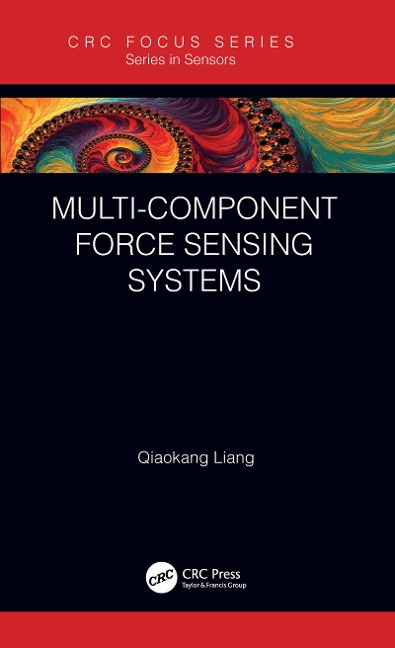
Multi-Component Force Sensing Systems focuses on the design, development, decoupling, and applications of multi-component force sensing systems. Force and moment information can be used as feedback to form an automatic control system to accomplish ef-cient manipulation. The origins of force measurement and control can be traced back to the late 1970s. Since then, multi-component F/M (force/moment) sensing systems have been widely known and intensively studied. In the past few years, force measurement practices have been signi-cantly affected by new tools (such as digital force gauges, virtual instrumentation, high speed data acquisition systems, etc.) as well as sophisticated measurement methods such as mechano-magnetic, mechano-optical, etc. However, this is the first book to provide an overview of the topic. It will be a useful reference for students in physics and engineering working with robotic sensing systems and robotic systems, in addition to researchers and those working within industry. This work was supported in part by the National Nature Science Foundation of China (NSFC 62073129 and 61673163). Features: . Explores the development of force/torque sensing systems . Provides real applications of the multi-component force/torque sensing systems . Contains executable code for decoupling algorithms About the Author: Qiaokang Liang is an Associate Professor with the College of Electrical and Information Engineering, Hunan University. He is currently the vice director of the Hunan Key Laboratory of Intelligent Robot Technology in Electronic Manufacturing and serving as the assistant director of the National Engineering Laboratory for Robot Vision Perception and Control. He received his Ph.D. degree in control science and engineering from the University of Science and Technology of China, Hefei, China, in 2011. His research interests include robotics and mechatronics, biomimetic sensing, advanced robot technology, and human-computer interaction.
Qiaokang Liang is an Associate Professor with the College of Electrical and Information Engineering, Hunan University. He is currently the vice director of Hunan Key Laboratory of Intelligent Robot Technology in Electronic Manufacturing, and serving as the assistant director of National Engineering Laboratory for Robot Vision Perception and Control. He received the Ph.D. degree in control science and engineering from the University of Science and Technology of China, Hefei, China, in 2011. His research interests include robotics and mechatronics, biomimetic sensing, advanced robot technology, and human-computer interaction.
1. Introduction 2. Multi-Component Force Sensing Systems Based on Different Techniques. 3. FBG Based Optical Force Sensing Systems 4. Decoupling Algorithms
Dieses eBook wird im PDF-Format geliefert und ist mit einem Adobe Kopierschutz (DRM) versehen. Sie können dieses eBook mit allen Geräten lesen, die das PDF-Format und den Adobe Kopierschutz (DRM) unterstützen.
Zum Beispiel mit den folgenden Geräten:
• tolino Reader
Laden Sie das eBook direkt über den Reader-Shop auf dem tolino herunter oder übertragen Sie das eBook auf Ihren tolino mit einer kostenlosen Software wie beispielsweise Adobe Digital Editions.
• Sony Reader & andere eBook Reader
Laden Sie das eBook direkt über den Reader-Shop herunter oder übertragen Sie das eBook mit der kostenlosen Software Sony READER FOR PC/Mac oder Adobe Digital Editions auf ein Standard-Lesegeräte mit epub- und Adobe DRM-Unterstützung.
• Tablets & Smartphones
Möchten Sie dieses eBook auf Ihrem Smartphone oder Tablet lesen, finden Sie hier unsere kostenlose Lese-App für iPhone/iPad und Android Smartphone/Tablets.
• PC & Mac
Lesen Sie das eBook direkt nach dem Herunterladen mit einer kostenlosen Lesesoftware, beispielsweise Adobe Digital Editions, Sony READER FOR PC/Mac oder direkt über Ihre eBook-Bibliothek in Ihrem Konto unter „Meine eBooks“ - „online lesen“.
Schalten Sie das eBook mit Ihrer persönlichen Adobe ID auf bis zu sechs Geräten gleichzeitig frei.
Bitte beachten Sie, dass die Kindle-Geräte das Format nicht unterstützen und dieses eBook somit nicht auf Kindle-Geräten lesbar ist.