Und dann auf "Zum Home-Bildschirm [+]".

Stöbern
genialokal zum Startbildschirm hinzufügen
Installieren Sie die genialokal App auf Ihrem Startbildschirm für einen schnellen Zugriff und eine komfortable Nutzung.
Installieren Sie die genialokal App auf Ihrem Startbildschirm für einen schnellen Zugriff und eine komfortable Nutzung.

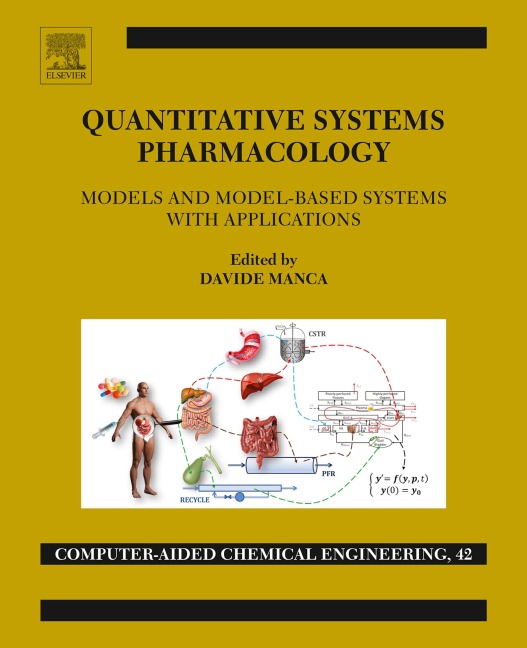
Quantitative Systems Pharmacology: Models and Model-Based Systems with Applications, Volume 42, provides a quantitative approach to problem-solving that is targeted to engineers. The book gathers the contributions of doctors, pharmacists, biologists, and chemists who give key information on the elements needed to model a complex machine like the human body. It presents information on diagnoses, administration and release of therapeutics, distribution metabolism and excretion of drugs, compartmental pharmacokinetics, physiologically-based pharmacokinetics, pharmacodynamics, identifiability of models, numerical methods for models identification, design of experiments, in vitro and in vivo models, and more. As the pharma community is progressively acknowledging that a quantitative and systematic approach to drug administration, release, pharmacokinetics and pharmacodynamics is highly recommended to understand the mechanisms and effects of drugs, this book is a timely resource.
- Outlines a model-based approach (based on Process Systems Engineering-OSE and Computer Aided Process Engineering-CAPE) in quantitative pharmacology
- Explains how therapeutics work in the human body and how anatomy and physiology influences drug efficacy
- Discusses how drugs are driven to specific targets using nanoparticles
- Offers insight into how in vitro and in vivo experiments help understand the drug mechanism of action and optimize their performance
- Includes case studies showing the positive outcome of these methods in personalized therapies, therapeutic drug monitoring, clinical trials analysis and drug formulation
1. Quantitative systems pharmacology: Extending the envelope through systems engineering2. An engineering oriented approach to physiologically based pharmacokinetic and pharmacodynamic modeling3. Advanced Techniques for the Optimal Design of Experiments in Pharmacokinetics4. On the Identifiability of Physiological Models: Optimal Design of Clinical Tests5. Bayesian hierarchical modeling of gabapentin absorption and disposition with application to dosing regimen assessment6. Computational tools in the assistance of personalized healthcare7. Multiscale models for transport and biodistribution of therapeutics in cancer8. Quantitative systems pharmacology on cancer drug delivery to target sites: Application of chemical engineering tools9. Systems engineers' role in biomedical research. Convection-enhanced drug delivery10. On the modeling of oral drug delivery11. Drug delivery from polymeric matrices12. Modeling the mechanics and the transport phenomena in hydrogels