Und dann auf "Zum Home-Bildschirm [+]".

Stöbern
genialokal zum Startbildschirm hinzufügen
Installieren Sie die genialokal App auf Ihrem Startbildschirm für einen schnellen Zugriff und eine komfortable Nutzung.
Installieren Sie die genialokal App auf Ihrem Startbildschirm für einen schnellen Zugriff und eine komfortable Nutzung.

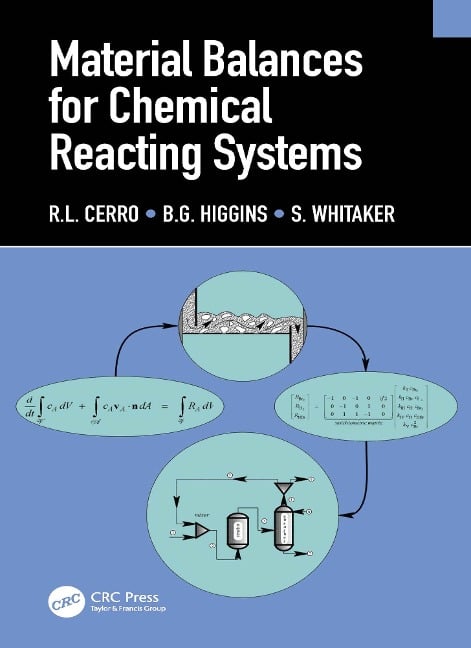
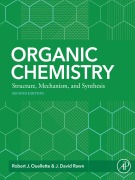
Written for use in the first course of a typical chemical engineering program, Material Balances for Chemical Reacting Systems introduces and teaches students a rigorous approach to solving the types of macroscopic balance problems they will encounter as chemical engineers. This first course is generally taken after students have completed their studies of calculus and vector analysis, and these subjects are employed throughout this text. Since courses on ordinary differential equations and linear algebra are often taken simultaneously with the first chemical engineering course, these subjects are introduced as needed. - Teaches readers the fundamental concepts associated with macroscopic balance analysis of multicomponent, reacting systems - Offers a novel and scientifically correct approach to handling chemical reactions - Includes an introductory approach to chemical kinetics - Features many worked out problems, beginning with those that can be solved by hand and ending with those that benefit from the use of computer software This textbook is aimed at undergraduate chemical engineering students but can be used as a reference for graduate students and professional chemical engineers as well as readers from environmental engineering and bioengineering. The text features a solutions manual with detailed solutions for all problems, as well as PowerPoint lecture slides available to adopting professors.
R. L. Cerro is professor emeritus at the University of Alabama in Huntsville. He studied undergraduate chemical engineering at the Universidad del Litoral in Santa Fe, Argentina and completed MS and PhD degrees at the University of California, Davis. After two years post-doctoral work at the University of Minnesota, where he team-taught chemical engineering courses, he returned to the University of Litoral where he was a professor and later a fellow of the National Research Council of Argentina and a member of the National Academy of Engineering. He was a professor of chemical engineering at The University of Tulsa, OK and later chair of the Chemical and Materials Engineering Department at the University of Alabama in Huntsville. He had sabbatical leaves at the University of Minnesota, the Universidad de Salamanca in Spain, and the University of Litoral where he taught undergraduate and graduate courses. His area of research is transport phenomena and he was an industrial consultant for Allied-Signal (Catoosa, OK), Corning Research (Fontainebleu, France), and Koch-Glitsch (Wichita, KS). B. G. Higgins is professor emeritus at the University of California, Davis. He studied undergraduate chemical engineering at the University of the Witwatersrand, Johannesburg, South Africa, and completed his graduate studies at the University of Minnesota in chemical engineering. After three years at the Institute of Paper Chemistry in Appleton, WI, he joined the faculty at the University of California. He was chair of the department from 1988-1996. His principal area of research is the fluid mechanics and stability of thin film coating processes, and has consulted with US and Japanese companies on coating technology, as related to optical displays, printable electronics, and drying technology for thin films. He was also a software developer from 2009-2011 for Wolfram Alpha. From 2008-2018 Prof. Higgins was visiting professor at the University of Tokyo, and Tokyo University of Science. He is currently a visiting professor of chemical engineering at the Hanoi University of Mining and Geology. S. Whitaker is professor emeritus at the University of California, Davis. He studied undergraduate chemical engineering at the University of California, Berkeley and completed his graduate studies at the University of Delaware. After three years at the DuPont Experimental Station in Delaware, he joined the faculty at Northwestern University. Three years later he moved to the newly established Chemical Engineering Department at the University of California, Davis. His main area of research is multi-phase transport phenomena, and he is the author of four textbooks: Introduction of Fluid Mechanics (Prentice-Hall, 1968), Elementary Heat Transfer Analysis (Pergamon Press, 1976), Fundamental Principles of Heat Transfer (Pergamon Press, 1977), and The Method of Volume Averaging (Kluwer Academic Publishers, 1999).
1. Introduction. 2. Units. 3. Conservation of Mass for Single Component Systems. 4. Multicomponent Systems. 5. Two-Phase Systems & Equilibrium Stages. 6. Stoichiometry. 7. Material Balances for Complex Systems. 8. Transient Material Balances. 9. Reactions Kinetics. Appendix A. Appendix B: Iteration Methods. Appendix C: Matrices. Appendix D: Atomic Species Balances. Appendix E: Conservation of Charge. Appendix F: Heterogeneous Reactions
Dieses eBook wird im PDF-Format geliefert und ist mit einem Adobe Kopierschutz (DRM) versehen. Sie können dieses eBook mit allen Geräten lesen, die das PDF-Format und den Adobe Kopierschutz (DRM) unterstützen.
Zum Beispiel mit den folgenden Geräten:
• tolino Reader
Laden Sie das eBook direkt über den Reader-Shop auf dem tolino herunter oder übertragen Sie das eBook auf Ihren tolino mit einer kostenlosen Software wie beispielsweise Adobe Digital Editions.
• Sony Reader & andere eBook Reader
Laden Sie das eBook direkt über den Reader-Shop herunter oder übertragen Sie das eBook mit der kostenlosen Software Sony READER FOR PC/Mac oder Adobe Digital Editions auf ein Standard-Lesegeräte mit epub- und Adobe DRM-Unterstützung.
• Tablets & Smartphones
Möchten Sie dieses eBook auf Ihrem Smartphone oder Tablet lesen, finden Sie hier unsere kostenlose Lese-App für iPhone/iPad und Android Smartphone/Tablets.
• PC & Mac
Lesen Sie das eBook direkt nach dem Herunterladen mit einer kostenlosen Lesesoftware, beispielsweise Adobe Digital Editions, Sony READER FOR PC/Mac oder direkt über Ihre eBook-Bibliothek in Ihrem Konto unter „Meine eBooks“ - „online lesen“.
Schalten Sie das eBook mit Ihrer persönlichen Adobe ID auf bis zu sechs Geräten gleichzeitig frei.
Bitte beachten Sie, dass die Kindle-Geräte das Format nicht unterstützen und dieses eBook somit nicht auf Kindle-Geräten lesbar ist.