Und dann auf "Zum Home-Bildschirm [+]".

Stöbern
genialokal zum Startbildschirm hinzufügen
Installieren Sie die genialokal App auf Ihrem Startbildschirm für einen schnellen Zugriff und eine komfortable Nutzung.
Installieren Sie die genialokal App auf Ihrem Startbildschirm für einen schnellen Zugriff und eine komfortable Nutzung.
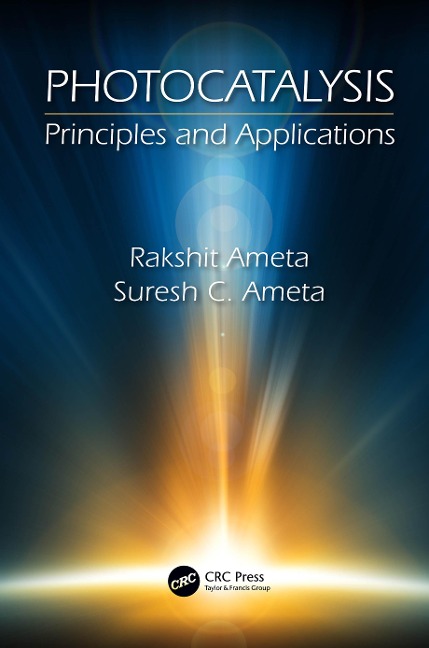
Photocatalysis, reactions carried out in the presence of a semiconductor and light, is rapidly becoming one of the most active areas of chemical research, with applications in areas such as electrochemistry, medicine, and environmental chemistry, Photocatalysis: Principles and Applications stresses the development of various types of photocatalytic semiconductors, including binary, ternary, quaternary, and composite, and their modifications by metallization, sensitization, and doping to enhance their photocatalytic activities. In addition to describing the principles and mechanisms of photocatalysis, it also discusses other possible applications of photocatalysis such as use as antifouling agents, controlling air pollution by degrading contaminants present in the environment, self-cleaning of glasses and tiles in the presence of light/artificial light, green composites, wastewater treatment, hydrogen generation, and inactivation of microorganisms. The book also describes medical applications and summarizes efforts in the field of photosplitting of water as a newer energy source and photoreduction of carbon dioxide for providing synthetic fuels and also a step towards mimicking photosynthesis. - Introduces the basic principle of photocatalysis. - Provides an overview of the types of semiconductors, their immobilization, and modifications to make them more active. - Gives possible applications of photocatalysis in wastewater treatment and strategy to combat against different kinds of pollutions like water, air, and soil. - Summarizes efforts in the field of photosplitting of water as a newer energy source and photoreduction of carbon dioxide for providing synthetic fuels and as a step towards mimicking photosynthesis. - Discusses inactivation of different kinds of microorganisms. - Covers medical applications. Features - Introduces the basic principle of photocatalysis. - Provides an overview of the types of semiconductors, their immobilization, and modifications to make them more active. - Gives possible applications of photocatalysis in wastewater treatment and strategy to combat against different kinds of pollutions like water, air, and soil. - Summarizes efforts in the field of photosplitting of water as a newer energy source and photoreduction of carbon dioxide for providing synthetic fuels and as a step towards mimicking photosynthesis. - Discusses inactivation of different kinds of microorganisms. - Covers medical applications.
Rakshit Ameta obtained his Master of Science degree with first position and was awarded Gold Medal. He received the Fateh Singh Award from the Maharana Mewar Foundation for his meritorious performance. He has worked at M. L. Sukhadia University, University of Kota and presently is an Associate Professor of Chemistry at PAHER University. Widely published, Dr. Ameta has been elected as Scientist-in-Charge, Industrial and Applied Chemistry Section, Indian Chemical Society (2014-2016), and was also elected as a Council Member of the Indian Chemical Society (2011-2013) and the Indian Council of Chemists (2012-2015). Suresh C. Ameta obtained his Master's degree and was awarded Gold Medal in 1970. He secured a first position in M. Phil. in 1978, and Ph.D. in 1980 from Vikram University. He served as Professor and Head, Department of Chemistry, North Gujarat University Patan (1994) and M. L. Sukhadia University (2002-2005), and as Head, Department of Polymer Science (2005-2008). He also served as Dean, Post Graduate Studies, M. L. Sukhadia University (2004-2008). Now he is Dean, Faculty of Science, at PAHER University. He had been President of Indian Chemical Society (2000-2001). Widely published and highly decorated, Professor Ameta has approximately 43 years of experience in teaching and research.
Contents 1. Introduction 2. Photocatalysis 3. Binary semiconductors 4. Ternary semiconductors 5. Quaternary semiconductors 6. Metallization 7. Doping 8. Sensitization 9. Composites 10. Immobilization 11. Hydrogen generation 12. Solar Cells 13. Waste water treatment 14. Reduction of carbon dioxide 15. Artificial photosynthesis 16. Medical applications 17. Other applications 18. Inactivation of microorganisms 19. Photoreactors 20. Future trends
Dieses eBook wird im PDF-Format geliefert und ist mit einem Adobe Kopierschutz (DRM) versehen. Sie können dieses eBook mit allen Geräten lesen, die das PDF-Format und den Adobe Kopierschutz (DRM) unterstützen.
Zum Beispiel mit den folgenden Geräten:
• tolino Reader
Laden Sie das eBook direkt über den Reader-Shop auf dem tolino herunter oder übertragen Sie das eBook auf Ihren tolino mit einer kostenlosen Software wie beispielsweise Adobe Digital Editions.
• Sony Reader & andere eBook Reader
Laden Sie das eBook direkt über den Reader-Shop herunter oder übertragen Sie das eBook mit der kostenlosen Software Sony READER FOR PC/Mac oder Adobe Digital Editions auf ein Standard-Lesegeräte mit epub- und Adobe DRM-Unterstützung.
• Tablets & Smartphones
Möchten Sie dieses eBook auf Ihrem Smartphone oder Tablet lesen, finden Sie hier unsere kostenlose Lese-App für iPhone/iPad und Android Smartphone/Tablets.
• PC & Mac
Lesen Sie das eBook direkt nach dem Herunterladen mit einer kostenlosen Lesesoftware, beispielsweise Adobe Digital Editions, Sony READER FOR PC/Mac oder direkt über Ihre eBook-Bibliothek in Ihrem Konto unter „Meine eBooks“ - „online lesen“.
Schalten Sie das eBook mit Ihrer persönlichen Adobe ID auf bis zu sechs Geräten gleichzeitig frei.
Bitte beachten Sie, dass die Kindle-Geräte das Format nicht unterstützen und dieses eBook somit nicht auf Kindle-Geräten lesbar ist.