Und dann auf "Zum Home-Bildschirm [+]".

Stöbern
genialokal zum Startbildschirm hinzufügen
Installieren Sie die genialokal App auf Ihrem Startbildschirm für einen schnellen Zugriff und eine komfortable Nutzung.
Installieren Sie die genialokal App auf Ihrem Startbildschirm für einen schnellen Zugriff und eine komfortable Nutzung.
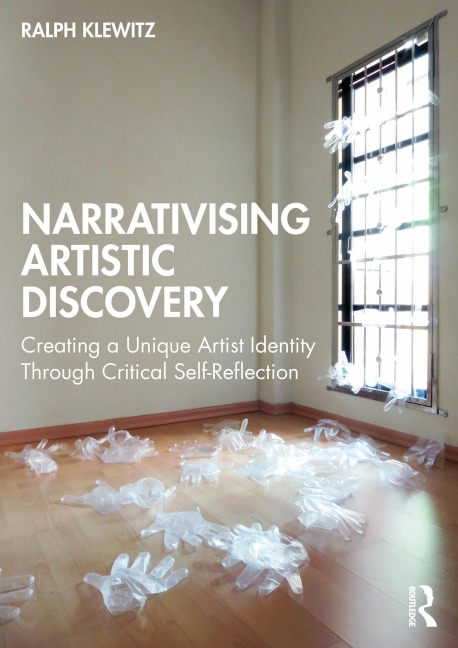
This book explores how artistic identity evolves through creative practice, self-reflection, and philosophical inquiry, using the experience of artist Ralph Klewitz as a case study. Klewitz's research evolves through active questioning, reinterpretation, and self-discovery, demonstrating how these dynamics continuously reshape his artistic identity. His introspection serves as a model for artists, showing how self-reflection can foster growth and identity formation. Using the Socratic method, Klewitz engages in a continual process of inquiry that informs his research. Reflecting on both his artistic process and the interpretation of his art, he integrates philosophical perspectives from thinkers like Bergson, Derrida, and Barthes, examining how personal experience intersects with philosophical thought. His journey illustrates that artistic identity is fluid, shaped over time through critical inquiry. Klewitz examines how gaining a deeper understanding of one's work enables artists to communicate more clearly, thereby enhancing audience engagement and actively contributing to the discourse surrounding their art. Artists, art educators, researchers in creative practice, philosophy, and social sciences, as well as students exploring artistic development, will find this book essential. It also offers key insights for the wider art world community and individuals in the creative industries, particularly those interested in the intersection of art, identity, and social engagement.
Ralph Klewitz, PhD, is a Swiss-born artist, designer, academic, and independent researcher, specialising in graphic design, artistic research, and contemporary arts practice.
Acknowledgment Preface Framework Overview Artist Identity Construction Autoethnography Narrative Inquiry Socratic Method Context Section 1: Creation Section 1 Abstract Bergson's Philosophy and Translating My Artistic Process into Language Term Definitions' Impact on Artistic Practice: Reflections and Insights Self-reflective narratives on Bergson's "Introduction to Metaphysics" Enhancing my insights by reflecting on Bergson's "Creative Evolution" Navigating Bergson's Concept of Becoming in My Creative Process Bergson's Notion of Knowledge and Artistic Creation Reflecting on Bergson's Concept of 'Nothing' Bergson's 'Flowing of Forms' as a Holistic Concept Order and Disorder in Artistic Creation Exploring the Dual Paths of the Mind Section 1: Key Insights Why Do I Create Art? How Do I Produce Art? What Roles Do Intuition and Reasoning Play in My Art? When Do I Complete an Artwork? Section 2: Interpretation Section 2 Abstract Unveiling Art, Navigating Insights, Shaping the Research Roadmap Retrospective Insights into Artistic Evolution and Precarious Logic Videoart Documentation Structure Reflections on Utilising the First-Person Voice Reflections on Utilising the Third-Person Voice Exploring Artistic Authorship from Alternative Perspectives Unpacking Barthes' Authorship Exploration Phase 1: Engaging with Barthes' Premise Phase 2: Rethinking Authorship The Who-Question The Where-Question The When-Question Navigating Artistic Voice Through Writing Approaches Exploring the Impact of Technical Skills on Artistic Practice Artistic Dimensions Unveiled Through Skill, Knowledge, and Inspiration Artistic Motivation and Evolution Materiality, Chronology, and Perceiving Artwork with Background Information Artistic Temporality and Enduring Resonance Temporal Significance in Klein's and Rosenkranz's Artistic Discourse The Artist's Engagement with Creation Linguistic Artifacts Accompanying My Artwork Choosing Between Spoken and Written Language, English and German Navigating Beyond Logic in Artistic Reflection Contextualising Surrealist Concepts in My Artistic Development Reflections on the Manifesto Reflections on the Artist's Statement Exploring Stream-of-Consciousness Writing Navigating the Interplay of Causality and Ambiguity in Art and Academia Exploring Philosophical Depths and Personal Opinions in Art Criticism Navigating the Tension Between Structure and Intuition in Artistic Reflection Exploring Free Associations in Artistic Reflections Artistic Reflections and Interpretive Freedom Navigating Personal Reflections and Interpretations in Artistic Discourse Inner and Outer Realms in Stream-of-Consciousness Reflections Reflecting on Form and Interpretation in Art Interpreting Form and Reality Through Stream-of-Consciousness Writing Navigating Factual and Imagined Realities Through Stream-of-Consciousness Writing Artistic Evolution Through Creative Reflection Discovery and Collaboration in Language Translation Text Disassembly, Reassembly, and Insights Exploring the Interplay Between Text and Image in Artist Books Exploring the Interplay of Text, Image, and Chance Innovative Design Processes in Artist Books Schön's Theories in Constructing Reflective Book Designs Post-Rationalising Inspirations for My Book Design Interpreting the Interplay of Language, Imagery, and Liminal Spaces Expanding Intertextuality in My Artist Book Comparative Analysis in Art Interpretation Expanding Art Interpretation Through Methodological Inclusivity Complexities in Research Data Collection and Interpretation Navigating Complexity in Artistic Interpretation Participant Distinctions, Dissensions, and Autonomy in Interpretation Understanding Key Characteristics and Their Alignment with My Research Incommensurability Amongst the Interpretations Concluding Reflections and Synthesising Insights for Further Inquiry Section 2: Key Insights Reconceptualising Authorship Through a Dialogue Between Artist, Perceiver, and Artwork Interpreting Art Through Inquiry and Expression Artistic Jolts and Ruptures in My Artist Books Intertextual Exploration of My Artist Books Participant Responses and Artistic Reflections Exploring Insights and Dialogues in Art Interpretation Navigating Psychological and Philosophical Insights in Artist Identity Formation Transformation Embracing Dynamic Meaning in Artistic Research Navigating Artistic Identity Formation Articulating Practice to Engage Audiences Speculation Human-AI Collaboration AI as an Autonomous Creative Entity Reflecting on the Scenarios and Recommendations Bibliography Filmography Index
Dieses eBook wird im PDF-Format geliefert und ist mit einem Adobe Kopierschutz (DRM) versehen. Sie können dieses eBook mit allen Geräten lesen, die das PDF-Format und den Adobe Kopierschutz (DRM) unterstützen.
Zum Beispiel mit den folgenden Geräten:
• tolino Reader
Laden Sie das eBook direkt über den Reader-Shop auf dem tolino herunter oder übertragen Sie das eBook auf Ihren tolino mit einer kostenlosen Software wie beispielsweise Adobe Digital Editions.
• Sony Reader & andere eBook Reader
Laden Sie das eBook direkt über den Reader-Shop herunter oder übertragen Sie das eBook mit der kostenlosen Software Sony READER FOR PC/Mac oder Adobe Digital Editions auf ein Standard-Lesegeräte mit epub- und Adobe DRM-Unterstützung.
• Tablets & Smartphones
Möchten Sie dieses eBook auf Ihrem Smartphone oder Tablet lesen, finden Sie hier unsere kostenlose Lese-App für iPhone/iPad und Android Smartphone/Tablets.
• PC & Mac
Lesen Sie das eBook direkt nach dem Herunterladen mit einer kostenlosen Lesesoftware, beispielsweise Adobe Digital Editions, Sony READER FOR PC/Mac oder direkt über Ihre eBook-Bibliothek in Ihrem Konto unter „Meine eBooks“ - „online lesen“.
Schalten Sie das eBook mit Ihrer persönlichen Adobe ID auf bis zu sechs Geräten gleichzeitig frei.
Bitte beachten Sie, dass die Kindle-Geräte das Format nicht unterstützen und dieses eBook somit nicht auf Kindle-Geräten lesbar ist.