Und dann auf "Zum Home-Bildschirm [+]".

Stöbern
genialokal zum Startbildschirm hinzufügen
Installieren Sie die genialokal App auf Ihrem Startbildschirm für einen schnellen Zugriff und eine komfortable Nutzung.
Installieren Sie die genialokal App auf Ihrem Startbildschirm für einen schnellen Zugriff und eine komfortable Nutzung.
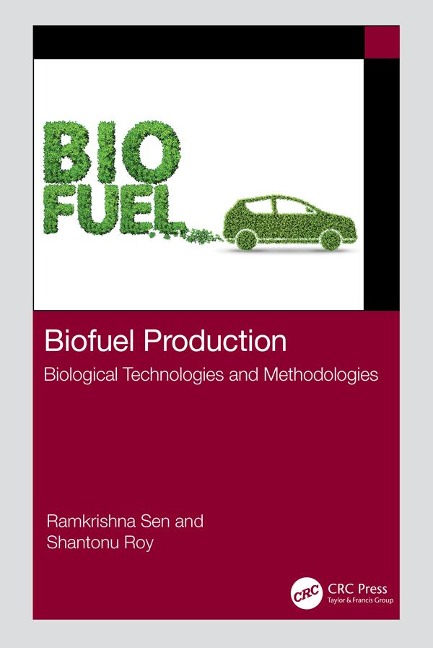
Biofuels and bioenergy have emerged as an alternative option based on their sustainability, concomitant waste treatment, and site-specific flexibility. This book encompasses all the knowhow of different biofuel production processes through biological methods. It describes recent advancements in all major biofuel technologies such as biohydrogen, biomethane, bioethanol, syngas and so forth. Related protocols supported by schematic representation are included, encompassing comprehensive up-to-date scientific and technological information in biofuels and bioenergy. Features: - Includes practical approaches focused on process design and analysis in biofuel production via biological routes - Discusses kinetic equations of different microbial systems - Provides comprehensive coverage of biochemical kinetics and equations related to biofuel process - Describes protocols for setting up of experiments for pertinent biofuel technologies - Emphasis on practical engineering approaches and experiments This book is aimed at researchers and graduate students in chemical, biochemical and bioprocess engineering, and biofuels.
Ramkrishna Sen is presently Professor and Head, Department of Biotechnology; Chairperson, School of Bioscience; Chairperson, Central Research Facility (Life Science Division), Prof.-in-charge, Advanced Lab for Plant Genetic Engineering and Joint Faculty of the P K Sinha Center for Bioenergy & Renewables at IIT Kharagpur. He served as a Fulbright Visiting Professor in the Columbia University, New York, USA. Prof. Sen has been engaged in R&D activities in the areas of Energy, Environment, Water & Healthcare, with a major focus on Green Process & Product Development in Microalgal-&-Microbial Biorefinery models. Shantonu Roy is a Gold Medalist in Microbiology in B.Sc. from Vidyasagar University. He did M.Sc. in Biotechnology from the Jadavpur University, Kolkata. He then moved to the Indian Institute of Technology (IIT) Kharagpur, West Bengal, India where he pursued his Ph.D. He has been awarded with prestigious DST INSPIRED faculty and DST Early career award. He is among the top 20 scientist working in the field of biohydrogen in India according to DST Status Report Hydrogen and fuel cell, 2021. Currently, he is working as assistant professor in the School of Community Science and Technology at Indian Institute of Engineering Science and Technology Shibpur, West Bengal, India. His research interests focus on hydrogen production and methane production from thermophilic bacteria. He has developed expertise on metagenomic analysis of thermophilic mixed consortia, proteomics and strain improvement by mutagenesis.
Chapter 1 Introduction to Biofuel and Bioenergy 1.1 Introduction 1.2 Renewable Energy Scenario 1.3 Environmental and Ecological Impact References Chapter 2 Dark Fermentative Hydrogen Production 2.1 Introduction 2.2 Microbial Perspective on Dark Fermentative Hydrogen-producing Microorganisms 2.3 Biochemistry of Dark Fermentative Hydrogen Production 2.4 Concept of Consortia Development 2.5 Process Parameters Influencing Dark Fermentative Hydrogen Production 2.6 Mathematical Models Expressing Substrate Conversion Efficiency and Microbial Growth 2.7 Protocol for Biohydrogen Production Conclusions References Chapter 3 Biomethane Production Process 3.1 Introduction 3.2 Microbiology and Biochemistry of Methanogenesis 3.3 Microbial Interactions 3.4 Biochemistry of Biomethane Production 3.5 Protocol for Biomethane Production Using Isolates Conclusions References Chapter 4 Bioethanol Production Process 4.1 Introduction 4.2 Feedstock for Bioethanol Production 4.3 Protocol for Bioethanol Production Conclusions References Chapter 5 Biobutanol Production Process 5.1 Introduction 5.2 Characteristics of Butanol 5.3 Technologies for Butanol Production 5.4 Feedstocks for Biobutanol Production 5.5 Purification and Separation of Butanol 5.6 Protocol for Biobutanol Production Conclusions References Chapter 6 Algal Cultivation and Biodiesel Production from Its Biomass 6.1 Introduction 6.2 Present State of the Art of Photobioreactor (PBR) Development 6.3 Protocol for Algal Cultivation Conclusions References Chapter 7 Bioelectricity Production Using Microbial Fuel Cell 7.1 Introduction 7.2 Classifications of Microbial Fuel Cells (MFC 7.3 Microbiology and Biochemistry of Microbial Fuel Cells 7.4 Biochemistry of Microbial Fuel Cell 7.5 Methods for Understanding Performance of MFC 7.6 Microbial Fuel Cell Design Conclusions References
Dieses eBook wird im PDF-Format geliefert und ist mit einem Adobe Kopierschutz (DRM) versehen. Sie können dieses eBook mit allen Geräten lesen, die das PDF-Format und den Adobe Kopierschutz (DRM) unterstützen.
Zum Beispiel mit den folgenden Geräten:
• tolino Reader
Laden Sie das eBook direkt über den Reader-Shop auf dem tolino herunter oder übertragen Sie das eBook auf Ihren tolino mit einer kostenlosen Software wie beispielsweise Adobe Digital Editions.
• Sony Reader & andere eBook Reader
Laden Sie das eBook direkt über den Reader-Shop herunter oder übertragen Sie das eBook mit der kostenlosen Software Sony READER FOR PC/Mac oder Adobe Digital Editions auf ein Standard-Lesegeräte mit epub- und Adobe DRM-Unterstützung.
• Tablets & Smartphones
Möchten Sie dieses eBook auf Ihrem Smartphone oder Tablet lesen, finden Sie hier unsere kostenlose Lese-App für iPhone/iPad und Android Smartphone/Tablets.
• PC & Mac
Lesen Sie das eBook direkt nach dem Herunterladen mit einer kostenlosen Lesesoftware, beispielsweise Adobe Digital Editions, Sony READER FOR PC/Mac oder direkt über Ihre eBook-Bibliothek in Ihrem Konto unter „Meine eBooks“ - „online lesen“.
Schalten Sie das eBook mit Ihrer persönlichen Adobe ID auf bis zu sechs Geräten gleichzeitig frei.
Bitte beachten Sie, dass die Kindle-Geräte das Format nicht unterstützen und dieses eBook somit nicht auf Kindle-Geräten lesbar ist.