Und dann auf "Zum Home-Bildschirm [+]".

Stöbern
genialokal zum Startbildschirm hinzufügen
Installieren Sie die genialokal App auf Ihrem Startbildschirm für einen schnellen Zugriff und eine komfortable Nutzung.
Installieren Sie die genialokal App auf Ihrem Startbildschirm für einen schnellen Zugriff und eine komfortable Nutzung.
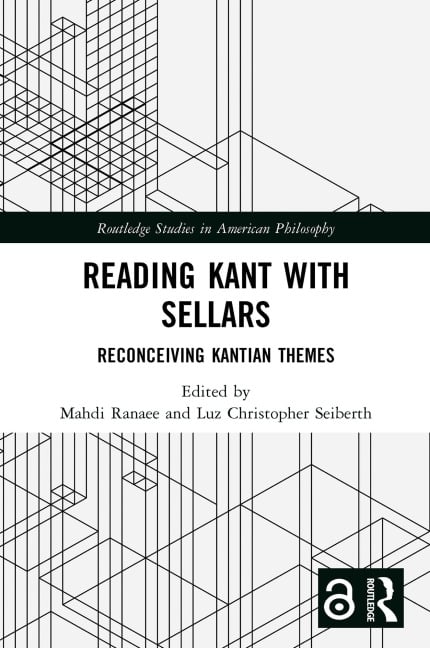
This book considers Wilfrid Sellars' engagement with Kantian philosophy-both theoretical and practical-in his exegetical work in reading Kant as well as in his own systematic development of Kantian philosophy. Despite the spate of new publications on Wilfrid Sellars' role in 20th-century philosophy, a comprehensive book-length examination of his interpretation of Kant has been conspicuously absent. This volume fills that gap both exegetically and systematically, exploring his engagement in four distinct sections: (1) Logic and History; (2) Sensations and Intuitions; (3) Being and Categories; and (4) Reason, Modality, and Freedom. The chapters within these sections, written by leading experts, explore Sellars' reading of Kant and offer both defenses and critiques. Readers will find in this collection not only a thorough exploration of Sellars' engagement with Kant, but also a rich dialogue between Kant scholars and specialists in Sellars' philosophy. Reading Kant with Sellars is essential reading for Kant and Sellars scholars, offering them deeper insights into their respective fields by highlighting the importance of Kant for Sellars and the relevance of Sellars' reading of Kant for Kant scholarship. It will also appeal to scholars and advanced students in philosophy of mind, philosophy of language, epistemology, moral and practical philosophy, and logic. Chapter 8 of this book is freely available as a downloadable Open Access PDF at http://www.taylorfrancis.com under a Creative Commons Attribution (CC BY-NC-ND) 4.0 license. The funder for this chapter is Digitales Kant-Zentrum NRW (Kant and Cognitive Science), funded by the Ministry of Culture and Science of the State of North Rhine-Westphalia.
Mahdi Ranaee is Assistant Professor of Philosophy at the University of Siegen, Germany. He specializes in Kant, history of analytic philosophy, Islamic philosophy, and epistemology. He is co-editor of Fraught with Ought: Selected Writings of Wilfrid Sellars (forthcoming) and his articles include "Non-Accidentally Factive Mental States" (Dialogue). Luz Christopher Seiberth is Assistant Professor of Philosophy at the University of Potsdam, Germany and specializes in Kant. A symposium to his monograph Intentionality in Sellars (Routledge 2022) appeared in International Journal of Philosophical Studies (2022, 30/5). He is co-editor of Fraught with Ought: Selected Writings of Wilfrid Sellars (forthcoming).
Introduction: Kantian Themes in a Transcendental Linguistic Turn Mahdi Ranaee and Luz Christopher Seiberth Part I: Logic and History 1. Letting the Dead Speak: On Sellars' Kant Colin McLear 2. Transcendental Logic and Sellars' Early Papers August Buholzer Part II: Sensations and Intuitions 3. Sellars and Kant on Intuitions and the Problem of Externality Rolf-Peter Horstmann 4. Kant and Sellars on Sensations Luca Corti 5. The Role of Imagination in Sellars' Theory of Experience David Landy 6. What are Kant's Sensible Intuitions? Nonconceptualism, Sellars, and Allais James R. O'Shea Part III: Being and Categories 7. Sellars and Kant on Categories and their Schematization Johannes Haag 8. Why Does Wilfrid Sellars Not Have a Transcendental Deduction? Mahdi Ranaee 9. The Forms of Representation: How to be a Kantian Realist Willem deVries 10. Sellars' Two Worlds Ryan Simonelli 11. Sellars' Metaontology Luz Christopher Seiberth Part IV: Reason, Modality, and Freedom 12. Understanding Reason: A Defense of Kantian Naturalism Preston Stovall 13. Inferentialism, Modal Anti-Realism, and the Problem of Affection Griffin Klemick 14. "To Show the Compatibility of Compatibilism and Incompatibilism": Sellars' Reinvention of Kant's Conception of Free Will Jeremy Randel Koons
Dieses eBook wird im PDF-Format geliefert und ist mit einem Adobe Kopierschutz (DRM) versehen. Sie können dieses eBook mit allen Geräten lesen, die das PDF-Format und den Adobe Kopierschutz (DRM) unterstützen.
Zum Beispiel mit den folgenden Geräten:
• tolino Reader
Laden Sie das eBook direkt über den Reader-Shop auf dem tolino herunter oder übertragen Sie das eBook auf Ihren tolino mit einer kostenlosen Software wie beispielsweise Adobe Digital Editions.
• Sony Reader & andere eBook Reader
Laden Sie das eBook direkt über den Reader-Shop herunter oder übertragen Sie das eBook mit der kostenlosen Software Sony READER FOR PC/Mac oder Adobe Digital Editions auf ein Standard-Lesegeräte mit epub- und Adobe DRM-Unterstützung.
• Tablets & Smartphones
Möchten Sie dieses eBook auf Ihrem Smartphone oder Tablet lesen, finden Sie hier unsere kostenlose Lese-App für iPhone/iPad und Android Smartphone/Tablets.
• PC & Mac
Lesen Sie das eBook direkt nach dem Herunterladen mit einer kostenlosen Lesesoftware, beispielsweise Adobe Digital Editions, Sony READER FOR PC/Mac oder direkt über Ihre eBook-Bibliothek in Ihrem Konto unter „Meine eBooks“ - „online lesen“.
Schalten Sie das eBook mit Ihrer persönlichen Adobe ID auf bis zu sechs Geräten gleichzeitig frei.
Bitte beachten Sie, dass die Kindle-Geräte das Format nicht unterstützen und dieses eBook somit nicht auf Kindle-Geräten lesbar ist.