Und dann auf "Zum Home-Bildschirm [+]".

Stöbern
genialokal zum Startbildschirm hinzufügen
Installieren Sie die genialokal App auf Ihrem Startbildschirm für einen schnellen Zugriff und eine komfortable Nutzung.
Installieren Sie die genialokal App auf Ihrem Startbildschirm für einen schnellen Zugriff und eine komfortable Nutzung.
Ihr gewünschter Artikel ist in 0 Buchhandlungen vorrätig - wählen Sie hier eine Buchhandlung in Ihrer Nähe aus:

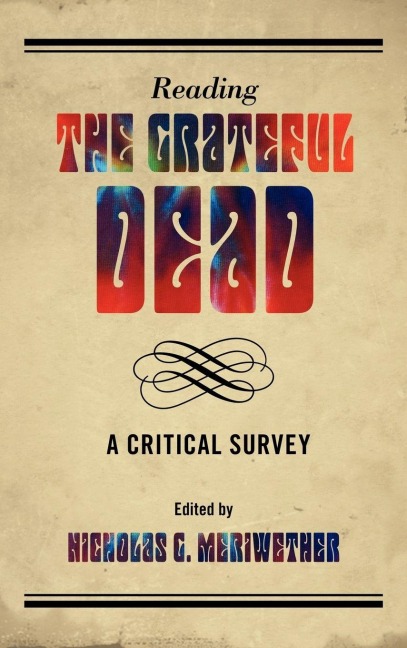
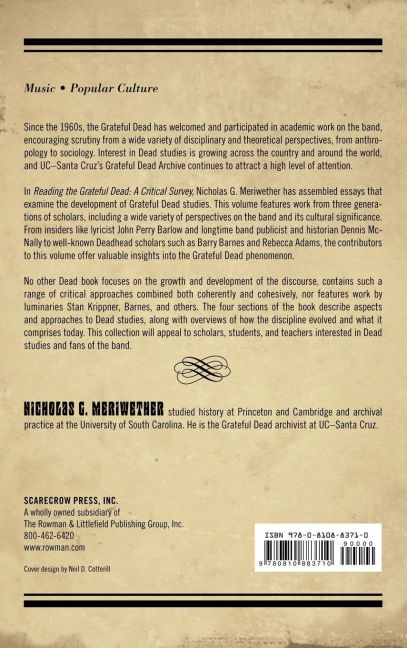
In Reading the Grateful Dead: A Critical Survey, Nicholas G. Meriwether has assembled a collection of essays that examine the development of Grateful Dead studies. This volume includes work from three generations of scholars and includes a wide variety of perspectives on the band and its cultural significance. Organized into four sections, each describes an aspect or approach to Dead studies, along with an overview of the nature and extent of Dead studies: how it evolved and what it comprises today.
Nicholas G. Meriwether studied history at Princeton and Cambridge and archival practice at the University of South Carolina. He is the Grateful Dead Archivist at UC Santa Cruz.
Acknowledgments "Halloween Costume Party" Bob Cooperman Introduction: "The Secret of This Tie That Binds": The Interdisciplinary Discourse of Grateful Dead Studies Nicholas G. Meriwether PART 1: STUDYING THE DEAD 1. The Education of a Deadhead: A Letter from a Novelist Matthew Armstrong 2. The Grateful Dead in the Academy Dennis McNally 3. Thinking About the Dead: Amateur Anthropology, the Human Comedy, and Making Good Ancestors John Perry Barlow 4. "The Thousand Stories Have Come 'Round To One": Studying the Grateful Dead Phenomenon Nicholas G. Meriwether 5. Mapping the Deadhead Social Science Trip Natalie Dollar PART 2: MUSIC AND LYRICS, MEDIUM AND MESSAGE 6. How the Grateful Dead Learned to Jam Michael Kaler 7. "Terrapin Station," Postmodernism, and the Infinite Jon Ney 8. A Super-Metacantric Analysis of "Playing in the Band" Robert H. Trudeau 9. "And Closed My Eyes To See": Buddhist Resonances in the Lyrics of the Grateful Dead Ryan Slesinger 10. The Dead Play Egypt, Thirty Years Later: Myt