Und dann auf "Zum Home-Bildschirm [+]".

Stöbern
genialokal zum Startbildschirm hinzufügen
Installieren Sie die genialokal App auf Ihrem Startbildschirm für einen schnellen Zugriff und eine komfortable Nutzung.
Installieren Sie die genialokal App auf Ihrem Startbildschirm für einen schnellen Zugriff und eine komfortable Nutzung.
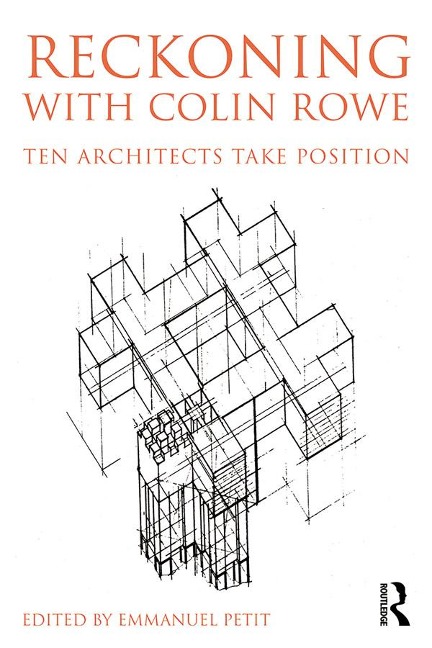
While the first half of the 20th century in architecture was, to a large extent, characterized by innovations in aesthetics (accompanied by succinct and polemical manifestoes), the post-war decades saw emerge a more refined and intellectual disciplinary framework that eventually metamorphosed into the highly theory-focused moment of the 'postmodern'. Colin Frederick Rowe (1920 - 1999) was a leader of this epistemic shift due to his aptitude to connect his historical and philosophical erudition to the visual analysis of architecture. This book unites ten different perspectives from architects whose lives and ideas intersected with Rowe's, including: - Robert Maxwell - Anthony Vidler - Peter Eisenman - O. Mathias Ungers - Léon Krier - Rem Koolhaas - Alan Colquhoun - Robert Slutzky - Bernhard Hoesli - Bernard Tschumi - With an introduction by Emmanuel Petit and a postscript by Jonah Rowen In their critical assessment of a key 20th century formalist, these renowned architects reflect on how their own positions came to diverge from Rowe's. Reckoning with Colin Rowe is a thought-provoking discussion of key schools, places, concepts and people of architectural theory since the post-war years, illustrated with over forty beautiful black and white drawings and photographs.
Emmanuel Petit studied architecture at the ETH in Zurich, Switzerland, and received his PhD in history and theory of architecture from Princeton University, USA. He has taught at Yale, USA; Harvard, USA; and the Massachusetts Institute of Technology, USA, as associate professor and visiting associate professor, respectively; and is currently Sir Banister Fletcher Visiting Professor at The Bartlett School of Architecture in London, UK. He is the author of Irony, or the Self-critical Opacity of Postmodern Architecture (2013).
Acknowledgements Introduction: Rowe After Colin Rowe Part 1: Mannerism 1. Robert Maxwell Mannerism and Modernism: The Importance of Irony 2. Anthony Vidler Reckoning with Art History: Colin Rowe's Critical Vision 3. Peter Eisenman Bifurcating Rowe Part 2: Opposing Zeitgeist 4. O. Mathias Ungers He Who Did Not Understand the Zeitgeist 5. Léon Krier Unresolved Encounters with Colin Rowe 6. Rem Koolhaas Being O.M.U.'s Ghost-writer Part 3: Transparency, Collage, Montage 7. Alan Colquhoun Transparency Revisited 8. Robert Slutzky To Reason with One's Vision 9. Bernhard Hoesli Transparent Form-Organization as an Instrument of Design 10. Bernard Tschumi Montage: Deconstructing Collage Postscript: Jonah Rowen Comparing Comparisons in Colin Rowe Contributor Bios Image Credits Index
Dieses eBook wird im PDF-Format geliefert und ist mit einem Adobe Kopierschutz (DRM) versehen. Sie können dieses eBook mit allen Geräten lesen, die das PDF-Format und den Adobe Kopierschutz (DRM) unterstützen.
Zum Beispiel mit den folgenden Geräten:
• tolino Reader
Laden Sie das eBook direkt über den Reader-Shop auf dem tolino herunter oder übertragen Sie das eBook auf Ihren tolino mit einer kostenlosen Software wie beispielsweise Adobe Digital Editions.
• Sony Reader & andere eBook Reader
Laden Sie das eBook direkt über den Reader-Shop herunter oder übertragen Sie das eBook mit der kostenlosen Software Sony READER FOR PC/Mac oder Adobe Digital Editions auf ein Standard-Lesegeräte mit epub- und Adobe DRM-Unterstützung.
• Tablets & Smartphones
Möchten Sie dieses eBook auf Ihrem Smartphone oder Tablet lesen, finden Sie hier unsere kostenlose Lese-App für iPhone/iPad und Android Smartphone/Tablets.
• PC & Mac
Lesen Sie das eBook direkt nach dem Herunterladen mit einer kostenlosen Lesesoftware, beispielsweise Adobe Digital Editions, Sony READER FOR PC/Mac oder direkt über Ihre eBook-Bibliothek in Ihrem Konto unter „Meine eBooks“ - „online lesen“.
Schalten Sie das eBook mit Ihrer persönlichen Adobe ID auf bis zu sechs Geräten gleichzeitig frei.
Bitte beachten Sie, dass die Kindle-Geräte das Format nicht unterstützen und dieses eBook somit nicht auf Kindle-Geräten lesbar ist.