Und dann auf "Zum Home-Bildschirm [+]".

Stöbern
genialokal zum Startbildschirm hinzufügen
Installieren Sie die genialokal App auf Ihrem Startbildschirm für einen schnellen Zugriff und eine komfortable Nutzung.
Installieren Sie die genialokal App auf Ihrem Startbildschirm für einen schnellen Zugriff und eine komfortable Nutzung.

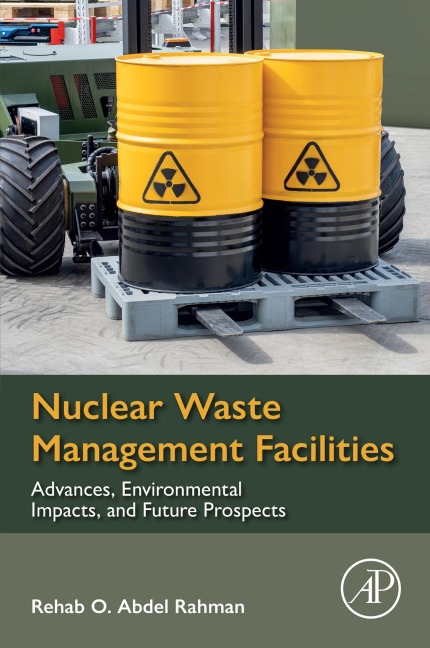
Nuclear Waste Management Facilities: Advances, Environmental Impacts, and Future Prospects examines best practices and recent trends in improving nuclear safety and reducing the negative environmental impacts of nuclear waste. With strong emphasis on regulatory requirements, this reference is essential for designing new integrated waste management practices, using lessons learned from historical and current practices. Divided into three key sections, Part One introduces the reader to the safety and environmental impacts of the nuclear industry. Part Two reviews recent technological and methodological approaches to enhancing safety, as well as reducing the carbon footprint of both individual processes and integrated facilities. Topics covered include waste processing, transmutation and decommissioning. Part Three consider potential management schemes for special waste from innovative sources, and wastes that contain emerging contaminants, including waste recycling opportunities. Nuclear Waste Management Facilities: Advances, Environmental Impacts, and Future Prospects is a crucial tool needed to implement the safest and most environmentally considerate best practices within nuclear waste management facilities.
- Presents recent approaches used to assess and improve the safety and reduce the environmental impacts of nuclear waste management facilities - Offers technical guidance to support the development and defense of the environmental impact assessment (EIA) and Safety Cases to support the waste management facilities licensing throughout their lifecycles - Highlights the future perspectives for wastes produced from innovative reactors and wastes containing emerging contaminants, and recycling opportunities
Dr. Rehab O Abdel Rahman is a Professor of Chemical Nuclear Engineering at Hot Laboratories for the Egyptian Atomic Energy Authority (EAEA) in Cairo, Egypt. She worked for more than 25 years in supporting the licensing of radioactive waste management facilities and participated in international projects on the development and implementation of safety cases and safety assessment for those facilities. Her widely published research focuses on radioactive waste management. She supervises post graduate students, teaches undergraduate courses, and supports training activities within EAEA, serves as a member in international scientific committees. She has editorial experience as a managing editor for international journals, guest editor for special issues, and editor of several books, and frequent contributor on the topic of hazardous waste management.
Part 1 Introduction to Nuclear Waste Management Sustainability1. Sustainability and environmental impacts of the nuclear industry2. Historical radioactive and nuclear waste management practices: Analysis and insights for the period 1940-1990s3. Current approaches in managing nuclear wastes: Administrative requirements and technological advancesPart 2 Advances to Enhance Safety and Reduce the Impact of Nuclear Waste Management Facilities4. Spent fuel management: Methodological and technological advances in pre-disposal facilities5. Advances toward sustainable radioactive waste pre-treatment and treatment practices6. Advances toward sustainable radioactive waste conditioning and storage practices7. Decommissioning of the nuclear waste management facilities: Practice and innovative trends toward efficient waste minimization8. Case studies on the practices and advances in legacy waste management9. Advances to enhance safety and reduce the impacts of nuclear waste management facilities10. Remediation of radioactive contaminated sites: Conventional and innovative trends toward sustainable practice11. Prospective on the management of innovative power reactors wastes: infrastructure requirementsPart 3 Future Perspectives on Nuclear Waste Management12. Prospective on the management of nuclear waste containing contaminants of emerging concerns13. Perspectives on the factors that affect the recycling and reuse of cleared, radioactive and nuclear materials