Und dann auf "Zum Home-Bildschirm [+]".

Stöbern
genialokal zum Startbildschirm hinzufügen
Installieren Sie die genialokal App auf Ihrem Startbildschirm für einen schnellen Zugriff und eine komfortable Nutzung.
Installieren Sie die genialokal App auf Ihrem Startbildschirm für einen schnellen Zugriff und eine komfortable Nutzung.
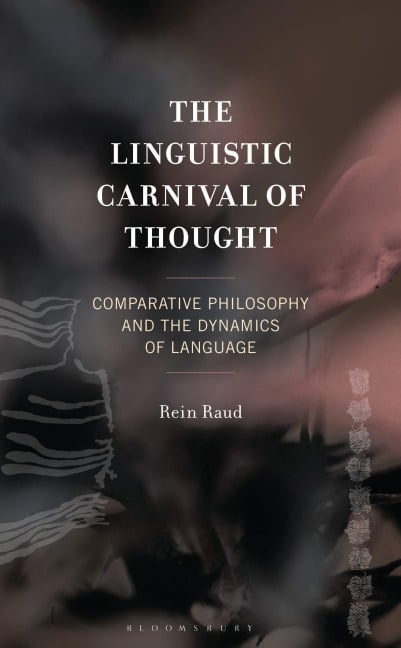
The Linguistic Carnival of Thought: Comparative Philosophy and the Dynamics of Language argues that the practice of philosophizing is significantly influenced by linguistic structures. Against the widespread view that all languages are reducible to the same matrix on a deep-structural level, Rein Raud presents ample evidence to the contrary, demonstrating how different strategies of predication, postulation, negation, individuation, and so on vary greatly and present incompatible combinations in natural languages, which are nonetheless suitable for precise and rational argumentation.
This book compares the views of language presented by Plato, Kongzi/Xunzi, and Bhartrhari; discusses "pansemioticism," or the view that reality itself is significant (addressing Yijing, East Asian Buddhism, the Kabbalah, the philosophies of Peirce, Derrida, and others); juxtaposes the set-theoretical ontology of Badiou and the mereological worldview of Huayan Buddhism; and discusses various critiques of the idea of "truth" (Wittgenstein, Deleuze, Foucault) and a way to accommodate them through the logic of Dignaga, among other topics. With examples from languages and philosophical traditions across the world, the book is an ideal introduction to the problematic for monolingual speakers of English and a scintillating exploration for polyglots.
Rein Raud is distinguished professor of Asian and cultural studies at the School of Humanities, University of Tallinn, Estonia.
Acknowledgments
Introduction
Part I: Language, Languaging, Philosophy, Philosophizing
Chapter 1. Languaging Philosophically
Chapter 2. The Description
Chapter 3. Linguistic Relativity
Coda
Part II: Philosophy as a Cultural Practice
Chapter 4. Cultural Practices
Chapter 5. Philosophy and the Networks of Power
Chapter 6. Philosophizing vs "Philosophy": In Defense of a Flexible (Re)Definition
Coda
Part III: Language as a Medium of Conceptualization
Chapter 7. Linguistic Strategies of Worldbuilding
Chapter 8. Sets, Members, Wholes, Parts
Chapter 9. Object- And Event-Orientation: Japanese Notions of "Thingness"
Coda
Part IV: Reality, Signification, Truth
Chapter 10. Names and Things: Three Early Views
Chapter 11. Pansemioticism
Chapter 12. Telling the Truth
Coda
Afterword
References
Dieses eBook wird im PDF-Format geliefert und ist mit einem Adobe Kopierschutz (DRM) versehen. Sie können dieses eBook mit allen Geräten lesen, die das PDF-Format und den Adobe Kopierschutz (DRM) unterstützen.
Zum Beispiel mit den folgenden Geräten:
• tolino Reader
Laden Sie das eBook direkt über den Reader-Shop auf dem tolino herunter oder übertragen Sie das eBook auf Ihren tolino mit einer kostenlosen Software wie beispielsweise Adobe Digital Editions.
• Sony Reader & andere eBook Reader
Laden Sie das eBook direkt über den Reader-Shop herunter oder übertragen Sie das eBook mit der kostenlosen Software Sony READER FOR PC/Mac oder Adobe Digital Editions auf ein Standard-Lesegeräte mit epub- und Adobe DRM-Unterstützung.
• Tablets & Smartphones
Möchten Sie dieses eBook auf Ihrem Smartphone oder Tablet lesen, finden Sie hier unsere kostenlose Lese-App für iPhone/iPad und Android Smartphone/Tablets.
• PC & Mac
Lesen Sie das eBook direkt nach dem Herunterladen mit einer kostenlosen Lesesoftware, beispielsweise Adobe Digital Editions, Sony READER FOR PC/Mac oder direkt über Ihre eBook-Bibliothek in Ihrem Konto unter „Meine eBooks“ - „online lesen“.
Schalten Sie das eBook mit Ihrer persönlichen Adobe ID auf bis zu sechs Geräten gleichzeitig frei.
Bitte beachten Sie, dass die Kindle-Geräte das Format nicht unterstützen und dieses eBook somit nicht auf Kindle-Geräten lesbar ist.