Und dann auf "Zum Home-Bildschirm [+]".

Stöbern
genialokal zum Startbildschirm hinzufügen
Installieren Sie die genialokal App auf Ihrem Startbildschirm für einen schnellen Zugriff und eine komfortable Nutzung.
Installieren Sie die genialokal App auf Ihrem Startbildschirm für einen schnellen Zugriff und eine komfortable Nutzung.
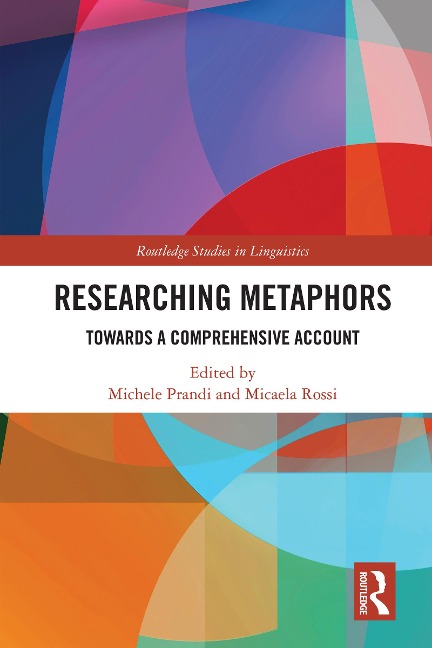
This collection advocates for a more holistic picture of metaphor, extending the field's focus beyond the cognitive paradigm and conventional metaphorical concepts to illustrate the possibilities afforded by the study of living metaphors. The volume brings together a diverse range of researchers in the discipline towards critically examining the presuppositions of the cognitive approach. The book shines a light on living metaphors - creative interpretations of conflictual meaning specific to a text or communicative act with their own unique functions - to throw into relief long-held tenets in existing metaphor research. Chapters reflect on the notion that creative metaphors spring from independent sources, not merely from metaphorical concepts, and the subsequent implications for our understanding of the relationship between linguistic forms and conceptual structures and the role of creative metaphors in organizing thought and action. Taken together, the book offers a complementary vision of languages and figures which integrates disparate lines of study within the cognitive paradigm with alternative perspectives for a more comprehensive portrait of metaphors. This book will be of interest to students and scholars interested in the study of metaphor, including such disciplines as theoretical linguistics, cognitive linguistics, semantics, literary studies, and philosophy of language.
Michele Prandi was professor of Linguistics at the Universities of Geneva, Pavia, Bologna, and Genoa. He is Doctor Honoris Causa at the University of Uppsala. His main research fields are semantics of complex expressions, conditions of significance, natural ontology and conceptual analysis, and metaphor and figurative language in their grammatical and conceptual aspects. Micaela Rossi is professor of French Language and Translation at the University of Genoa. Her research interests focus on the formation of new metaphorical terminologies in technical and scientific vocabularies, as well as on the textual and discursive dynamics that determine their fixation within socio-professional communities of use.
Introduction Part 1: Bridging conventional and living metaphors Z. Kövecses: Some recent issues in conceptual metaphor theory M. Fasciolo: Creative metaphors and conceptual conflicts: The requirements of consistency as ontological presuppositions M. Prandi: Formal syntax and textual coherence: Two wellsprings for conceptual conflicts R. Trim: Hidden reference in the creation of metaphor F. Strik Lievers: Types of metaphors and their structure: Annotation guidelines between theory and practice Part 2: Conventional and creative metaphors in special concepts and terms R. Temmerman: Terminological metaphors: Framing for better and for worse ... M. Rossi: Creating metaphors in specialised languages: Choice criteria for the success of metaphorical terms C. Resche: Reflections on metaphors and models in connection with theory building in economics C. Fedriani: Specialized concepts and the career of metaphors: The diachronic development of ANGER IS A HOT FLUID and LOVE IS A JOURNEY from Latin to Old Italian Part 3: Living and conventional metaphors in use: Texts, discourses, genres, translation R. W. Gibbs, Jr. and C. Rasse: Metaphor in understanding literary characters M. Bonhomme: The driving role of stereotypy in proverbial metaphors E. Zurru: Social movements and metaphor: The case of #FridaysForFuture I. Rizzato: Shakespeare's metaphorical swarms in The Two Gentlemen of Verona: Textual and pragmatic features and their impact on the Italian translation
Dieses eBook wird im PDF-Format geliefert und ist mit einem Adobe Kopierschutz (DRM) versehen. Sie können dieses eBook mit allen Geräten lesen, die das PDF-Format und den Adobe Kopierschutz (DRM) unterstützen.
Zum Beispiel mit den folgenden Geräten:
• tolino Reader
Laden Sie das eBook direkt über den Reader-Shop auf dem tolino herunter oder übertragen Sie das eBook auf Ihren tolino mit einer kostenlosen Software wie beispielsweise Adobe Digital Editions.
• Sony Reader & andere eBook Reader
Laden Sie das eBook direkt über den Reader-Shop herunter oder übertragen Sie das eBook mit der kostenlosen Software Sony READER FOR PC/Mac oder Adobe Digital Editions auf ein Standard-Lesegeräte mit epub- und Adobe DRM-Unterstützung.
• Tablets & Smartphones
Möchten Sie dieses eBook auf Ihrem Smartphone oder Tablet lesen, finden Sie hier unsere kostenlose Lese-App für iPhone/iPad und Android Smartphone/Tablets.
• PC & Mac
Lesen Sie das eBook direkt nach dem Herunterladen mit einer kostenlosen Lesesoftware, beispielsweise Adobe Digital Editions, Sony READER FOR PC/Mac oder direkt über Ihre eBook-Bibliothek in Ihrem Konto unter „Meine eBooks“ - „online lesen“.
Schalten Sie das eBook mit Ihrer persönlichen Adobe ID auf bis zu sechs Geräten gleichzeitig frei.
Bitte beachten Sie, dass die Kindle-Geräte das Format nicht unterstützen und dieses eBook somit nicht auf Kindle-Geräten lesbar ist.