Und dann auf "Zum Home-Bildschirm [+]".

Stöbern
genialokal zum Startbildschirm hinzufügen
Installieren Sie die genialokal App auf Ihrem Startbildschirm für einen schnellen Zugriff und eine komfortable Nutzung.
Installieren Sie die genialokal App auf Ihrem Startbildschirm für einen schnellen Zugriff und eine komfortable Nutzung.

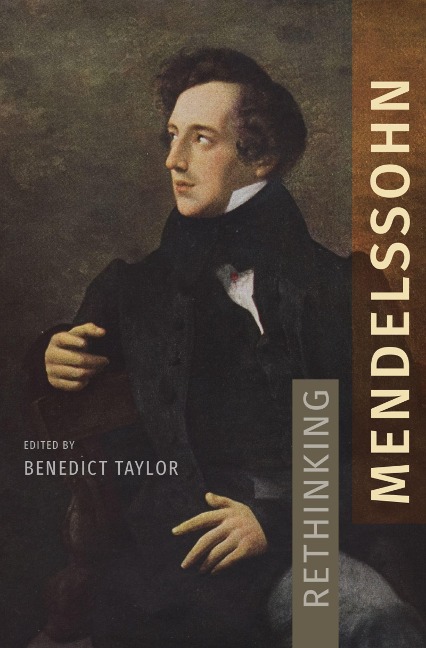
As one of the foremost composers, conductors, and pianists of the nineteenth century, Felix Mendelssohn played a fundamental role in the shaping of modern musical tastes through his contributions to the early music revival and the formation of the Austro-German musical canon. His career allows for a remarkable meeting point for critical engagement with a host of crucial issues in the last two centuries of music history, including the relation between musical meaning and social function, programmatic and absolute music, notions of classicism and Romanticism, modernism and historicism. It also serves as a pertinent case-study of the roles political ideology, racism, and musical ignorance may play in creating and perpetuating a composer's posthumous reception. Fittingly, Rethinking Mendelssohn focuses on critical engagement with the composer's music and aesthetics, and on the interpretation of his works in relation to contemporaneous culture. Building on the renaissance in Mendelssohn scholarship of the last two decades, Rethinking Mendelssohn sets a fresh and exciting tone for research on the composer. Opening new ways of understanding Mendelssohn and setting the future direction of Mendelssohn studies, the contributing scholars pay particular attention to Mendelssohn's contested views on the relationship between art and religion, analysis of Mendelssohn's instrumental music in the wake of recent controversies in Formenlehre, and the burgeoning interest in his previously neglected contribution to the German song.
Benedict Taylor is Reader in Music at the University of Edinburgh. His research interests centre on nineteenth-century music, theory and analysis, and philosophy. Previous books include Mendelssohn, Time and Memory: The Romantic Conception of Cyclic Form (2011), The Melody of Time: Music and Temporality in the Romantic Era (2016), and Towards a Harmonic Grammar of Grieg's Late Piano Music (2017).
Biographies of Contributors Preface Abbreviations Introduction: Rethinking Mendelssohn Benedict Taylor I Interpreting the Orchestral Music 1 Deformed Beauty? Narrative and Musical Form in Mendelssohn's Overture to the Tale of the Fair Melusina, Op. 32 Thomas Grey 2 Brass Topoi, Telescoped Recapitulations, and the Bildungsreise: A New Approach to the First Movement of Mendelssohn's 'Italian' Symphony Peter Mercer-Taylor 3 'Inner Necessity': Fabulation, Frame, and Musical Memory in Mendelssohn's Lobgesang John Michael Cooper 4 An Epic Voice with Rhyme and Reason: On Rehearing Mendelssohn's 'Scottish' Symphony Scott Burnham II Historical and Aesthetic Contexts 5 Mendelssohn and the Idea of the North Sarah Clemmens Waltz 6 Sibling Love and the Daemonic: Contradictions in the Relationship between Felix and Fanny Mendelssohn Angela Mace Christian 7 Mendelssohn and Droysen: Historicism in Practice and Theory Celia Applegate III Analysing Mendelssohn 8 Mendelssohn and Sonata Form: The Case of Op. 44 No. 2 Benedict Taylor 9 Expansion and Recomposition in Mendelssohn's Symphonic Sonata Forms Steven Vande Moortele 10 Syntax and Process in the First Movement of Mendelssohn's Piano Trio Op. 66 Julian Horton 11 Form through Sound: Klangfarbe and Texture in Mendelssohn's Instrumental Compositions Thomas Schmidt IV Art, Ethics, and Religion 12 The Philosophical Composer: The Influence of Moses Mendelssohn and Friedrich Schleiermacher on Felix Mendelssohn Leon Botstein 13 Rethinking Kunstreligion in the Context of Mendelssohn's Life and Work Sabine Koch 14 Sacred Sound and Secular Space in Mendelssohn's Instrumental Music Lawrence Kramer 15 Felix Mendelssohn's Deutsche Liturgie in the Context of the Prussian Agende of 1829 Laura K. T. Stokes V Mendelssohn and the Lied 16 Reassessing Felix Mendelssohn's Song Aesthetic through the Lens of Religion: The Case of 'Entsagung' Jennifer Ronyak 17 Changes of Pace: Expressive Accelerations and Decelerations in Mendelssohn's Vocal Rhythms Harald Krebs 18 'Time is, Time was, Time is past': The Phenomenology of Travel in Mendelssohn's Songs Susan Youens 19 Fanny Hensel's Sechs Lieder Op. 9: A Brother's Elegy Stephen Rodgers Bibliography Index