Und dann auf "Zum Home-Bildschirm [+]".

Stöbern
genialokal zum Startbildschirm hinzufügen
Installieren Sie die genialokal App auf Ihrem Startbildschirm für einen schnellen Zugriff und eine komfortable Nutzung.
Installieren Sie die genialokal App auf Ihrem Startbildschirm für einen schnellen Zugriff und eine komfortable Nutzung.
Ihr gewünschter Artikel ist in 0 Buchhandlungen vorrätig - wählen Sie hier eine Buchhandlung in Ihrer Nähe aus:

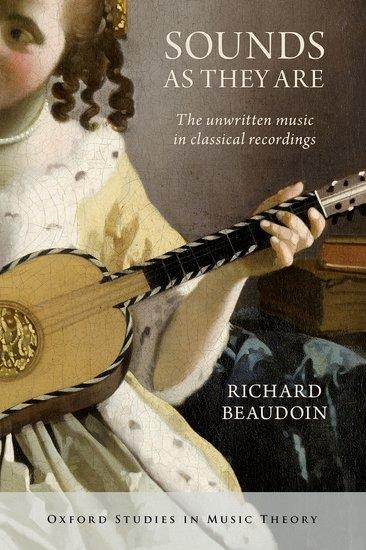
In Sounds as They Are, author Richard Beaudoin recognizes the often-overlooked sounds made by the bodies of performers and their recording equipment as music and analyzes these sounds using a bold new theory of inclusive track analysis (ITA). In doing so, he demonstrates new expressive, interpretive, and embodied possibilities and also uncovers insidious inequalities across music studies and the recording industry, including the silencing of certain sounds along lines of gender and race.
Richard Beaudoin analyses audio recordings and uses his research to create scholarship and compose new music. He has held posts as Preceptor in Music at Harvard University, The Joseph E. and Grace W. Valentine Visiting Assistant Professor of Music at Amherst College, and Visiting Research Fellow at the Royal Academy of Music, London. He is currently Assistant Professor of Music at Dartmouth College.
Acknowledgements
INTRODUCTION
Four octaves and one breath
Defining unwritten music
Why classical recordings?
Categorizing unwritten music
Five notes
CHAPTER 1. The Aesthetics and Ethics of Unwritten Music
Sound recordings as documents
Questioning "intelligent suppression"
Everything that sounds simultaneously
An unwritten note
A series of enigmatic clicks
A decisive inhale
Five analogies
The reception of unwritten music
The empathetic dimension
CHAPTER 2. Sounds of Breath
Breath sounds as music
Breath as rhetoric
Breath as anacrusis
Breath as expectation
Breath within motive
Breath as climax
Breath as phrase marker
Breath as narration
CHAPTER 3. Sounds of Touch
Touch sounds as music
Fingernails and motive
Foreshadowing fingertips
Dancing fingerfalls
Squeaking shifts
Percussive valve clacks
Chair creaks
Podium stamps
Timbral damper pedals
CHAPTER 4. Sounds of Effort
Sounded effort as music
Sound, sex, and somaesthetics
Climactic exertions 1: The exultant holler
Climactic exertions 2: The tense moan
Climactic exertions 3: Grunt lead
Intimate exertions 1: Subtle vocalizing
Intimate exertions 2: Emphatic panting
Intimate exertions 3: Stifled grunting
A thoroughgoing growl
Moans as indicators of phrase
Grunts unheard
CHAPTER 5. Surface Noise
Surface noise as music
Listening with
Recordings as carta
Six modes of interaction
Performance-centricity
Narrative asynchrony
Ekphrastic (non)coincidence
Expressive synchronicity
Metaphoric development
Surface noise-centricity
CHAPTER 6. Inclusive Track Analysis
Attentional flexibility
Reading what was never written
Inclusive track analysis: A pragmatic framework
Beyond classical tracks
Les sons tels qu'ils sont
Discography
Bibliography
Index