Und dann auf "Zum Home-Bildschirm [+]".

Stöbern
genialokal zum Startbildschirm hinzufügen
Installieren Sie die genialokal App auf Ihrem Startbildschirm für einen schnellen Zugriff und eine komfortable Nutzung.
Installieren Sie die genialokal App auf Ihrem Startbildschirm für einen schnellen Zugriff und eine komfortable Nutzung.
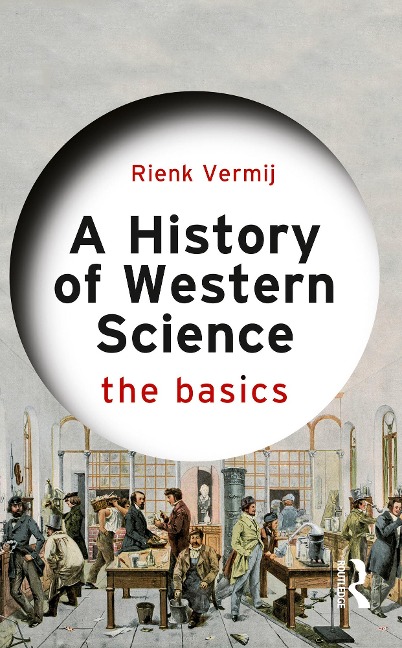
A History of Western Science: The Basics offers a short introduction to the history of Western science that is accessible to all through avoiding technical language and mathematical intricacies. A coherent narrative of how science developed in interaction with society over time is also provided in this comprehensive guide. The first part discusses the period up to 1700, with a focus on the conceptual shift and new ideas about nature that occurred in early modern Europe. Part two focusses on the practical and institutional aspects of the scientific enterprise and discusses how science established itself in Western society post 1700s, while part three discusses how during the same period modern science has impacted our general view of the world, and reviews some of the major discoveries and debates. Key topics discussed in the book include: - Natural philosophy, medicine, and mathematics in the ancient and medieval worlds - The key figures in the history of science-Galileo, Descartes, Isaac Newton, Darwin and Einstein-as well as lesser-known men and women who have developed the field - The development of scientific instruments, the transformation of alchemy into chemistry, weights and measures, the emergence of the modern hospital and its effects on medicine, and the systematic collection of data on meteorology, volcanism, and terrestrial magnetism - The big questions - the origins of humans, the nature of reality and the impact of science. As a jargon-free and comprehensive study of the history of Western science, this book is an essential introductory guide for academics and researchers of the history of science, as well as general readers interested in learning more about the field.
Rienk Vermij is a Professor at the Department of the History of Science, Medicine, and Technology of the University of Oklahoma. His research topics include early ideas on earthquakes, the reception of Copernicanism, and the Enlightenment. He has published several books and many articles.
Contents Introduction Part I. The Scientific Revolution1. Antiquity and the Middle Ages Greek philosophers and nature Greek mathematics Medicine in antiquity The classical tradition in mediaeval Europe2. The sixteenth century: the Aristotelian worldview in decline New intellectual currents: humanism and hermeticism Natural history and medicine Mathematics and 'natural magic' Astronomy Philosophy of nature3. The seventeenth century: a new worldview Galileo and a new view of the heavens Descartes and mechanistic science The emergence of an experimental tradition Mathematization of science The mathematical science of Isaac Newton A revolution in the prevailing worldview? Part II. Autonomous science: methods, theories and researchers 1700-20004. The eighteenth century: disseminating the idea of science Knowledge and practice: instruments Collecting and classifying: natural history From alchemy to chemistry Newtonian mechanics and its problems5. The nineteenth century (i): science at the service of the rationalization of society A 'scientific' system of measurement The modern hospital Observatories, measuring stations and a global science Science and Western imperialism6. The nineteenth century (ii): professional science Universities and professors Women in science Laboratories Classification and conferences The rise of the experiment: physiology Measuring and experimenting in the study of nature Further mathematization Statistics7. The twentieth century: industrial science The rise of industrial science The science of measurement Research institutes Control and modelling Independence under pressure Part III. The scientific worldview8. The origin of the world The Bible and the new image of the world The development of geology The origin of the universe9. The nature of life and the origin of human beings Early scientific ideas about humankind and its place in the world The idea of evolution Darwin's contribution Descent The mysteries of the mind The mechanism of heredity Heredity and evolution A science of human beings?10. The nature of reality A rational world? The building blocks of real
Dieses eBook wird im PDF-Format geliefert und ist mit einem Adobe Kopierschutz (DRM) versehen. Sie können dieses eBook mit allen Geräten lesen, die das PDF-Format und den Adobe Kopierschutz (DRM) unterstützen.
Zum Beispiel mit den folgenden Geräten:
• tolino Reader
Laden Sie das eBook direkt über den Reader-Shop auf dem tolino herunter oder übertragen Sie das eBook auf Ihren tolino mit einer kostenlosen Software wie beispielsweise Adobe Digital Editions.
• Sony Reader & andere eBook Reader
Laden Sie das eBook direkt über den Reader-Shop herunter oder übertragen Sie das eBook mit der kostenlosen Software Sony READER FOR PC/Mac oder Adobe Digital Editions auf ein Standard-Lesegeräte mit epub- und Adobe DRM-Unterstützung.
• Tablets & Smartphones
Möchten Sie dieses eBook auf Ihrem Smartphone oder Tablet lesen, finden Sie hier unsere kostenlose Lese-App für iPhone/iPad und Android Smartphone/Tablets.
• PC & Mac
Lesen Sie das eBook direkt nach dem Herunterladen mit einer kostenlosen Lesesoftware, beispielsweise Adobe Digital Editions, Sony READER FOR PC/Mac oder direkt über Ihre eBook-Bibliothek in Ihrem Konto unter „Meine eBooks“ - „online lesen“.
Schalten Sie das eBook mit Ihrer persönlichen Adobe ID auf bis zu sechs Geräten gleichzeitig frei.
Bitte beachten Sie, dass die Kindle-Geräte das Format nicht unterstützen und dieses eBook somit nicht auf Kindle-Geräten lesbar ist.