Und dann auf "Zum Home-Bildschirm [+]".

Stöbern
genialokal zum Startbildschirm hinzufügen
Installieren Sie die genialokal App auf Ihrem Startbildschirm für einen schnellen Zugriff und eine komfortable Nutzung.
Installieren Sie die genialokal App auf Ihrem Startbildschirm für einen schnellen Zugriff und eine komfortable Nutzung.
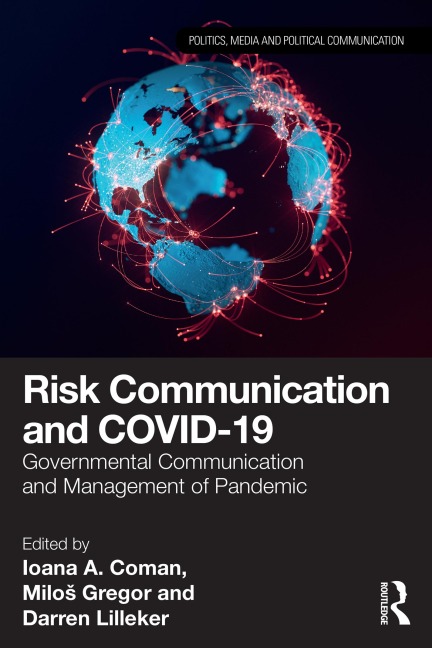
Risk Communication and COVID-19 explores the "risk communication" responses by national governments to the outbreak and global spread of the COVID-19 strain of coronavirus. The book focuses on 17 country case studies, representing countries all around the world, covering a range of democratic and authoritarian systems, styles of leadership, and political contexts. The chapters analyze communication drawing on a modified risk communication framework to determine what patterns governmental risk communication followed in several areas: messenger attributes, consistency and clarity of communication, communication methods, message attributes, and public trust in government. The book also analyzes how these attributes changed and developed over time from 2020 to 2022. The analyzed period is divided into several parts representing different pandemic milestones, such as the first cases, the second wave of the pandemic, vaccination, and adaptation to the endemic logic of dealing with the COVID-19 virus. Importantly, the book draws out key lessons which can inform communication strategies during crises, particularly when the crisis necessitates public behavioral adjustments. The lessons are framed to further understanding of the challenges faced within the field of political risk communication during crises in the twenty-first century. This book will be of great interest to students and researchers of politics, communication, and public relations, specifically on courses and modules relating to current affairs, risk communication, crisis communication, and strategic communication, as well as practitioners working in the field of health crisis communication.
Ioana A. Coman is Associate Professor at Texas Tech University, USA. She is a passionate educator and a researcher focused on how publics understand, react to, and interact with other important actors during large-scale health risk, crisis, and other hot-button issues or contexts. Her courses focus on different aspects of risk/crisis communication, public relations, journalism, entrepreneurship, and innovation. MiloS Gregor is Assistant Professor at Masaryk University, the Czech Republic. He teaches courses on political communication and marketing, propaganda, disinformation, and fake news. Together with Petra Mlejnková, he is a mentor of projects Choose Your Info (Zvol si info) and Fakescape, both dedicated to media literacy awareness. Both projects received awards in the international Peer to Peer: Global Digital Challenge competition. Darren Lilleker is Professor of Political Communication in the Faculty of Media and Communication and Deputy Head of the Humanities and Law Department at Bournemouth University, UK. He is Convenor of the Centre for Comparative Politics and Media Research and teaches across the politics programs. He has led a range of research projects using qualitative and quantitative methods, delivered lectures, and conducted workshops to students across the world.
Introduction 1. Risk Communication During Crisis and Post-Crisis Loops: How Governments Communicated about COVID-19 and the Vaccines - Conceptual Framework 2. Ghana: Communicating State Capacity Through Humour and Strategic Absences 3. South Africa: Government Messaging During the COVID-19 Pandemic 4. Brazil: From Denialism to Cynicism 5. Mexico: Governmental Communication and Management of the Pandemic of COVID-19 - The "Vespertinas" as Communication Strategy 7. Czechia: From Chaos and Ignorance to Calm and Vaccination - Government Communication on COVID-19 8. Italy: Managing Risk and Crisis Communication in the Context of Political Instability 9. Sweden: the Quiet Consensus 10. Egypt: From Empathetic Rhetoric to Pragmatism - Addressing Healthcare Inequities in the COVID-19 Response 11. Iran: On the Front Lines and Yet Isolated - During the COVID-19 Pandemic 12. Israel: COVID-19 and Public Information 13. India: The Message, the Messenger, the Messiah - COVID-19 Communication under Modi 14. Vietnam: Dynamic Response and Communication Strategy in the COVID-19 Pandemic 15. Thailand: Inconsistency and Obscurity of Government-led Communication During the Pandemic 16. Japan: Risk Communication and COVID-19 17. China: Unraveling Crisis Communication - Assessing Strategies in the COVID-19 Pandemic 18. Aotearoa New Zealand: The World-beating Response that Lost its Lustre Conclusion: Risk Communication during COVID-19 and National and Global Lessons Learned
Dieses eBook wird im PDF-Format geliefert und ist mit einem Adobe Kopierschutz (DRM) versehen. Sie können dieses eBook mit allen Geräten lesen, die das PDF-Format und den Adobe Kopierschutz (DRM) unterstützen.
Zum Beispiel mit den folgenden Geräten:
• tolino Reader
Laden Sie das eBook direkt über den Reader-Shop auf dem tolino herunter oder übertragen Sie das eBook auf Ihren tolino mit einer kostenlosen Software wie beispielsweise Adobe Digital Editions.
• Sony Reader & andere eBook Reader
Laden Sie das eBook direkt über den Reader-Shop herunter oder übertragen Sie das eBook mit der kostenlosen Software Sony READER FOR PC/Mac oder Adobe Digital Editions auf ein Standard-Lesegeräte mit epub- und Adobe DRM-Unterstützung.
• Tablets & Smartphones
Möchten Sie dieses eBook auf Ihrem Smartphone oder Tablet lesen, finden Sie hier unsere kostenlose Lese-App für iPhone/iPad und Android Smartphone/Tablets.
• PC & Mac
Lesen Sie das eBook direkt nach dem Herunterladen mit einer kostenlosen Lesesoftware, beispielsweise Adobe Digital Editions, Sony READER FOR PC/Mac oder direkt über Ihre eBook-Bibliothek in Ihrem Konto unter „Meine eBooks“ - „online lesen“.
Schalten Sie das eBook mit Ihrer persönlichen Adobe ID auf bis zu sechs Geräten gleichzeitig frei.
Bitte beachten Sie, dass die Kindle-Geräte das Format nicht unterstützen und dieses eBook somit nicht auf Kindle-Geräten lesbar ist.