Und dann auf "Zum Home-Bildschirm [+]".

Stöbern
genialokal zum Startbildschirm hinzufügen
Installieren Sie die genialokal App auf Ihrem Startbildschirm für einen schnellen Zugriff und eine komfortable Nutzung.
Installieren Sie die genialokal App auf Ihrem Startbildschirm für einen schnellen Zugriff und eine komfortable Nutzung.
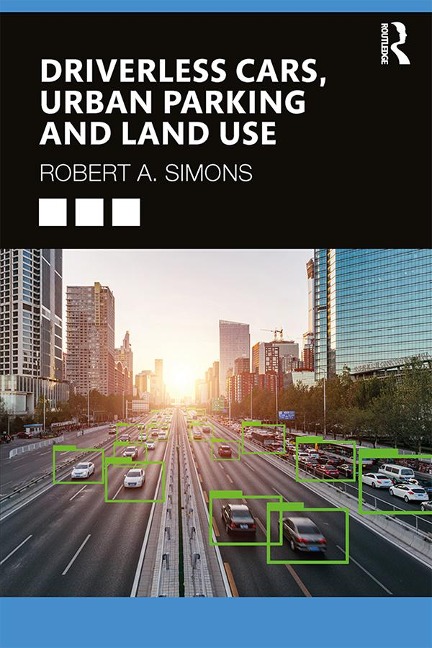
The subject of driverless and even ownerless cars has the potential to be the most disruptive technology for real estate, land use, and parking since the invention of the elevator. This book includes new research and economic analysis, plus a thorough review of the current literature to pose and attempt to answer a number of important questions about the effect that driverless vehicles may have on land use in the United States, especially on parking. Simons outlines the history of disruptive technologies in transport and real estate before examining how the predicted changes brought in by the adoption of driverless technologies and decline in car ownership will affect our urban areas. What could we do with all the parking areas in our cities and our homes and institutional buildings that may no longer be required? Can they be sustainably repurposed? Will self-driving cars become like horses, used only by hobbyists for recreation and sport? While the focus is on parking, the book also contains the views of real estate economists, architects, and policymakers and is essential reading for real estate developers and investors, transport economists, planners, politicians, and policymakers who need to consider the implications of a future with more driverless vehicles. Fasten your seat belt: like it or not, driverless cars will begin to change the way we move about our cities within ten years.
Robert A. Simons is a professor of urban planning and real estate development at Cleveland State University, USA, in the Levin College of Urban Affairs. He is the editor of the Journal of Sustainable Real Estate, and has published over 75 journal articles and four books on real estate topics. He has served as an expert witness on over 90 legal cases, most with contaminated property issues. R.simons@csuohio.edu
1: Introduction By Robert A. Simons 2. Identification of Major Vehicle-Related Hardware and Technological Trends By Robert A. Simons 3. Tastes and Preferences and Behavioral Change in Transportation Modal Choices and Car Ownership By Robert Simons, Jonathan Richmond, Howard Goldberg and Daniel J. Simons 4. Government Regulation Of The Transition To Driverless/Autonomous Cars By Robert A Simons, Tod Northman and Jeffery Carr 5. Ethical Issues From The Transition To Driverless / Automated Cars By Robert A Simons, Tod Northman and Jeffery Carr 6: The Past Adoption and Transition Time Periods of Five Disruptive Technologies By Robert A. Simons and Alexandra A. Malkin 7: A Road Too Steep And Too Long: The Scientific Case Against Plausible Evolution Of Driverless Cars By Robert A. Simons 8: Any Early Signs of Softness in the Parking Markets in Capital Markets and Parking Sale Prices? By Robert A. Simons, David C. Feltman and Alexandra A. Malkin 9: The Forward-Looking Adoption Timeline for Driverless Cars and Corporate Owned Fleets By Robert A. Simons and Alexandra A. Malkin 10. Current Parking Regulations and Parking Market Standards in the US... By Robert A. Simons and Samuel T. Simons 11: Urban Adaptive Reuse Potential from the Architect's Perspective..... By Robert A. Simons and Judson Kline 12: A Breakdown Of Parking Spaces By Type In 15 US Metropolitan Areas... By Robert A. Simons and Liam Robinson 13: Where Would The Driverless Car Fleet Rest During The Day? By Robert A. Simons and Alexandra A. Malkin 14: Parking At Home: Transformational Changes at the Unit and Subdivision Levels By Robert A. Simons and Aly H. Karam 15: Policy Implications: Transition Period By Robert A. Simons 16: Policy Implications: in the Long Run By Robert A. Simons 17: Policy Implications and Generalizability To Large European and Asian Cities, Plus Some Final Thoughts on DV Adoption By Robert A. Simons 18: Introduction To Parking Structure Adaptive Reuse Case Studies By Robert A. Simons 19: The Wedge - A Parking Expansion and Adaptive Reuse Case Study In Grand Rapids, Michigan By Robert A. Simons, Michael Ortlieb, and Josh Owens 20: The Summit, A Dolce Hotel: An Adaptive Reuse Of A Parking Structure In Cincinnati, Ohio By Robert A. Simons and Seth Barnhard
Dieses eBook wird im PDF-Format geliefert und ist mit einem Adobe Kopierschutz (DRM) versehen. Sie können dieses eBook mit allen Geräten lesen, die das PDF-Format und den Adobe Kopierschutz (DRM) unterstützen.
Zum Beispiel mit den folgenden Geräten:
• tolino Reader
Laden Sie das eBook direkt über den Reader-Shop auf dem tolino herunter oder übertragen Sie das eBook auf Ihren tolino mit einer kostenlosen Software wie beispielsweise Adobe Digital Editions.
• Sony Reader & andere eBook Reader
Laden Sie das eBook direkt über den Reader-Shop herunter oder übertragen Sie das eBook mit der kostenlosen Software Sony READER FOR PC/Mac oder Adobe Digital Editions auf ein Standard-Lesegeräte mit epub- und Adobe DRM-Unterstützung.
• Tablets & Smartphones
Möchten Sie dieses eBook auf Ihrem Smartphone oder Tablet lesen, finden Sie hier unsere kostenlose Lese-App für iPhone/iPad und Android Smartphone/Tablets.
• PC & Mac
Lesen Sie das eBook direkt nach dem Herunterladen mit einer kostenlosen Lesesoftware, beispielsweise Adobe Digital Editions, Sony READER FOR PC/Mac oder direkt über Ihre eBook-Bibliothek in Ihrem Konto unter „Meine eBooks“ - „online lesen“.
Schalten Sie das eBook mit Ihrer persönlichen Adobe ID auf bis zu sechs Geräten gleichzeitig frei.
Bitte beachten Sie, dass die Kindle-Geräte das Format nicht unterstützen und dieses eBook somit nicht auf Kindle-Geräten lesbar ist.