Und dann auf "Zum Home-Bildschirm [+]".

Stöbern
genialokal zum Startbildschirm hinzufügen
Installieren Sie die genialokal App auf Ihrem Startbildschirm für einen schnellen Zugriff und eine komfortable Nutzung.
Installieren Sie die genialokal App auf Ihrem Startbildschirm für einen schnellen Zugriff und eine komfortable Nutzung.
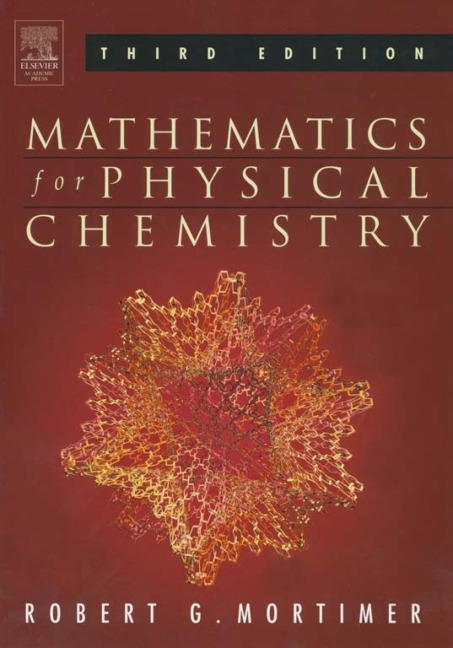
Mathematics for Physical Chemistry, Third Edition, is the ideal text for students and physical chemists who want to sharpen their mathematics skills. It can help prepare the reader for an undergraduate course, serve as a supplementary text for use during a course, or serve as a reference for graduate students and practicing chemists. The text concentrates on applications instead of theory, and, although the emphasis is on physical chemistry, it can also be useful in general chemistry courses. The Third Edition includes new exercises in each chapter that provide practice in a technique immediately after discussion or example and encourage self-study. The first ten chapters are constructed around a sequence of mathematical topics, with a gradual progression into more advanced material. The final chapter discusses mathematical topics needed in the analysis of experimental data.
- Numerous examples and problems interspersed throughout the presentations
- Each extensive chapter contains a preview, objectives, and summary
- Includes topics not found in similar books, such as a review of general algebra and an introduction to group theory
- Provides chemistry specific instruction without the distraction of abstract concepts or theoretical issues in pure mathematics
Robert G. Mortimer is a Professor Emeritus of Chemistry at Rhodes College in Memphis, Tennessee. He has taught physical chemistry at Indiana University and Rhodes College for over 40 years. He has carried out both experimental and theoretical research in the area of nonequilibrium processes in fluid systems.
1. Numbers, Measurements and Numerical Mathematics Numbers 2. Symbolic Mathematics and Mathematical Functions 3. The Solution of Algebraic Equations 4. Mathematical Functions and Differential Calculus5. Integral Calculus 6. Mathematical Series and Transforms 7. Calculus With Several Independent Variables 8. Differential Equations 9. Operators, Matrices,and Group Theory 10. The Solution of Simultaneous Algebraic Equations 11. The Treatment of Experimental Data A. Values of Physical Constants B. Some Mathematical Formulas and Identities C. Infinite Series D. A Short Table of Derivatives E. A Short Table of Indefinite Integrals F. A Short Table of Definite Integrals G. Some Integrals with Exponentials in the Integrands: The Error Function