Und dann auf "Zum Home-Bildschirm [+]".

Stöbern
genialokal zum Startbildschirm hinzufügen
Installieren Sie die genialokal App auf Ihrem Startbildschirm für einen schnellen Zugriff und eine komfortable Nutzung.
Installieren Sie die genialokal App auf Ihrem Startbildschirm für einen schnellen Zugriff und eine komfortable Nutzung.
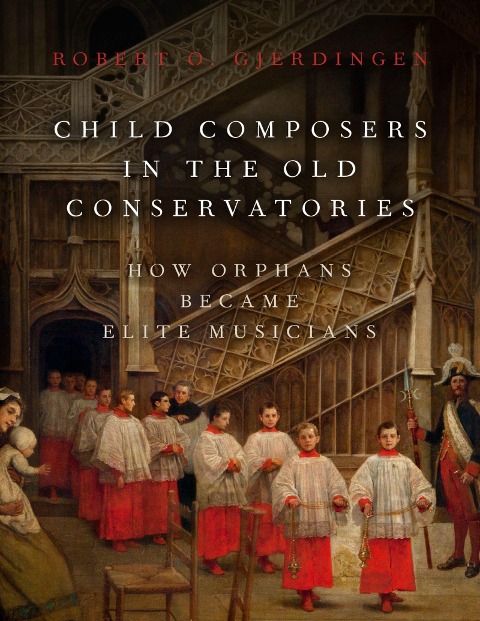
In seventeenth century Italy, overcrowding, violent political uprising, and plague led an astonishing number of abandoned and orphaned children to overwhelm the cities. Out of the piety of private citizens and the apathy of local governments, the system of conservatori was created to house, nurture, and train these fanciulli vaganti (roaming children) to become hatters, shoemakers, tailors, goldsmiths, cabinet makers, and musicians - a range of practical trades that might sustain them and enable them to contribute to society. Conservatori were founded across Italy, from Venice and Florence to Parma and Naples, many specializing in a particular trade. Four music conservatori in Naples gained particular renown for their exceptional training of musicians, both performers and composers, all boys. By the eighteenth century, the graduates of the Naples conservatories began to spread across Europe, with some 600 boys formerly in residence beginning to dominate the European musical world. Other conservatories in the country - including the Paris Conservatory - began to imitate the principles of the Naples' conservatory's training, known as the partimento tradition. The daily lessons and exercises associated with this tradition were largely lost-until author Robert Gjerdingen discovered evidence of them in the archives of conservatories across Italy and the rest of Europe. Compellingly narrated and richly illustrated, Child Composers in the Old Conservatory follows the story of these boys as they undergo rigorous training with the conservatory's maestri and eventually become maestri themselves, then moves forward in time to see the influence of partimenti in the training of such composers as Claude Debussy and Colette Boyer. Advocating for the revival of partimenti in modern music education, the book explores the tremendous potential of this tradition to enable natural musical fluency for students of all ages learning the craft today.
Robert Gjerdingen is Professor of Music at Northwestern University's School of Music.
Preface 1. Introduction Part I - Children in Need 2. Little Boys on Their Own 3. Masters Take Up the Challenge 4. Child Labor 5. Institutionalized Apprenticeship 6. Social Class Part II - Technologies of Traning 7. Schemas and Exemplars 8. Solfeggi and the Acquisition of Style 9. Partimenti and the Power of Improvisation 10. Counterpoint and Collocation 11. Intavolature and the Techniques of Instruments. 12. Dispositions and the Mastery of Complexity Part III - Trial by Contest 13. Little Masters, Real Masters, and Masterpieces 14. The Contest Piece as a Probe of Memory 15. Affordance and the Musical Habitus 16. Predicting Creativity Within a Tradition 17. A Sickly Young Woman Speaks Elegant Harmony Part IV - Transforming Commonplaces 18. The Oval and Cross 19. A Framework for Elaboration 20. The Beaux-Arts Framework 21. A Beaux-Arts Framework for Music 22. Learning Old Music in an Age of Digital Reproduction Appendix A: For Further Study Appendix B: Movimenti, Schemas, and Exemplars Index of Names
Dieses eBook wird im PDF-Format geliefert und ist mit einem Adobe Kopierschutz (DRM) versehen. Sie können dieses eBook mit allen Geräten lesen, die das PDF-Format und den Adobe Kopierschutz (DRM) unterstützen.
Zum Beispiel mit den folgenden Geräten:
• tolino Reader
Laden Sie das eBook direkt über den Reader-Shop auf dem tolino herunter oder übertragen Sie das eBook auf Ihren tolino mit einer kostenlosen Software wie beispielsweise Adobe Digital Editions.
• Sony Reader & andere eBook Reader
Laden Sie das eBook direkt über den Reader-Shop herunter oder übertragen Sie das eBook mit der kostenlosen Software Sony READER FOR PC/Mac oder Adobe Digital Editions auf ein Standard-Lesegeräte mit epub- und Adobe DRM-Unterstützung.
• Tablets & Smartphones
Möchten Sie dieses eBook auf Ihrem Smartphone oder Tablet lesen, finden Sie hier unsere kostenlose Lese-App für iPhone/iPad und Android Smartphone/Tablets.
• PC & Mac
Lesen Sie das eBook direkt nach dem Herunterladen mit einer kostenlosen Lesesoftware, beispielsweise Adobe Digital Editions, Sony READER FOR PC/Mac oder direkt über Ihre eBook-Bibliothek in Ihrem Konto unter „Meine eBooks“ - „online lesen“.
Schalten Sie das eBook mit Ihrer persönlichen Adobe ID auf bis zu sechs Geräten gleichzeitig frei.
Bitte beachten Sie, dass die Kindle-Geräte das Format nicht unterstützen und dieses eBook somit nicht auf Kindle-Geräten lesbar ist.