Und dann auf "Zum Home-Bildschirm [+]".

Stöbern
genialokal zum Startbildschirm hinzufügen
Installieren Sie die genialokal App auf Ihrem Startbildschirm für einen schnellen Zugriff und eine komfortable Nutzung.
Installieren Sie die genialokal App auf Ihrem Startbildschirm für einen schnellen Zugriff und eine komfortable Nutzung.
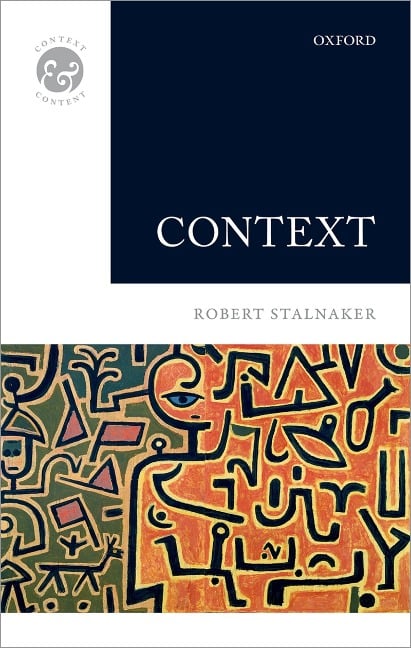
Robert Stalnaker explores the notion of the context in which speech takes place, its role in the interpretation of what is said, and in the explanation of the dynamics of discourse. He distinguishes different notions of context, but the main focus is on the notion of context as common ground, where the common ground is an evolving body of background information that is presumed to be shared by the participants in a conversation. The common ground is the information that is presupposed by speakers and addressees, and a central concern of this book is with the notion of presupposition, and with the interaction of compositional structure with discourse dynamics in the explanation of presuppositional phenomena. Presupposed information includes background information both about the subject matter of a discourse and about the evolving discourse itself, and about the attitudes of the participants in the discourse, including who and where they are, and what they agree and disagree about. Stalnaker provides a way of representing self-locating information that helps to explain how it can be shared and communicated, and how it evolves over time. He discusses the semantic and pragmatics of conditionals and epistemic modals, and their role in representing agreement, disagreement, and the negotiation about how a context should evolve. The book concludes with a discussion of the relations between contextualism and semantic relativism. The Context and Content series is a forum for outstanding original research at the intersection of philosophy, linguistics, and cognitive science. The general editor is François Recanati (Institut Jean-Nicod, Paris).
Robert Stalnaker is the Laurance S. Rockefeller Professor of Philosophy at MIT. He got his PhD in philosophy at Princeton University, working with Stuart Hampshire and C. G. Hempel. He taught at Yale University, the University of Illinois at Urbana-Champaign and Cornell University before moving to MIT in 1988. He is the author of Inquiry (MIT Press, 1984), Our Knowledge of the Internal World (OUP, 2007), and Mere Possibilities (Princeton University Press, 2010), as well as two collections of papers, Context and Content (OUP, 1999) and Ways a World Might Be (OUP, 2003). He is a fellow of the American Academy of Arts and Sciences, and a corresponding fellow of the British Academy.
- Introduction - 1: Three Notions of Context - 2: Common Ground and Keeping Score - 3: Presupposition Requirements - 4: Context and Compositionality - 5: The Essential Contextual - 6: May, Might, If - 7: Disagreement and Projection - 8: Contextualism and the New Relativism - Appendix - References
Dieses eBook wird im PDF-Format geliefert und ist mit einem Adobe Kopierschutz (DRM) versehen. Sie können dieses eBook mit allen Geräten lesen, die das PDF-Format und den Adobe Kopierschutz (DRM) unterstützen.
Zum Beispiel mit den folgenden Geräten:
• tolino Reader
Laden Sie das eBook direkt über den Reader-Shop auf dem tolino herunter oder übertragen Sie das eBook auf Ihren tolino mit einer kostenlosen Software wie beispielsweise Adobe Digital Editions.
• Sony Reader & andere eBook Reader
Laden Sie das eBook direkt über den Reader-Shop herunter oder übertragen Sie das eBook mit der kostenlosen Software Sony READER FOR PC/Mac oder Adobe Digital Editions auf ein Standard-Lesegeräte mit epub- und Adobe DRM-Unterstützung.
• Tablets & Smartphones
Möchten Sie dieses eBook auf Ihrem Smartphone oder Tablet lesen, finden Sie hier unsere kostenlose Lese-App für iPhone/iPad und Android Smartphone/Tablets.
• PC & Mac
Lesen Sie das eBook direkt nach dem Herunterladen mit einer kostenlosen Lesesoftware, beispielsweise Adobe Digital Editions, Sony READER FOR PC/Mac oder direkt über Ihre eBook-Bibliothek in Ihrem Konto unter „Meine eBooks“ - „online lesen“.
Schalten Sie das eBook mit Ihrer persönlichen Adobe ID auf bis zu sechs Geräten gleichzeitig frei.
Bitte beachten Sie, dass die Kindle-Geräte das Format nicht unterstützen und dieses eBook somit nicht auf Kindle-Geräten lesbar ist.