Und dann auf "Zum Home-Bildschirm [+]".

Stöbern
genialokal zum Startbildschirm hinzufügen
Installieren Sie die genialokal App auf Ihrem Startbildschirm für einen schnellen Zugriff und eine komfortable Nutzung.
Installieren Sie die genialokal App auf Ihrem Startbildschirm für einen schnellen Zugriff und eine komfortable Nutzung.
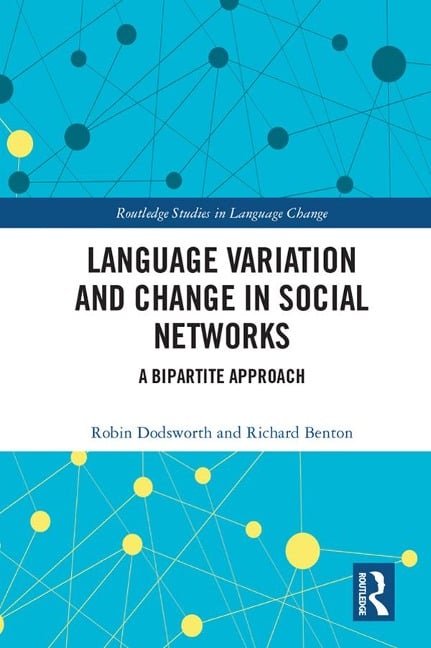
This monograph takes up recent advances in social network methods in sociology, together with data on economic segregation, in order to build a quantitative analysis of the class and network effects implicated in vowel change in a Southern American city. Studies of sociolinguistic variation in urban spaces have uncovered durable patterns of linguistic difference, such as the maintenance of blue collar/white collar distinctions in the case of stable linguistic variables. But the underlying interactional origins of these patterns, and the interactional reasons for their durability, are not well understood, due in part to the near-absence of large-scale network investigation. This book undertakes a sociolinguistic network analysis of data from the Raleigh corpus, a set of conversational interviews collected form natives of Raleigh, North Carolina, from 2008-2017. Acoustic analysis of the corpus shows the rapid, ongoing retreat from the Southern Vowel Shift and increasing participation in national vowel changes. The social distribution of these trends is explored via standard social factors such as occupation as well as innovative network variables, including a measure of nestedness in the community network. The book aims to pursue new network-based questions about sociolinguistic variation that can be applied to other corpora, making this key reading for students and researchers in sociolinguistics and historical linguistics as well as those interested in further understanding how existing quantitative network methods from sociological research might be applied to sociolinguistic data.
Robin Dodsworth is Associate Professor of English in the Linguistics program at North Carolina State University, USA. Richard Benton is Assistant Professor of Sociology at The University of Illinois at Urbana Champaign, USA.
Chapter 1 Previous approaches to network analysis in sociolinguistics 1.1 Guiding principles and their realization in previous studies 1.2 Assessing previous studies and looking forward Chapter 2 Raleigh, the corpus, and the retreat from the Southern Vowel Shift 2.1 Raleigh: A brief demographic and economic history 2.2 Dialect mixing and leveling 2.3 The Raleigh corpus 2.4 An industrial approach to occupation in Raleigh 2.5 Assessing dialect shift across three generations Chapter 3 Bipartite networks and complex social systems 3.1 Introduction 3.2 Bipartite networks: A formal introduction 3.3 Adapting network methods for bipartite networks 3.4 Bipartite network applications 3.5 Bipartite school co-attendance networks in Raleigh 3.6 The Raleigh network data 3.7 Structural cohesion Chapter 4 Structural equivalence 4.1 Motivation for using structural equivalence in the Raleigh study 4.2 Hypotheses: Network, occupation, and language change 4.3 Calculating structural equivalence 4.4 Testing the hypotheses: QAP regression 4.5 Results 4.6 Discussion Chapter 5Community detection 5.1 Community detection in social networks 5.2 QuanBiMo 5.3 Community detection in the Raleigh network 5.4 Modules in the Raleigh network 5.5 Assessing linguistic variation across modules 5.6 Results 5.7 Conclusions Chapter 6Conclusions 6.1 Summary of findings about language and social network position in Raleigh 6.2 Looking forward: Social meaning, social structure, and types of linguistic variables References
Dieses eBook wird im PDF-Format geliefert und ist mit einem Adobe Kopierschutz (DRM) versehen. Sie können dieses eBook mit allen Geräten lesen, die das PDF-Format und den Adobe Kopierschutz (DRM) unterstützen.
Zum Beispiel mit den folgenden Geräten:
• tolino Reader
Laden Sie das eBook direkt über den Reader-Shop auf dem tolino herunter oder übertragen Sie das eBook auf Ihren tolino mit einer kostenlosen Software wie beispielsweise Adobe Digital Editions.
• Sony Reader & andere eBook Reader
Laden Sie das eBook direkt über den Reader-Shop herunter oder übertragen Sie das eBook mit der kostenlosen Software Sony READER FOR PC/Mac oder Adobe Digital Editions auf ein Standard-Lesegeräte mit epub- und Adobe DRM-Unterstützung.
• Tablets & Smartphones
Möchten Sie dieses eBook auf Ihrem Smartphone oder Tablet lesen, finden Sie hier unsere kostenlose Lese-App für iPhone/iPad und Android Smartphone/Tablets.
• PC & Mac
Lesen Sie das eBook direkt nach dem Herunterladen mit einer kostenlosen Lesesoftware, beispielsweise Adobe Digital Editions, Sony READER FOR PC/Mac oder direkt über Ihre eBook-Bibliothek in Ihrem Konto unter „Meine eBooks“ - „online lesen“.
Schalten Sie das eBook mit Ihrer persönlichen Adobe ID auf bis zu sechs Geräten gleichzeitig frei.
Bitte beachten Sie, dass die Kindle-Geräte das Format nicht unterstützen und dieses eBook somit nicht auf Kindle-Geräten lesbar ist.