Und dann auf "Zum Home-Bildschirm [+]".

Stöbern
genialokal zum Startbildschirm hinzufügen
Installieren Sie die genialokal App auf Ihrem Startbildschirm für einen schnellen Zugriff und eine komfortable Nutzung.
Installieren Sie die genialokal App auf Ihrem Startbildschirm für einen schnellen Zugriff und eine komfortable Nutzung.
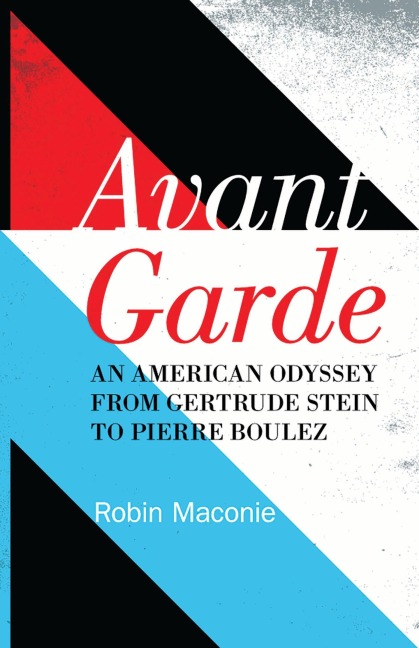
Gertrude Stein and philosopher Alfred North Whitehead were unlikely friends who spent most of their mature lives in exile: Stein in France and Whitehead in the United States. Their friendship was based on a mutual admiration for the philosophical pragmatism of William James and skepticism toward the European tradition of intellectual abstraction extending as far back as Plato and Aristotle. Though neither was musical, both were leading exponents of a new orientation toward time and knowledge acquisition that would go on to influence succeeding generations of composers. Through Virgil Thomson, Stein came to influence John Cage and the New York school of abstract music; through his teaching in the United States, Whitehead's philosophy of time and cognition came to be seen in America and abroad as an alternative to Newtonian neoclassicism, an alternative clearly acknowledged in the metric modulations of Elliott Carter and Conlon Nancarrow as well as the post-1950 total serialism of Pierre Boulez and Karlheinz Stockhausen.
The seemingly unlikely influence of Stein and Whitehead on Thomson, Cage, Carter, and the minimalists tells a remarkable story of transmission within and among the arts and philosophy, one that Robin Maconie unravels through his series of essays in Avant Garde: An American Odyssey from Gertrude Stein to Pierre Boulez. Maconie explores, from Hollywood to Harvard, the way in which music functions as a form of communication across the boundaries of language, serving the causes of trade and diplomacy through its representation of national identity, emotional character, honorable intention, and social discipline. The study of music as a language inevitably became the object of information science after World War II, but, as Maconie notes, 60 years on, music's refusal to yield to scientific elucidation has generated a stream of anti-music propaganda by a powerful collective of celebrity science writers. In a sequence of linked essays, Stockhausen specialist Robin Maconie reconsiders the role of music and music technology through careful examination of key modern concepts with respect to time, existence, identity, and relationship as formulated by such thinkers as Einstein, Russell, Whitehead, and Stein, along with Freud, Schoenberg, Wittgenstein, and Marcel Duchamp.
This foray into art, music, science, and philosophy is ideally suited for students and scholars of these disciplines, as well as those seeking to understand more deeply the influence these individuals had on one another's work and modern music.
Robin Maconie is a New Zealand composer and musicologist. He is the author of Other Planets: The Music of Karlheinz Stockhausen (2005), The Way of Music: Aural Training for the Internet Generation (2006), and Musicologia: Musical Knowledge from Plato to John Cage (2010), all published by Scarecrow Press.
Dieses eBook wird im PDF-Format geliefert und ist mit einem Adobe Kopierschutz (DRM) versehen. Sie können dieses eBook mit allen Geräten lesen, die das PDF-Format und den Adobe Kopierschutz (DRM) unterstützen.
Zum Beispiel mit den folgenden Geräten:
• tolino Reader
Laden Sie das eBook direkt über den Reader-Shop auf dem tolino herunter oder übertragen Sie das eBook auf Ihren tolino mit einer kostenlosen Software wie beispielsweise Adobe Digital Editions.
• Sony Reader & andere eBook Reader
Laden Sie das eBook direkt über den Reader-Shop herunter oder übertragen Sie das eBook mit der kostenlosen Software Sony READER FOR PC/Mac oder Adobe Digital Editions auf ein Standard-Lesegeräte mit epub- und Adobe DRM-Unterstützung.
• Tablets & Smartphones
Möchten Sie dieses eBook auf Ihrem Smartphone oder Tablet lesen, finden Sie hier unsere kostenlose Lese-App für iPhone/iPad und Android Smartphone/Tablets.
• PC & Mac
Lesen Sie das eBook direkt nach dem Herunterladen mit einer kostenlosen Lesesoftware, beispielsweise Adobe Digital Editions, Sony READER FOR PC/Mac oder direkt über Ihre eBook-Bibliothek in Ihrem Konto unter „Meine eBooks“ - „online lesen“.
Schalten Sie das eBook mit Ihrer persönlichen Adobe ID auf bis zu sechs Geräten gleichzeitig frei.
Bitte beachten Sie, dass die Kindle-Geräte das Format nicht unterstützen und dieses eBook somit nicht auf Kindle-Geräten lesbar ist.