Und dann auf "Zum Home-Bildschirm [+]".

Stöbern
genialokal zum Startbildschirm hinzufügen
Installieren Sie die genialokal App auf Ihrem Startbildschirm für einen schnellen Zugriff und eine komfortable Nutzung.
Installieren Sie die genialokal App auf Ihrem Startbildschirm für einen schnellen Zugriff und eine komfortable Nutzung.
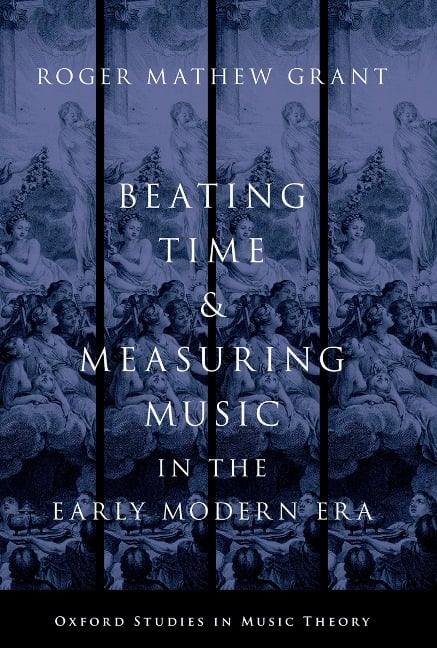
Beating Time & Measuring Music in the Early Modern Era chronicles the shifting relationships between ideas about time in music and science from the sixteenth through the early nineteenth centuries. Centered on theories of musical meter, the book investigates the interdependence between theories of meter and conceptualizations of time from the age of Zarlino to the invention of the metronome. These formulations have evolved throughout the history of Western music, reflecting fundamental reevaluations not only of music but also of time itself. Drawing on paradigms from the history of science and technology and the history of philosophy, author Roger Mathew Grant illustrates ways in which theories of meter and time, informed by one another, have manifested themselves in the field of music. During the long eighteenth century, treatises on subjects such as aesthetics, music theory, mathematics, and natural philosophy began to reflect an understanding of time as an absolute quantity, independent of events. This gradual but conclusive change had a profound impact on the network of ideas connecting time, meter, character, and tempo. Investigating the impacts of this change, Grant explores the timekeeping techniques - musical and otherwise - that implemented this conceptual shift, both technologically and materially. Bringing together diverse strands of thought in a broader intellectual history of temporality, Grant's study fills an unexpected yet conspicuous gap in the history of music theory, and is essential reading for music theorists and composers as well as historical musicologists and practitioners of historically informed performance.
Roger Mathew Grant is Assistant Professor of Music at Wesleyan University. A recent graduate of the University of Pennsylvania (PhD 2010) his research focuses on the relationships between eighteenth-century music theory, Enlightenment aesthetics, and early modern science. His journal articles have appeared in Music Theory Spectrum, Eighteenth-Century Music, and the Journal of Music Theory. A former Junior Fellow of the University of Michigan's Society of Fellows, he was the fourth musicologist ever to hold a fellowship in the forty-year history of the Society.
Table of Contents
Acknowledgements Introduction A History of Meter Theory, Or, the Rules of the Rules Reading in the Dark
Part I 1. Beating Time Themes in Meter Theory, 1500-1700 The Theoretical Work of the Beat The Organizing Principle of Meter Theory: Four Approaches "Honor Them All": On the Use (and Misuse?) of Meter Theory 2. The Beat: A Technical History A Technical and Physical Solution A Problem of Continuity The Techn? of the Beat. Re-reading Zarlino 3. A Renewed Account of Unequal Triple Meter Equality Inequality
Part II 4. Measuring Music Meter, Measure, and Motion in Eighteenth-Century Music Theory A Transformation in Time A Multiplicity of Measures Kirnberger's Contribution 5. Techniques for Keeping Time The Problem of Tempo Timekeeping Two Ways: 1. Chronometers Timekeeping Two Ways: 2. Taxonomies of Meter 6. The Eighteenth-Century Alla Breve A Rather Vague Indication Long-Note Music in the Eighteenth Century Long Notes in Eighteenth-Century Music
Part III 7. The Reinvention of Tempo A New Chronometer? Meter, Tempo, Number Length Into Duration, Duration Into Length: A Crisis of Measures Maelzel's Metronome 8. The Persistent Question of Meter The Measure as Mystery Meter as Attention, Activity, Aesthesis Fétis and the Future Appendices Bibliography
Dieses eBook wird im PDF-Format geliefert und ist mit einem Adobe Kopierschutz (DRM) versehen. Sie können dieses eBook mit allen Geräten lesen, die das PDF-Format und den Adobe Kopierschutz (DRM) unterstützen.
Zum Beispiel mit den folgenden Geräten:
• tolino Reader
Laden Sie das eBook direkt über den Reader-Shop auf dem tolino herunter oder übertragen Sie das eBook auf Ihren tolino mit einer kostenlosen Software wie beispielsweise Adobe Digital Editions.
• Sony Reader & andere eBook Reader
Laden Sie das eBook direkt über den Reader-Shop herunter oder übertragen Sie das eBook mit der kostenlosen Software Sony READER FOR PC/Mac oder Adobe Digital Editions auf ein Standard-Lesegeräte mit epub- und Adobe DRM-Unterstützung.
• Tablets & Smartphones
Möchten Sie dieses eBook auf Ihrem Smartphone oder Tablet lesen, finden Sie hier unsere kostenlose Lese-App für iPhone/iPad und Android Smartphone/Tablets.
• PC & Mac
Lesen Sie das eBook direkt nach dem Herunterladen mit einer kostenlosen Lesesoftware, beispielsweise Adobe Digital Editions, Sony READER FOR PC/Mac oder direkt über Ihre eBook-Bibliothek in Ihrem Konto unter „Meine eBooks“ - „online lesen“.
Schalten Sie das eBook mit Ihrer persönlichen Adobe ID auf bis zu sechs Geräten gleichzeitig frei.
Bitte beachten Sie, dass die Kindle-Geräte das Format nicht unterstützen und dieses eBook somit nicht auf Kindle-Geräten lesbar ist.