Und dann auf "Zum Home-Bildschirm [+]".

Stöbern
genialokal zum Startbildschirm hinzufügen
Installieren Sie die genialokal App auf Ihrem Startbildschirm für einen schnellen Zugriff und eine komfortable Nutzung.
Installieren Sie die genialokal App auf Ihrem Startbildschirm für einen schnellen Zugriff und eine komfortable Nutzung.
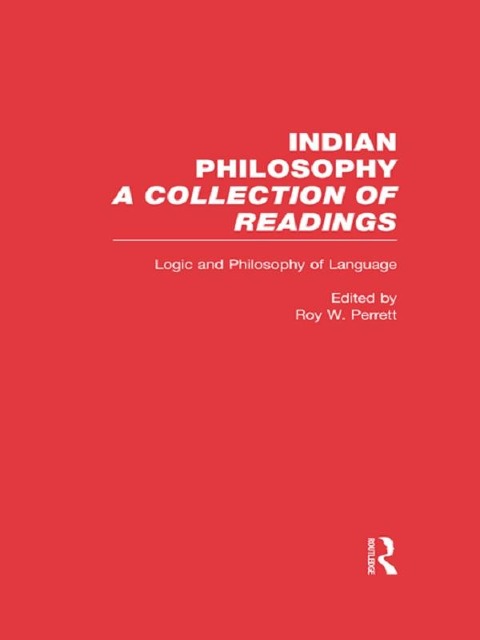
First published in 2001. The five volumes of this series collect together some of the most significant modern contributions to the study of Indian philosophy. Volume 2: Logic and Philosophy of Language is concerned with those parts of Indian pramd-a theory that Western philosophers would count as logic and philosophy of language. Indian philosophers and linguists were much concerned with philosophical issues to do with language, especially with theories of meaning, while the Indian logicians developed both a formalised canonical inference schema and a theory of fallacies. The logic of the standard Indian inferential model is deductive, but the premises are arrived at inductively. The later Navya-Nyaya logicians went on to develop too a powerful technical language, an intentional logic of cognitions, which became the language of all serious discourse in India. The selections in this volume discuss Indian treatments of topics in logic and the philosophy of language like the nature of inference, negation, necessity, counterfactual reasoning, many-valued logics, theory of meaning, reference and existence, compositionality and contextualism, the sense-reference distinction, and the nature of the signification relation.
Roy W. Perrett Massey University
Volume Introduction The Indian Tradition; A Note on the Indian Syllogism; The Concept of Paksa in Indian Logic; Negation and the Law of Contradiction in Indian Thought: A Comparative Study; Indian Logic Revisited: Nyayapravesa Reviewed; Some Features of the Technical Language of Navya-Nyaya; The Nyaya on Double Negation; The Middle Term; Psychologism in Indian Logical Theory; Tarka in the Nyaya Theory of Inference; Anekanta: Both Yes and No? 181 Sanskrit Philosophy of Language; Some Indian Theories of Meaning; Reference and Existence in Nyaya and Buddhist Logic; The Context Principle and Some Indian Controversies over Meaning; The Sense-Reference Distinction in Indian Philosophy of Language; Bhartrhari's Paradox
Dieses eBook wird im PDF-Format geliefert und ist mit einem Adobe Kopierschutz (DRM) versehen. Sie können dieses eBook mit allen Geräten lesen, die das PDF-Format und den Adobe Kopierschutz (DRM) unterstützen.
Zum Beispiel mit den folgenden Geräten:
• tolino Reader
Laden Sie das eBook direkt über den Reader-Shop auf dem tolino herunter oder übertragen Sie das eBook auf Ihren tolino mit einer kostenlosen Software wie beispielsweise Adobe Digital Editions.
• Sony Reader & andere eBook Reader
Laden Sie das eBook direkt über den Reader-Shop herunter oder übertragen Sie das eBook mit der kostenlosen Software Sony READER FOR PC/Mac oder Adobe Digital Editions auf ein Standard-Lesegeräte mit epub- und Adobe DRM-Unterstützung.
• Tablets & Smartphones
Möchten Sie dieses eBook auf Ihrem Smartphone oder Tablet lesen, finden Sie hier unsere kostenlose Lese-App für iPhone/iPad und Android Smartphone/Tablets.
• PC & Mac
Lesen Sie das eBook direkt nach dem Herunterladen mit einer kostenlosen Lesesoftware, beispielsweise Adobe Digital Editions, Sony READER FOR PC/Mac oder direkt über Ihre eBook-Bibliothek in Ihrem Konto unter „Meine eBooks“ - „online lesen“.
Schalten Sie das eBook mit Ihrer persönlichen Adobe ID auf bis zu sechs Geräten gleichzeitig frei.
Bitte beachten Sie, dass die Kindle-Geräte das Format nicht unterstützen und dieses eBook somit nicht auf Kindle-Geräten lesbar ist.