Und dann auf "Zum Home-Bildschirm [+]".

Stöbern
genialokal zum Startbildschirm hinzufügen
Installieren Sie die genialokal App auf Ihrem Startbildschirm für einen schnellen Zugriff und eine komfortable Nutzung.
Installieren Sie die genialokal App auf Ihrem Startbildschirm für einen schnellen Zugriff und eine komfortable Nutzung.
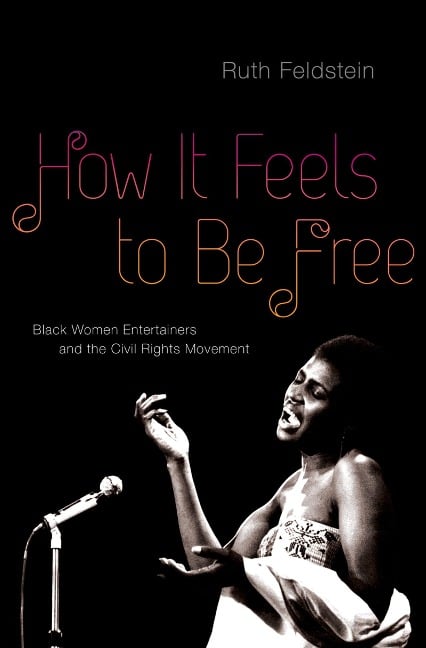
Winner of the Benjamin L. Hooks National Book Award Winnter of the Michael Nelson Prize of the International Association for Media and History In 1964, Nina Simone sat at a piano in New York's Carnegie Hall to play what she called a "show tune." Then she began to sing: "Alabama's got me so upset/Tennessee made me lose my rest/And everybody knows about Mississippi Goddam!" Simone, and her song, became icons of the civil rights movement. But her confrontational style was not the only path taken by black women entertainers. In How It Feels to Be Free, Ruth Feldstein examines celebrated black women performers, illuminating the risks they took, their roles at home and abroad, and the ways that they raised the issue of gender amid their demands for black liberation. Feldstein focuses on six women who made names for themselves in the music, film, and television industries: Simone, Lena Horne, Miriam Makeba, Abbey Lincoln, Diahann Carroll, and Cicely Tyson. These women did not simply mirror black activism; their performances helped constitute the era's political history. Makeba connected America's struggle for civil rights to the fight against apartheid in South Africa, while Simone sparked high-profile controversy with her incendiary lyrics. Yet Feldstein finds nuance in their careers. In 1968, Hollywood cast the outspoken Lincoln as a maid to a white family in For Love of Ivy, adding a layer of complication to the film. That same year, Diahann Carroll took on the starring role in the television series Julia. Was Julia a landmark for casting a black woman or for treating her race as unimportant? The answer is not clear-cut. Yet audiences gave broader meaning to what sometimes seemed to be apolitical performances. How It Feels to Be Free demonstrates that entertainment was not always just entertainment and that "We Shall Overcome" was not the only soundtrack to the civil rights movement. By putting black women performances at center stage, Feldstein sheds light on the meanings of black womanhood in a revolutionary time.
Ruth Feldstein is Associate Professor of History at Rutgers University, Newark. She is the author of Motherhood in Black and White: Race and Sex in American Liberalism, 1930-1965.
Introduction
1. "The World Was On Fire": Making New York City Subcultures 2. "Africa's Musical Ambassador": Miriam Makeba and the "Voice of Africa" in the United States 3. "I Don't Trust You Anymore": Nina Simone and Black Cultural Nationalism 4. Hollywood Time: Black Women and Integration Narratives in the Late 1960s 5. Cicely Tyson and African American History: Popular Culture and "Post"-Civil Rights in the 1970s
Epilogue Notes Bibliography Index
Dieses eBook wird im PDF-Format geliefert und ist mit einem Adobe Kopierschutz (DRM) versehen. Sie können dieses eBook mit allen Geräten lesen, die das PDF-Format und den Adobe Kopierschutz (DRM) unterstützen.
Zum Beispiel mit den folgenden Geräten:
• tolino Reader
Laden Sie das eBook direkt über den Reader-Shop auf dem tolino herunter oder übertragen Sie das eBook auf Ihren tolino mit einer kostenlosen Software wie beispielsweise Adobe Digital Editions.
• Sony Reader & andere eBook Reader
Laden Sie das eBook direkt über den Reader-Shop herunter oder übertragen Sie das eBook mit der kostenlosen Software Sony READER FOR PC/Mac oder Adobe Digital Editions auf ein Standard-Lesegeräte mit epub- und Adobe DRM-Unterstützung.
• Tablets & Smartphones
Möchten Sie dieses eBook auf Ihrem Smartphone oder Tablet lesen, finden Sie hier unsere kostenlose Lese-App für iPhone/iPad und Android Smartphone/Tablets.
• PC & Mac
Lesen Sie das eBook direkt nach dem Herunterladen mit einer kostenlosen Lesesoftware, beispielsweise Adobe Digital Editions, Sony READER FOR PC/Mac oder direkt über Ihre eBook-Bibliothek in Ihrem Konto unter „Meine eBooks“ - „online lesen“.
Schalten Sie das eBook mit Ihrer persönlichen Adobe ID auf bis zu sechs Geräten gleichzeitig frei.
Bitte beachten Sie, dass die Kindle-Geräte das Format nicht unterstützen und dieses eBook somit nicht auf Kindle-Geräten lesbar ist.