Und dann auf "Zum Home-Bildschirm [+]".

Stöbern
genialokal zum Startbildschirm hinzufügen
Installieren Sie die genialokal App auf Ihrem Startbildschirm für einen schnellen Zugriff und eine komfortable Nutzung.
Installieren Sie die genialokal App auf Ihrem Startbildschirm für einen schnellen Zugriff und eine komfortable Nutzung.
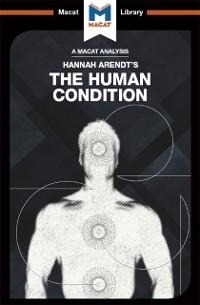
Hannah Arendt's 1958 The Human Condition was an impassioned philosophical reconsideration of the goals of being human. In its arguments about the kind of lives we should lead and the political engagement we should strive for, Arendt's interpretative skills come to the fore, in a brilliant display of what high-level interpretation can achieve for critical thinking. Good interpretative thinkers are characterised by their ability to clarify meanings, question accepted definitions and posit good, clear definitions that allow their other critical thinking skills to take arguments deeper and further than most. In many ways, The Human Condition is all about definitions. Arendt's aim is to lay out an argument for political engagement and active participation in society as the highest goals of human life; and to this end she sets about defining a hierarchy of ways of living a "vita activa," or active life. The book sets about distinguishing between our different activities under the categories of "labor", "work", and "action" - each of which Arendt carefully redefines as a different level of active engagement with the world. Following her clear and careful laying out of each word's meaning, it becomes hard to deny her argument for the life of "action" as the highest human goal.
Dr Anthony Lang is Head of the Schook of International Relations at the University of St Andrews.His work focuses on questions of agency, responsibility and punishment in political theory. Dr Sahar Aurore Saeidnia is a doctoral researcher at the Institut de recherche interdisciplinaire sur les enjeux sociaux, of the Ecole des Hautes Etudes en Sciences Sociales in Paris (EGESS-IRIS).
Ways in to the Text Who was Hannah Arendt? What does The Human Condition Say? Why does The Human Condition Matter? Section 1: Influences Module 1: The Author and the Historical Context Module 2: Academic Context Module 3: The Problem Module 4: The Author's Contribution Section 2: Ideas Module 5: Main Ideas Module 6: Secondary Ideas Module 7: Achievement Module 8: Place in the Author's Work Section 3: Impact Module 9: The First Responses Module 10: The Evolving Debate Module 11: Impact and Influence Today Module 12: Where Next? Glossary of Terms People Mentioned in the Text Works Cited
Dieses eBook wird im PDF-Format geliefert und ist mit einem Adobe Kopierschutz (DRM) versehen. Sie können dieses eBook mit allen Geräten lesen, die das PDF-Format und den Adobe Kopierschutz (DRM) unterstützen.
Zum Beispiel mit den folgenden Geräten:
• tolino Reader
Laden Sie das eBook direkt über den Reader-Shop auf dem tolino herunter oder übertragen Sie das eBook auf Ihren tolino mit einer kostenlosen Software wie beispielsweise Adobe Digital Editions.
• Sony Reader & andere eBook Reader
Laden Sie das eBook direkt über den Reader-Shop herunter oder übertragen Sie das eBook mit der kostenlosen Software Sony READER FOR PC/Mac oder Adobe Digital Editions auf ein Standard-Lesegeräte mit epub- und Adobe DRM-Unterstützung.
• Tablets & Smartphones
Möchten Sie dieses eBook auf Ihrem Smartphone oder Tablet lesen, finden Sie hier unsere kostenlose Lese-App für iPhone/iPad und Android Smartphone/Tablets.
• PC & Mac
Lesen Sie das eBook direkt nach dem Herunterladen mit einer kostenlosen Lesesoftware, beispielsweise Adobe Digital Editions, Sony READER FOR PC/Mac oder direkt über Ihre eBook-Bibliothek in Ihrem Konto unter „Meine eBooks“ - „online lesen“.
Schalten Sie das eBook mit Ihrer persönlichen Adobe ID auf bis zu sechs Geräten gleichzeitig frei.
Bitte beachten Sie, dass die Kindle-Geräte das Format nicht unterstützen und dieses eBook somit nicht auf Kindle-Geräten lesbar ist.