Und dann auf "Zum Home-Bildschirm [+]".

Stöbern
genialokal zum Startbildschirm hinzufügen
Installieren Sie die genialokal App auf Ihrem Startbildschirm für einen schnellen Zugriff und eine komfortable Nutzung.
Installieren Sie die genialokal App auf Ihrem Startbildschirm für einen schnellen Zugriff und eine komfortable Nutzung.
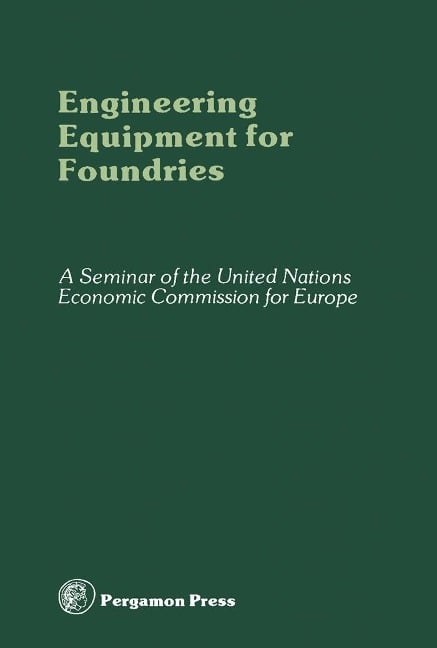
Engineering Equipment for Foundries covers the proceedings of the Seminar on Engineering Equipment for Foundries and Advanced Methods of Producing such Equipment, held in Palais des Nations in Geneva, Switzerland on November 28-December 2, 1977. This seminar is organized by the United National Economic Commission for Europe. This book is organized into five parts encompassing 39 chapters. Part I focuses on the economic problems of the foundry industry, particularly in connection with reduction of labor requirements and in calculating foundry production capacity. Part II highlights the problem of environmental pollution created by different branches of metallurgy, while Part III deals with the general problems concerning practices and technological developments in the foundry industry. Part IV describes the technological advances in molding and coremaking processes in foundry. This part also discusses the reduction of waste energy in permanent mold and die-casting foundries. Part V considers the transition to process and production automation of foundry equipment. This book will prove useful to metallurgical engineers, manufacturers, and researchers.
Dr. Sam Stuart is a physiotherapist and a research Fellow within the Balance Disorders Laboratory, OHSU. His work focuses on vision, cognition and gait in neurological disorders, examining how technology-based interventions influence these factors. He has published extensively in world leading clinical and engineering journals focusing on a broad range of activities such as real-world data analytics, algorithm development for wearable technology and provided expert opinion on technology for concussion assessment for robust player management. He is currently a guest editor for special issues (sports medicine and transcranial direct current stimulation for motor rehabilitation) within Physiological Measurement and Journal of NeuroEngineering and Rehabilitation, respectively.
IntroductionConclusions and RecommendationsList of ContributorsI. Economic Problems of the Foundry Industry Questions Arising in Connection with Reduction of Labor Requirements in Foundries Through the Application of Advanced Technologies Modern Foundry Planning as an Integrated Concept Foundry Engineering Design for Use in France and for Export The Foundry Official and Foundry Modernization Studies Package-Type Induction Melting Equipment Problems of Calculating the Capacity of Foundry ProductionII . Environmental Problems at the Foundry Enterprise Level Economic Evaluation of the Methods for Detection and Measurement of Environmental Pollution Caused by Foundries Choice of Molding Materials in Czechoslovak Foundries Bearing in Mind the Question of Health Problems of Working Conditions in Foundries, Present Possibilities of Improvement and Outlook for the Future at the Foundry Shop Level Cokeless before the 1980s Construction of an Iron Foundry in Accordance with Ecological Requirements Problems of Environmental Pollution Created by Different Branches of Metallurgy, Particularly FoundriesIII. Present Practices and Recent Technological Developments in the Foundry Industry - General Problems Mechanized Production of Ductile Iron in the Newly-Developed Rotary Ladle Use of the Air-Carbon Arc Process for the Fettling of Steel Castings Influence of the Metallurgical Characteristics of Induction Melting on the Properties of Cast Iron The Machines GAB 400 and GAB 120 for Dressing and Finishing Operations of Castings Operating Experience Gained with Large Coreless Induction Furnaces Proposed Standard for Diecasting Machines Industrial Electroheating Equipment and International StandardizationIV. Present Practice and Recent Technological Developments in the Foundry Industry - Molding and Coremaking Processes in Particular Preparation, Molding, Punch-Out, Shot Blasting, Regeneration-System Oberle Equipment for the Rapid Production of Molds and Cores in Chemically Bonded Sands Recent Technological Developments in High Efficiency Continuous Mixers for Chemically Bonded Sand Processes Aggregates for the Preparation of Self-Hardening mixtures Advances in the Technology of Fluid Sand in the Production of Cores and Molds The "Effset" Process of Freeze Molding Current Status of V-Process Molding A New Cold Shell Molding Machine Developments in the Use of Cold Coremaking Processes How to Reduce the Waste of Energy in Permanent Mould and Die-Casting Foundries The Development and Application of the Wallwork System of Flaskless MoldingV. Mechanization of Foundry Equipment (Especially Automation ) Automated Production by Robots of Aluminum Alloy Pressure Castings The Design of Cores and Manufacture of Molds Using Computer Aids New Technological Processes and Automated Integrated Equipment for the Mass Production of Precision Castings Computer-Based Preventive Maintenance Programs for Foundries The Problems of Automating and Mechanizing the Pressure Casting of Aluminum Alloy Parts Advanced Equipment for Making Precision Castings in Faced Metal Molds Automatic Pouring for Improved Quality and Reduced Cost Automatic Lines for Manufacturing Casting MoldsAnnex Technical Films and Other Audio-Visual Materials