Und dann auf "Zum Home-Bildschirm [+]".

Stöbern
genialokal zum Startbildschirm hinzufügen
Installieren Sie die genialokal App auf Ihrem Startbildschirm für einen schnellen Zugriff und eine komfortable Nutzung.
Installieren Sie die genialokal App auf Ihrem Startbildschirm für einen schnellen Zugriff und eine komfortable Nutzung.
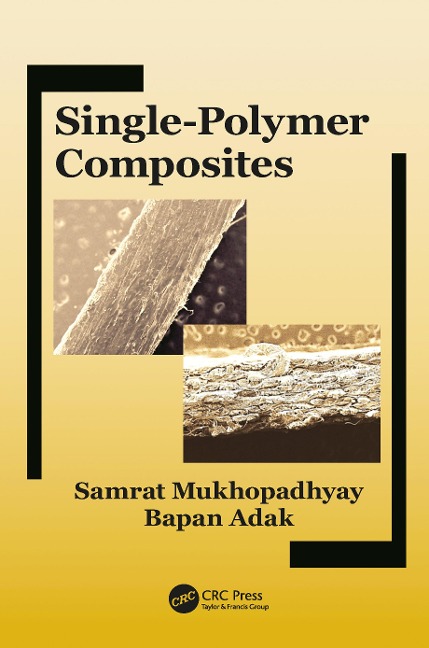
This book discusses the concept of single polymer composites (SPCs), their preparation, and properties and the main factors which affect the manufacturing of this class of composites. It deals with the leading classes of polymers, chapter wise, which have been majorly explored for manufacturing SPCs - polyolefins, polyesters, polyamides, and LCPs - includes a case study on manufacturing of SPCs, and devotes three chapters to detailed analyses of research on all-cellulose composites. Addressing the concerns of the researchers, it also answers intriguing questions in the field of SPCs with pointers to the right references. Key Features - Presents a summary of single polymer composites based on various polymers - Includes mechanical and thermal properties of single polymer composites - Reviews detailed view of eco-friendly approaches to composites - Offers a special focus on all-cellulose composites - Supports concepts with figures, schemes, and tables
Dr. Samrat Mukhopadhyay is an Associate Professor at the Department of Textile Technology, Indian Institute of Technology (IIT), Delhi. A gold medalist from the University of Kolkata, he subsequently did his Masters and PhD from IIT Delhi. He worked with Arvind Mills, Ahmedabad, had been teaching in various colleges in India and was with the Fibrous Materials Research Group, University of Minho, Portugal as a Post-Doctoral Scientist with the prestigious FCT grant before joining the Department. He has been working with synthetic and natural fibers, fiber reinforced composites and concrete systems, sustainable approaches in textile chemistry, color science and technological interventions in handloom sector. Presently he is part of research groups working on clothing for extreme weather protection funded by Defence Research and Development Organization (DRDO), Government of India. He is also working with Design Innovation grants, Ministry of Human Resource Development (MHRD). He is involved in projects with joint funding from industry and Government of India for developing practical solutions for industry under the Uchhatar Abhiskar Yojana (UAY). He has been working with single polymer composites for the last two decades. Part of his Phd work was using polypropylene filaments in single polymer composites. He was the Principal Investigator of a project sponsored by GAIL, Government of India, on development of high impact structures from single-polymer composites from HDPE. The project was successfully executed and has been funded for second stage of execution jointly with Indian Institute of Packaging, Government of India for developing prototypes. He has also worked on all-cellulose composites systems jointly with the co-author. Bapan Adak obtained B.Tech degree in 2010 from Govt. College of Engineering and Textile Technology, Serampore (West Bengal, India) in Textile Engineering. During his B.Tech, he worked on 'Dyeing of silk with natural coloring matters with or without mordants' and published his work in a reputed textile journal. In 2010, he joined in Arvind Ltd, Gujarat, India and continued his work for three years as manufacturing manager. In 2013, he started M.Tech in Fibre Science and Technology from Department of Textile Technology, Indian Institute of Technology Delhi, India and received his M.Tech degree in 2015. During M.Tech, he worked on cellulose based single-polymer composites popularly termed as - 'All-cellulose composites'. He has published several papers in reputed journals from his M.Tech research work. Currently, he is doing Ph.D from Department of Textile Technology, Indian Institute of Technology Delhi, India. His PhD topic is related to 'Studies on high gas barrier and weather resistant polyurethane nanocomposite films and laminates', which is a part of an ongoing project sponsored by Aerial Delivery Research & Development Establishment (ADRDE, Agra), Defence Research and Development Organization (DRDO, India).
1. Single Polymer Composites - General considerations. 2. Transcrystallinity in Single polymer composites. 3. Single polymer composites from Polyolefines. 4. Single polymer composites from polyamides. 5. Single polymer composites from Polyesters. 7. All-cellulose Composite: Concepts, raw materials, synthesis, phase characterization and structure analysis. 8. Properties of non-derivatized all-Cellulose Composites. 9. Derivatized all-cellulose composites. 10. Applications, Current Difficulties and Future Scopes of Single-Polymer Composites.
Dieses eBook wird im PDF-Format geliefert und ist mit einem Adobe Kopierschutz (DRM) versehen. Sie können dieses eBook mit allen Geräten lesen, die das PDF-Format und den Adobe Kopierschutz (DRM) unterstützen.
Zum Beispiel mit den folgenden Geräten:
• tolino Reader
Laden Sie das eBook direkt über den Reader-Shop auf dem tolino herunter oder übertragen Sie das eBook auf Ihren tolino mit einer kostenlosen Software wie beispielsweise Adobe Digital Editions.
• Sony Reader & andere eBook Reader
Laden Sie das eBook direkt über den Reader-Shop herunter oder übertragen Sie das eBook mit der kostenlosen Software Sony READER FOR PC/Mac oder Adobe Digital Editions auf ein Standard-Lesegeräte mit epub- und Adobe DRM-Unterstützung.
• Tablets & Smartphones
Möchten Sie dieses eBook auf Ihrem Smartphone oder Tablet lesen, finden Sie hier unsere kostenlose Lese-App für iPhone/iPad und Android Smartphone/Tablets.
• PC & Mac
Lesen Sie das eBook direkt nach dem Herunterladen mit einer kostenlosen Lesesoftware, beispielsweise Adobe Digital Editions, Sony READER FOR PC/Mac oder direkt über Ihre eBook-Bibliothek in Ihrem Konto unter „Meine eBooks“ - „online lesen“.
Schalten Sie das eBook mit Ihrer persönlichen Adobe ID auf bis zu sechs Geräten gleichzeitig frei.
Bitte beachten Sie, dass die Kindle-Geräte das Format nicht unterstützen und dieses eBook somit nicht auf Kindle-Geräten lesbar ist.