Und dann auf "Zum Home-Bildschirm [+]".

Stöbern
genialokal zum Startbildschirm hinzufügen
Installieren Sie die genialokal App auf Ihrem Startbildschirm für einen schnellen Zugriff und eine komfortable Nutzung.
Installieren Sie die genialokal App auf Ihrem Startbildschirm für einen schnellen Zugriff und eine komfortable Nutzung.
Ihr gewünschter Artikel ist in 0 Buchhandlungen vorrätig - wählen Sie hier eine Buchhandlung in Ihrer Nähe aus:

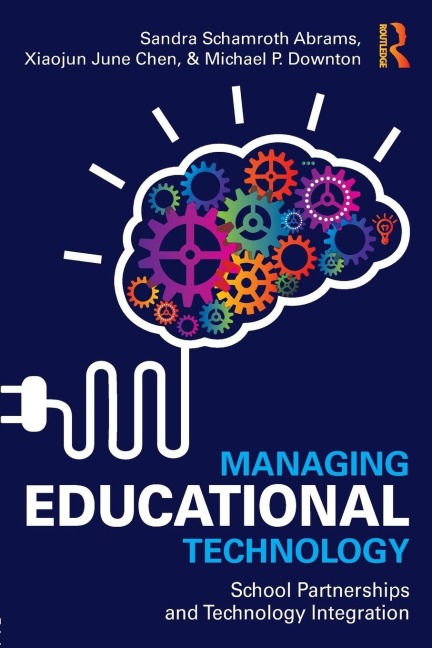
Managing Educational Technology examines the ways in which stakeholders from businesses, K-12 schools, and universities can influence the quality and success of technology integration in primary and secondary classrooms. -
Inspired by their experiences in the field as educators, education researchers, and technology evaluators, the authors present vignettes that highlight the benefits, demands, and limitations often associated with the introduction and integration of educational technologies to K-12 school environments. These examples also underscore the inherent nuances in partnerships among businesses, K-12 schools, and universities. Readers can use these rich examples when considering ways to integrate products into schools, as well as when discussing, analyzing, and evaluating the promises of and challenges in doing so. End-of-chapter questions guide readers to consider alternate actions and identify steps for additional growth, which complement the authors' practical suggestions to strengthen business-school-university partnerships.
Any reader interested in educational technology, educational leadership, or business will benefit from this insightful investigation of business-school-university partnerships.
Sandra Schamroth Abrams is an associate professor in the Department of Curriculum and Instruction at St. John's University, USA. Xiaojun June Chen is an associate professor of Educational Technology in the Department of Curriculum and Instruction at St. John's University, USA. Michael P. Downton is an assistant professor in the Department of Curriculum and Instruction at St. John's University, USA.
Chapter 1: Introduction. Chapter 2: Learning in the Context of Technology Intergration. Chapter 3: Gaining Access to a School. Chapter 4: Maintaining and Losing Access. Chapter 5: Data, Data, Data: Issues and Possible Conflicts. Chapter 6: Conclusion