Und dann auf "Zum Home-Bildschirm [+]".

Stöbern
genialokal zum Startbildschirm hinzufügen
Installieren Sie die genialokal App auf Ihrem Startbildschirm für einen schnellen Zugriff und eine komfortable Nutzung.
Installieren Sie die genialokal App auf Ihrem Startbildschirm für einen schnellen Zugriff und eine komfortable Nutzung.
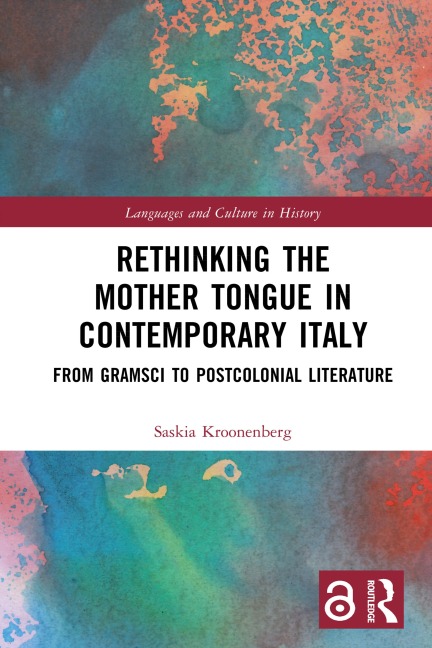
Taking Italy's linguistic landscape as an example of how a national language is multiple in and of itself, Rethinking the Mother Tongue in Contemporary Italy: From Gramsci to Postcolonial Literature offers an innovative postcolonial, non-monolingual approach to the notion of the mother tongue. After Italy's unification in 1861, the government tried to linguistically turn the culturally varying inhabitants into one people, seemingly trying to create a national mother tongue. However, it was only in the twentieth century, when mass media entered the family sphere, that Italians started to speak Italian as a mother tongue. Departing from the understanding that the notion of the mother tongue caught in monolingual thinking, the book analyses its relation to gender, race and its territorial colonial expansion. At present, according to the ius sanguinis (law of blood) Italianness is still based on blood, not on mother tongue. By combining Gramsci's notion of immanent grammar, contemporary Italian postcolonial literature, and new materialism, this book offers an innovative postcolonial and new materialist analysis of the notion of the mother tongue. It will be of interest to researchers in the fields of intellectual history, Italian studies, postcolonial theory and postcolonial and comparative literature as well as transnational humanities.
Saskia Kroonenberg is a lecturer at Radboud University, the Netherlands and visiting fellow at Humboldt University, Germany. Her interests include Antonio Gramsci, literary studies, new materialism, postcolonial and gender studies.
Table of Contents Introduction The Notion of the Mother Tongue Postcolonial Gramsci Immanent Grammar: Language, Terra, Body Outline of the Book A Note on this Language Chapter 1. The Language Question and the Mother Tongue: Unification, Expansion, Exclusion A Missing Mother Tongue Unifying Italy: The Language Question Expanding Italy: Colonialism and Fascism A Living Mother Tongue: Technologies and Varieties Postcolonial Literature and the Mother Tongue Conclusion: A Mother Tongue with an Accent Chapter 2. Gramsci and the Mother Tongue: Immanent Grammar, Subalternity, Molecular Changes Gramsci the Linguist Immanent Grammar Immanent Grammar and Subalternity Immanence: Language Immanence: Terra Immanence: Body Conclusion: Rethinking the Mother Tongue with Gramsci Chapter 3. Rethinking the Mother Tongue Today: From Gramsci to Postcolonial Literature From Gramsci to Future Future is a Verb Grammar and Racism in "Nassan Tenga" Terra and Names in "Il mio nome" Bodies and Meanings in "Abbiamo pianto un fiume di risate" Conclusion: Language, Terra, Body Conclusion: The Mother Tongue as Immanent Grammar The Mother Tongue in Italy