Und dann auf "Zum Home-Bildschirm [+]".

Stöbern
genialokal zum Startbildschirm hinzufügen
Installieren Sie die genialokal App auf Ihrem Startbildschirm für einen schnellen Zugriff und eine komfortable Nutzung.
Installieren Sie die genialokal App auf Ihrem Startbildschirm für einen schnellen Zugriff und eine komfortable Nutzung.
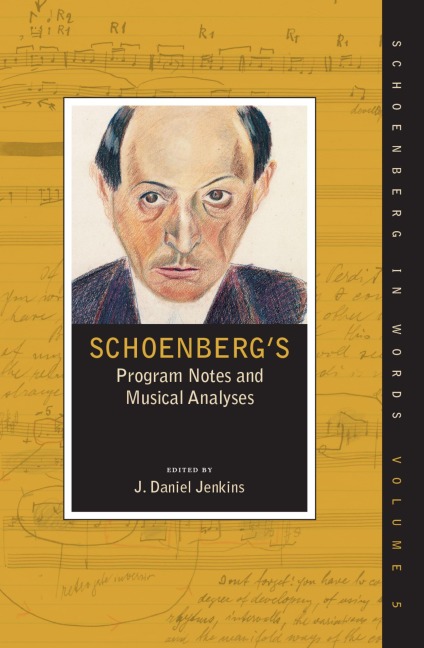
In 1950, as Arnold Schoenberg anticipated the publication of a collection of 15 of his most important writings, Style and Idea, he was already at work on a second volume to be called Program Notes. Inspired by this idea, Schoenberg's Program Notes and Musical Analyses can boast the most comprehensive study of the composer's writings about his own music yet published. Schoenberg's insights emerge not only in traditional program notes, but also in letters, sketch materials, pre-concert talks, public lectures, contributions to scholarly journals, newspaper articles, interviews, pedagogical materials, and publicity fliers. The editions of the texts in this collection, based almost exclusively on Schoenberg's original manuscript sources, include many items appearing in print in English for the first time, as well as more familiar texts that preserve musical and textual information eliminated from previous editions. The book also reveals how Schoenberg, desirous to communicate with and educate an audience, took every advantage of changes in technology during his lifetime, utilizing print media, radio broadcasts, record jackets--and had he lived, television--for this purpose. In addition to four chapters in which Schoenberg illuminates 42 of his own compositions, the book begins with chapters on his development and influences, his thoughts about trends in modern music, and, in a nod to the importance of the radio in providing a venue for music analysis, a chapter about Schoenberg's radio broadcasts.
J. Daniel Jenkins is Associate Professor of Music Theory at the University of South Carolina. His research focuses on music of the twentieth century, with particular emphasis on Arnold Schoenberg and Elliott Carter.
About the Companion Website Preface Acknowledgements Abbreviations Note on Texts and Translations Introduction
I. On Development and Influences 1.1. Who Am I?/My Evolution (Retrospective/Looking Back), November 29, 1949 1.2. My Models, June 6, 1928 1.3. A Self-Analysis (Maturity), March 3, 1948 1.4. Schoenberg Looks Backward--and Ahead, September 26, 1948
II. On the Radio 2.1. Discussion over Radio Berlin with Preußner and Strobel, March 30, 1931 2.2. First American Radio Broadcast, November 19, 1933 2.3. Interview with Max van Leuven Swarthout, Fall 1935 2.4. Radio Interview with Raoul Gripenwaldt, July 7, 1948 2.5. To the Birthday of Broadcasts of Contemporary Music, September 12, 1948 2.6. For the Broadcast, August 22, 1949 2.7. For My Broadcast, August 23, 1949 III. On Modern Music 3.1. Polytonalists [I], April 21, 1923, and Polytonalists [II], November 29, 1923 3.2. Notes for an Essay Entitled, "The Contemporary Situation in Music," 1929 3.3. What Have People to Expect from Music? November 7, 1935 3.4. Teaching and Modern Trends, June 30, 1938 3.5. Advice for Beginners in Composition with Twelve Tones, 1951 3.6. This is Probably the Solution to the Problem, Undated
IV. On Compositions: 1898-1907 4.1. Polytonality in My Works, December 12, 1924 4.2. Arnold Schoenberg Writes the Following about Himself and His String Quartet[sic], October 21, 1902 4.3. Program Notes to the Second Arnold Schoenberg Evening (Chamber Music in Large Halls), June 3, 1919 4.4. Excerpt from the Harmonielehre about Ninth Chords in Inversion, 1922 4.5. Constructives in Verklärte Nacht, 1932 4.6. Letter to Bruno Walter, December 23, 1943 4.7. Liner Notes for the Capitol Records Release of Verklärte Nacht, August 26, 1950 4.8. Symphonic Introductory Music to Pelleas und Melisande by Maeterlinck, perhaps 1902 4.9. Proposed Program of Pelleas und Melisande, 1902-3 4.10. Letter to Alexander von Zemlinsky, February 20, 1918 4.11. Excerpts from the Harmonielehre about Whole-Tone Chords and Chords in Fourths (1922) 4.12. Keywords for a "Free" Lecture in Boston with the Aid of Slonimsky, January 4, 1934 4.13. Liner Notes for the Capitol Records Release of Pelleas und Melisande, 1949 4.14. Foreword to a Broadcast of the Capitol Recording of Pelleas und Melisande, February 17, 1950 4.15. Analysis of op. 6, no. 7, 1948 4.16. Schoenberg's "Private Program" for the First String Quartet, 1904 4.17. Analysis of the First String Quartet, 1907 4.18. Cues for a Lecture on the First String Quartet at the University of Southern California, c. 1935 4.19. Excerpts from The Musical Idea and the Logic, Technique, and Art of Its Presentation, 1934-36 4.20. Liner Notes for the Dial Records Release of the First Chamber Symphony, 1949 4.21. Rigoletto and Kammersymphonie, An Analysis, Undated 4.22. Class Analysis of the Kammersymphonie, op. 9, after 1944 4.23. Letter to Hermann Scherchen, June 23, 1923
V. On Compositions: 1908-22 5.1. Class Analyses of the Second String Quartet, after 1944 5.2. Program Notes for the Society for Art and Culture: New Compositions by Arnold Schoenberg, January 14, 1910 5.3. Introduction to the Three Pieces for Piano, July 27, 1949 5.4. Excerpt from the Berlin Diary, January 28, 1912 5.5. Excerpt from the Harmonielehre about Erwartung, 1922 5.6. Letter to Leopold Stokowski, July 2, 1945 5.7. At the Time When I Painted, April 5, 1948 5.8. Introductory Remarks for a New York Philharmonic Society Broadcast of "Lied der Waldtaube" from Gurrelieder, October 30, 1949 5.9. Notes on the Gurrelieder, January 12, 1951 5.10. Notes for the Columbia Records Release of Pierrot lunaire, 1941 5.11. Breslau Lecture on Die glückliche Hand, March 24, 1928 5.12. The Simplified Study/Conductor's Score: Foreword to the Four Orchestral Songs, op. 22, September 1917 5.13. Analysis of the Four Orchestral Songs, op. 22, February 21, 1932 5.14. Program and Plan for a Symphony, before May 27, 1914
VI. On Compositions: 1923-34 6.1. Two Letters to Nicholas Slonimsky, June 3, 1937 and January 2, 1940 6.2. About Wilhelm Werker's Study of the Symmetry of Fugues, etc. in Bach, September 20, 1928 6.3. Method of Composing with Twelve Tones Only Related to One Another, 1935 6.4. Preliminary Remarks about opp. 27 and 28 to be placed after the title page, before the first page of score (Unused), early 1926 6.5. (Definite) Foreword to opp. 27 and 28, 1926 6.6. Movement Titles for the Suite, op. 29, 1924-26 6.7. Excerpt from a Letter to Rudolf Kolisch, July 27, 1932 6.8. Interview with Myself (Ideas of Arnold Schoenberg), October 6, 1928 6.9. Radio Lecture on the Variations for Orchestra, March 22, 1931 6.10. A Letter and a Draft of a Letter to Olin Downes, November 8, 1938 6.11. Radio Lecture for a Performance of Von heute auf morgen, February 27, 1930 6.12. Draft of a Foreword for a Publicity Flier for Von heute auf morgen, after April 1, 1930 6.13. Danger-Fear, 1929 6.14. Letter to Walter Eidlitz, March 15, 1933 6.15. The Transplanted Composer, April 19, 1950 6.16. Letter to Pablo Casals, February 20, 1933 6.17. About the String Quartet Concerto, February 1935 6.18. Draft of a Foreword to the Suite for String Orchestra for College Orchestra Composed by Arnold Schoenberg, perhaps 1935 6.19. Draft of a Letter to Olin Downes, October 1935
VII. On Compositions: 1936-47 7.1. Excerpt from a Letter to Louis Krasner, March 3, 1939 7.2. Program Notes to and Audio Commentary for the Kolisch Quartet Recording of the Four String Quartets, 1936 7.3. Program Notes for the Juilliard String Quartet Performance of the Four String Quartets, end of December 1949 or early January 1950 7.4. Letter to Alfred V. Frankenstein, March 18, 1939 7.5. To Kol nidre, 1938 or later 7.6. Draft of a Letter to Elliot E. Cohen, January 28, 1950 7.7. Radio Interview with Lisa Sergio, November 1940 7.8. Table of Motives, 1948 7.9. Letter to Donald W. Gray, April 19, 1950 7.10. How I Came to Compose the Ode to Napoleon, perhaps 1944 7.11. Program for the Piano Concerto, 1942 7.12. Two Documents about the Theme and Variations, perhaps 1944 7.13. My Fatality, March 9, 1949 7.14. Excerpt from a Letter to Kurt List, November 1, 1948
Epilogue: Melodrama--Retrospective/Looking Back, Undated
Notes Personalia Select Bibliography Select Discography
Dieses eBook wird im PDF-Format geliefert und ist mit einem Adobe Kopierschutz (DRM) versehen. Sie können dieses eBook mit allen Geräten lesen, die das PDF-Format und den Adobe Kopierschutz (DRM) unterstützen.
Zum Beispiel mit den folgenden Geräten:
• tolino Reader
Laden Sie das eBook direkt über den Reader-Shop auf dem tolino herunter oder übertragen Sie das eBook auf Ihren tolino mit einer kostenlosen Software wie beispielsweise Adobe Digital Editions.
• Sony Reader & andere eBook Reader
Laden Sie das eBook direkt über den Reader-Shop herunter oder übertragen Sie das eBook mit der kostenlosen Software Sony READER FOR PC/Mac oder Adobe Digital Editions auf ein Standard-Lesegeräte mit epub- und Adobe DRM-Unterstützung.
• Tablets & Smartphones
Möchten Sie dieses eBook auf Ihrem Smartphone oder Tablet lesen, finden Sie hier unsere kostenlose Lese-App für iPhone/iPad und Android Smartphone/Tablets.
• PC & Mac
Lesen Sie das eBook direkt nach dem Herunterladen mit einer kostenlosen Lesesoftware, beispielsweise Adobe Digital Editions, Sony READER FOR PC/Mac oder direkt über Ihre eBook-Bibliothek in Ihrem Konto unter „Meine eBooks“ - „online lesen“.
Schalten Sie das eBook mit Ihrer persönlichen Adobe ID auf bis zu sechs Geräten gleichzeitig frei.
Bitte beachten Sie, dass die Kindle-Geräte das Format nicht unterstützen und dieses eBook somit nicht auf Kindle-Geräten lesbar ist.